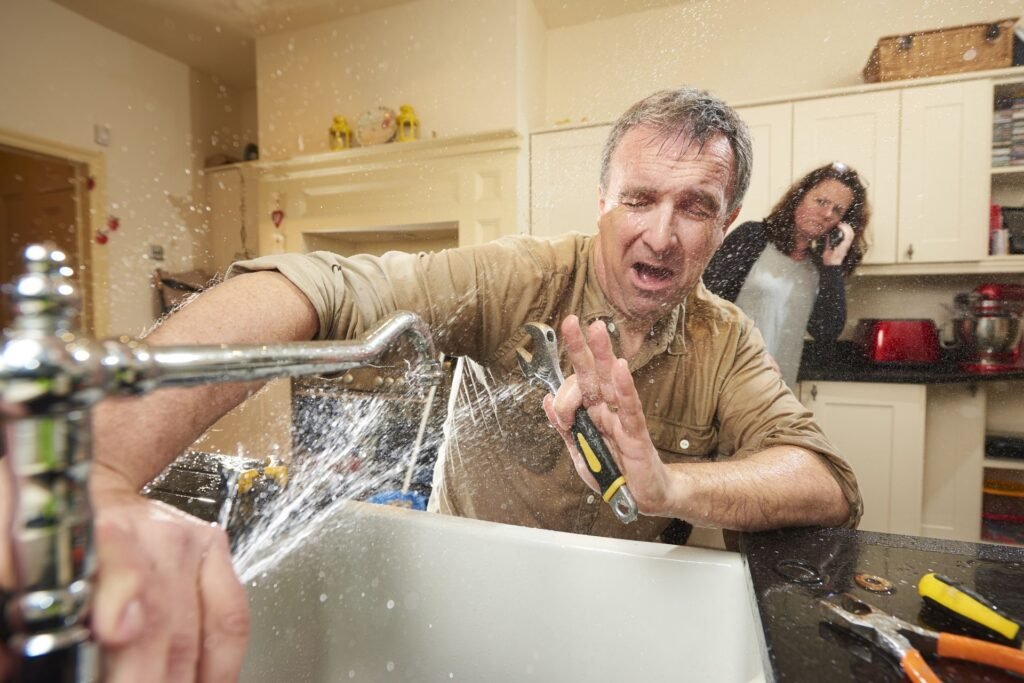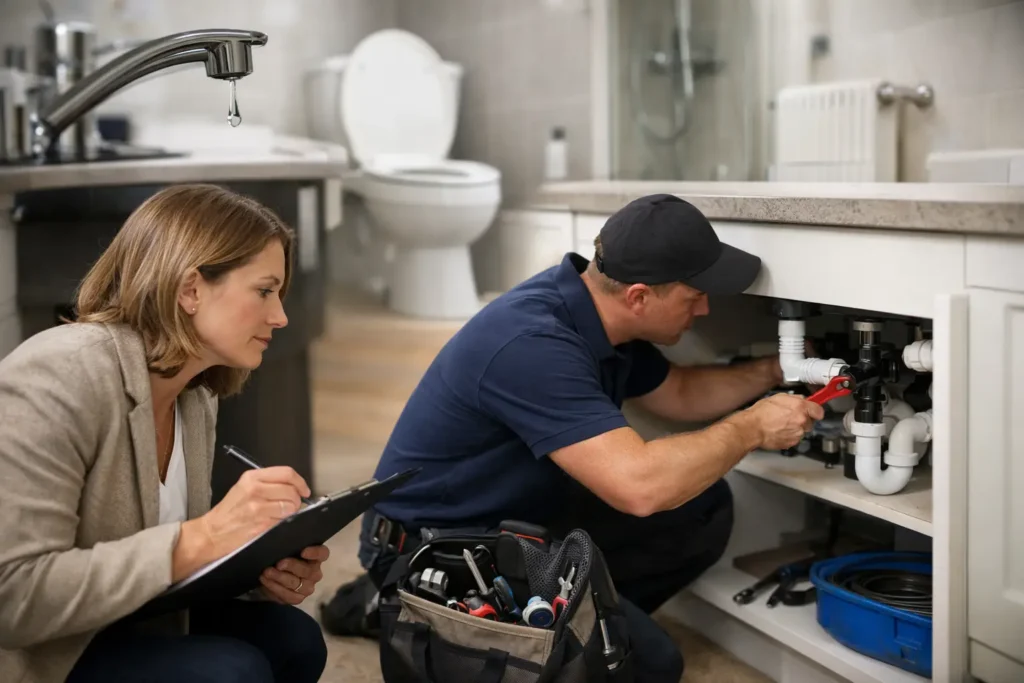
A small leak beneath a kitchen sink can become a damaged unit, swollen flooring and an unhappy tenant far quicker than most property managers expect. A practical property manager plumbing checklist helps you catch the early signs, plan repairs properly and avoid waiting until a routine issue becomes an emergency callout.
For rental homes, flats, offices, cafés and other occupied premises, plumbing checks are about more than keeping fixtures working. They protect the building, reduce disruption, support good hygiene and give tenants or staff confidence that problems will be dealt with properly.
How to use a property manager plumbing checklist
The right inspection frequency depends on the building, how heavily it is used and its past repair history. A quiet residential property may need a thorough check between tenancies and regular visual inspections during the year. Busy commercial washrooms, kitchens and hospitality premises need closer attention because blocked drains, worn taps and leaking toilets can affect customers, staff and trading.
Keep a simple record of each visit, including photographs of any developing issue, work completed and fixtures that may need replacement soon. This is useful when prioritising maintenance, responding to tenant reports and spotting recurring faults in the same property.
Your checklist should cover the following areas.
- Visible leaks and water damage. Check beneath sinks, around toilets, behind washing machines and dishwashers, near pipework, and inside vanity units. Look for staining, damp patches, warped cupboard bases, peeling paint or a musty smell. Even if there is no active drip during the visit, these signs can point to an intermittent leak.
- Taps, mixers and stop taps. Run every tap and check for drips from the spout, water escaping around the base, loose handles and poor water flow. Make sure the internal stop tap can be located and turns as it should. In an emergency, being unable to isolate the water quickly can turn a minor pipe fault into significant damage.
- Toilets and cisterns. Flush each toilet more than once. A weak flush, a toilet that continues running, a slow-filling cistern or water around the base all need attention. In commercial premises, one faulty toilet can put extra pressure on the remaining facilities and quickly become a hygiene concern.
- Showers, baths and basins. Check that showers drain freely and that seals around shower trays, baths and screens are intact. Failed sealant allows water behind tiles or into ceilings below, where the damage is often hidden until it is costly to put right. Test plugs and wastes too, as a basin or bath that will not hold water is frustrating for tenants and may indicate worn fittings.
- Drains and waste pipes. Listen for gurgling, watch for slow drainage and take note of unpleasant smells from sinks, showers and floor drains. These can be early warnings of a partial blockage, poor venting or a build-up further along the pipework. Do not wait for a complete blockage if several outlets are draining slowly.
- Kitchen plumbing and appliances. Inspect visible connections to washing machines, dishwashers and kitchen taps. Hoses, isolation valves and waste pipes should be secure, dry and free from strain. In shared houses and commercial kitchens, check that tenants or staff understand what should not go into the sink, especially fats, coffee grounds and food waste that can cause stubborn blockages.
- Radiators and exposed pipework. Look for cold spots, corrosion, staining beneath valves and signs of a slow leak. Bleeding, repairing or replacing a radiator before colder weather is generally less disruptive than dealing with a fault when the property is occupied and the heating is in regular use.
- Water pressure and temperature changes. Ask tenants, caretakers or staff whether they have noticed sudden changes in pressure, noisy pipes or inconsistent hot water at taps. One report may be a local fixture issue. Several reports from the same building suggest a wider plumbing fault that should be investigated.
- Outside taps and external drainage. Check outdoor taps for drips, damaged fittings and signs of freezing damage after cold weather. Inspect gullies and visible external drains for standing water, debris or smells. Properties with gardens, bin areas or busy rear service spaces often develop drainage problems here first.
- Access, reporting and emergency information. Confirm that tenants know how to report a leak or blocked toilet, and that the relevant person has access arrangements for urgent repairs. Make sure the water shut-off location is clear. A fast report and quick isolation can save a ceiling, floor covering or stock room from extensive water damage.
What needs urgent plumbing attention?
Not every defect requires an immediate callout, but some should never be left until the next planned visit. Active leaks, overflowing toilets, a blocked drain affecting more than one fixture, sewage smells, water coming through a ceiling and a toilet that cannot be used in a single-toilet property all need prompt action.
The same applies to a leaking pipe near electrical fittings or within a commercial kitchen, restaurant, school or workplace where hygiene and safe operation are at risk. The priority is to stop the water where possible, protect the area, inform occupants and arrange a professional inspection.
A dripping tap may seem less urgent, but it is still worth repairing before it becomes a recurring complaint or damages the surrounding unit. Property maintenance works best when small faults are dealt with at the right time rather than bundled into a larger repair after avoidable damage has occurred.
Between-tenancy plumbing checks matter
A void period is usually the best time to inspect plumbing without disrupting tenants. Run all taps and showers, flush toilets, test wastes and look inside every accessible cupboard. It is also the sensible time to replace tired taps, reseal a shower, repair a loose toilet seat or sort out a slow-running drain before a new tenant moves in.
Be careful not to assume a property is problem-free because it has been empty. A slow leak can remain unnoticed in an unoccupied flat, and a dry trap can allow unpleasant drain smells into the building. Before handover, check for water marks, test the mains water supply and run enough water through each outlet to confirm it drains correctly.
For larger portfolios, it can help to grade issues as urgent, planned repair or monitor. This makes budgets clearer and prevents low-cost maintenance from being missed simply because it is not yet causing a major problem.
Make tenant reporting easier
Tenants are often the first people to notice a change, whether it is a noisy cistern, a shower that takes longer to drain or a damp smell below the sink. Clear reporting instructions encourage them to raise the issue early instead of trying a temporary fix or assuming it can wait.
Ask for the location of the fault, when it began, whether water is still running and whether any other fixture is affected. A photograph or short video can be useful, but tenants should not be asked to dismantle pipework or attempt repairs themselves. Clear communication helps a plumber arrive with a better understanding of the likely fault and the right parts where possible.
For property managers across Hull and the surrounding area, reliable plumbing support means fewer repeat visits, less disruption and a better experience for occupants. If your checklist identifies a leak, blockage, faulty toilet, shower issue or recurring plumbing problem, contact HJZ Plumbing on 01482 236483 or through the HJZ Plumbing website for practical, tidy repairs and clear advice.