A frozen pipe rarely gives much warning. One cold night can turn a small weakness in a loft, outside wall or unused room into a split pipe, followed by water spreading through ceilings, stock rooms, kitchens or tenant living spaces. To prevent plumbing leaks winter brings, the best approach is to find vulnerable areas early and deal with small faults before temperatures fall.
For homeowners, landlords and business owners, a few sensible checks can avoid a great deal of disruption. The aim is not to overcomplicate things. It is to keep water where it belongs, maintain a safe background temperature and know what to do if a leak starts.
1. Find and test your internal stop tap
Your internal stop tap is the quickest way to limit water damage if a pipe bursts. It is commonly found beneath the kitchen sink, in a utility room, under the stairs or close to where the mains water pipe enters the building. In commercial premises, it may be in a plant room, cupboard or service area.
Make sure everyone responsible for the property knows where it is and can turn it off. A stop tap that has not been touched for years can seize, so test it carefully before winter rather than discovering the problem during an emergency. If it is stiff, dripping or difficult to operate, arrange a repair or replacement.
Landlords and letting agents should make this information available to tenants, particularly in flats and houses where a leak can affect neighbouring properties. A simple note with the stop tap location and emergency contact details can save valuable time.
2. Insulate exposed pipes properly
Pipes in lofts, garages, outbuildings, under floors and against external walls are most at risk of freezing. Pipe insulation, often called lagging, helps slow heat loss and protects cold water pipes during a frost. It is an inexpensive precaution, but it needs to be fitted neatly and continuously to be effective.
Pay close attention to bends, joints, valves and short exposed sections near outside taps. These are easy to miss. Insulation should fit the pipe size and should not be crushed, split or left with large gaps. If you can see old, damp or damaged lagging, replace it rather than relying on it through a cold spell.
Insulation reduces risk, but it cannot make up for a serious draught or a room left unheated for days. Treat it as one part of a wider winter maintenance plan.
3. Keep the building at a safe background temperature
When a property is occupied, regular heating helps protect pipework in walls, cupboards and service areas. You do not need every room to feel warm, but allowing internal temperatures to drop too low increases the chance of pipes freezing, especially during overnight frosts.
Open cupboard doors under sinks on very cold nights if pipework is against an outside wall. This allows warmer air to reach the pipes. Do this only where it is safe, and keep cleaning products and other hazards out of reach of children and pets.
For empty homes, rental properties between tenancies, holiday lets and closed commercial units, do not simply turn everything off and hope for the best. Arrange regular checks, leave appropriate background heating on where possible and make sure the water supply is managed correctly. The right solution depends on how long the property will be empty and how exposed the pipework is.
4. Fix drips, loose joints and small leaks before frost arrives
A dripping tap, damp patch under a sink or occasional puddle around a toilet may seem minor, but winter puts extra pressure on already weakened fittings. Small leaks can also go unnoticed in cupboards and voids until they have damaged flooring, units or plasterboard.
Check beneath kitchen and bathroom sinks, around washing machine and dishwasher connections, at toilet cisterns, and around radiators and valves. Look for staining, corrosion, swollen cupboard bases, mouldy smells or a steady increase in your water use. These are often early signs that something needs attention.
Do not overtighten fittings in an attempt to stop a drip. It can damage threads, seals and plastic components. A proper repair may involve replacing a washer, cartridge, connector, valve or section of pipe, depending on the cause.
5. Protect outside taps and external pipework
Outside taps and their supply pipes are particularly vulnerable because they are directly exposed to cold air. Disconnect hoses before winter, drain them fully and store them inside. Water left in a hose can freeze and place strain on the tap connection as well as the hose itself.
If your outside tap has an isolation valve inside the property, turn it off and open the outside tap to drain the remaining water from the pipe. This is one of the most effective ways to reduce the risk of a burst external pipe. An insulated tap cover can provide additional protection, but it should not be the only measure.
For cafés, schools, shops and other sites with outdoor cleaning points or staff areas, include external taps in your winter site checks. A leaking outdoor connection can remain unnoticed for longer than a fault inside the building.
6. Check lofts, voids and rarely used rooms
The places you visit least are often where winter leaks begin. A cold loft with poorly insulated pipework, a spare bedroom with the radiator turned off, or a storage room in a commercial unit can all become problem areas during a prolonged cold spell.
Before winter, inspect visible pipework for signs of previous leaks, such as water marks, green staining on copper, rusted clips or damaged insulation. Check that loft hatches close properly and that obvious draughts are not blowing directly across water pipes. Loft insulation should sit below pipes where practical, allowing warmth from the rooms beneath to reach them.
If pipes pass through walls or floors, seal excessive gaps around them without trapping moisture or making future access impossible. The goal is to reduce cold air movement, not hide plumbing that may need maintenance later.
7. Know the warning signs of a frozen pipe
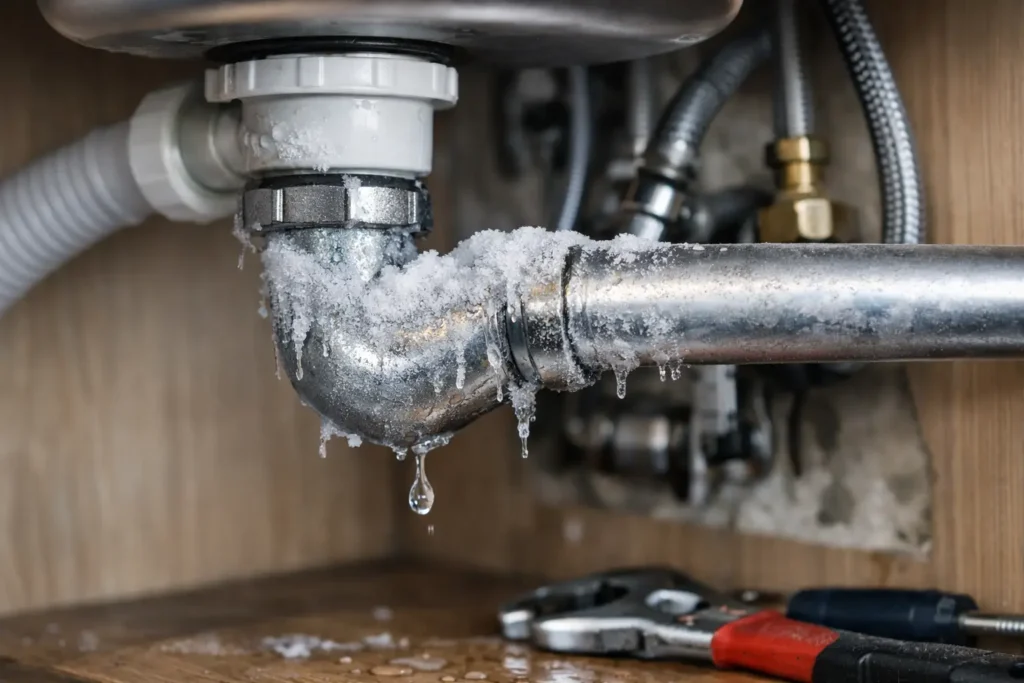
A frozen pipe may give a few clues before it bursts. Water flow from a tap may reduce sharply or stop altogether, particularly on one side of the property. You may see frost on an exposed pipe or notice unusual sounds when a tap is turned on.
If you suspect a pipe has frozen, turn off the water supply if there is any sign of swelling, cracking or leaking. Do not use a naked flame, blowtorch or direct high heat to thaw it. This can damage the pipe, create a fire risk and cause rapid pressure changes. Gentle warmth in the room and warm towels around accessible pipework are safer options, but professional help is the sensible choice if you cannot locate the frozen section or water is already escaping.
8. Act quickly when water appears
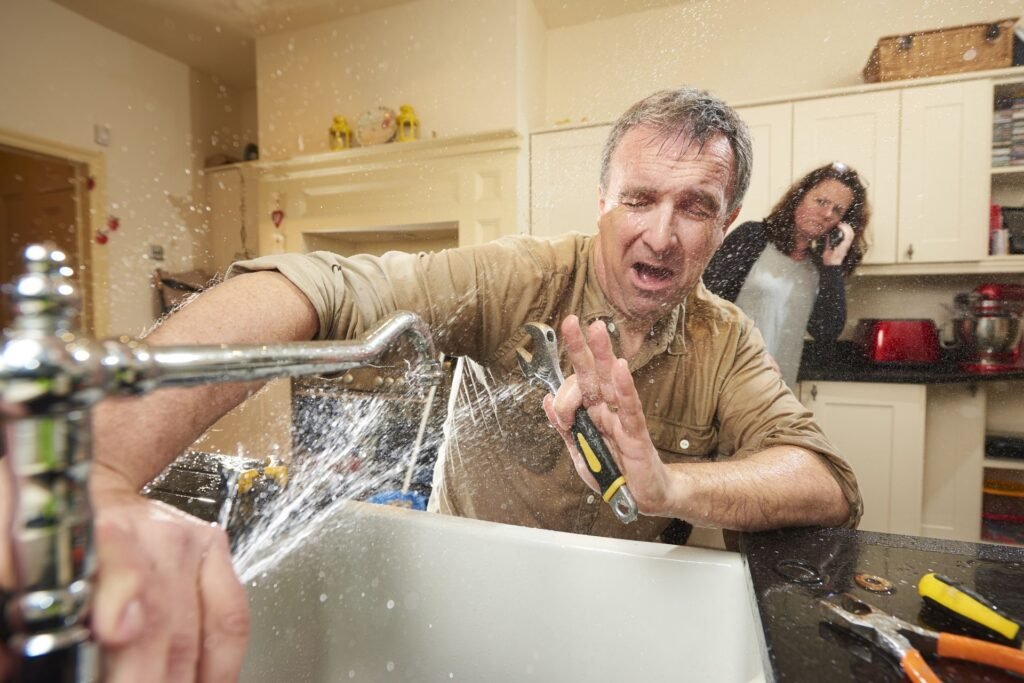
If a leak starts, turn off the internal stop tap straight away. Then switch off electricity only if it is safe to do so and water is near sockets, appliances or electrical fittings. Move valuables, stock and soft furnishings away from the affected area, and contain dripping water with buckets or towels where possible.
Take photographs for your records once the immediate risk is under control, especially in rented or commercial properties. Avoid taking ceilings down, pulling apart units or attempting a temporary repair that could make the damage worse. The priority is stopping the water and arranging a lasting repair.
Prevent plumbing leaks in winter with early maintenance
Winter plumbing problems are often preventable, but they are rarely convenient. A quick check of your stop tap, exposed pipework, outside connections and minor leaks can protect your property from expensive water damage and avoid disruption when you need your home or premises to function normally.
If you have found a leak, a frozen pipe, a faulty stop tap or pipework that needs attention before colder weather arrives, contact HJZ Plumbing on 01482 236483 for practical, reliable help across Hull and the surrounding area.