A sink that empties slowly, a gully that starts backing up, or a toilet that suddenly will not clear can turn into a bigger problem faster than most people expect. Blocked drains are not just inconvenient. They can lead to bad smells, hygiene issues, water damage, unhappy tenants, and serious disruption in homes, shops, cafés, offices, and other occupied buildings.
The good news is that drainage problems usually give some warning before they become a full overflow. If you know what to look for, you can act early, limit the mess, and avoid a more expensive repair.
What blocked drains usually look like
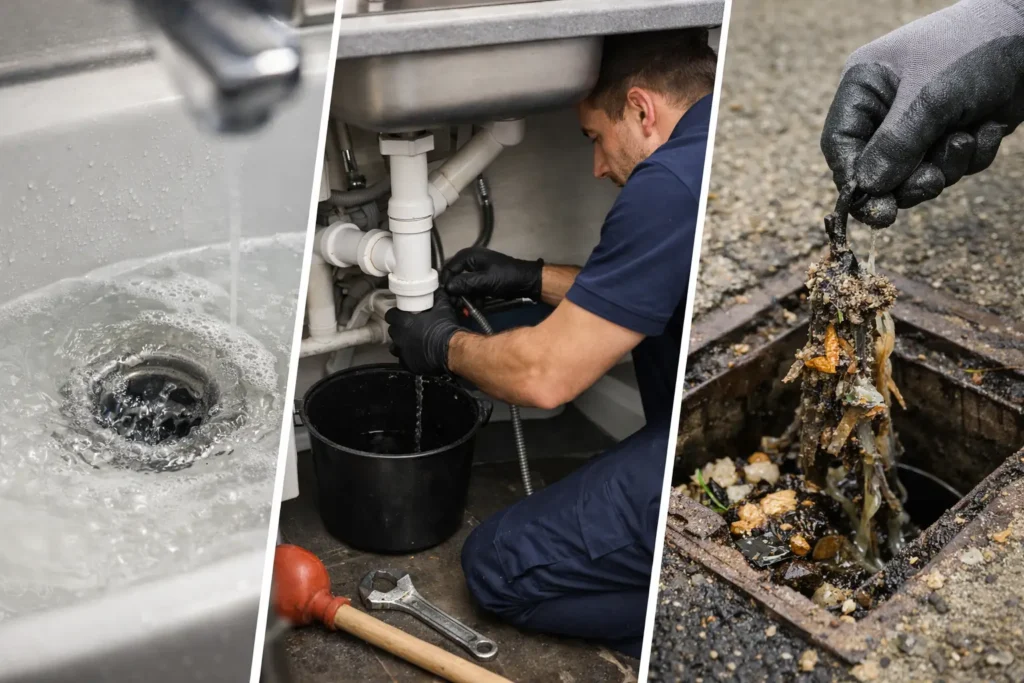
Not every drainage issue starts with water coming back up through a plughole. In many cases, the first signs are smaller and easy to dismiss. Water may drain away more slowly than usual in a kitchen sink, basin, shower tray, or bath. You might hear gurgling after flushing the toilet or using a tap. Outside, a drain cover or gully may begin to hold standing water after normal use or rainfall.
Smells are another common warning sign. If waste water is not flowing away properly, trapped debris can start to break down and create unpleasant odours. In a home, that can make kitchens and bathrooms uncomfortable. In commercial settings such as restaurants, cafés, hotels or schools, it can quickly become a hygiene concern that needs urgent attention.
Sometimes the problem appears in more than one place at once. If a toilet bubbles when a sink is emptied, or water rises in a shower when a washing machine drains, that often points to a blockage deeper in the system rather than a single fixture problem.
The most common causes of blocked drains
Most drainage blockages build up over time. A drain rarely goes from perfect to completely blocked in one day unless something unsuitable has been flushed or washed away.
In kitchens, grease and fat are among the biggest causes. Even when poured down the sink as a liquid, fats cool and harden inside pipework. They then catch food waste, coffee grounds and other debris, narrowing the drain until water can no longer pass through properly.
In bathrooms, hair, soap residue and toiletries are frequent culprits. Over time they combine into a stubborn mass that slows drainage and eventually causes a full blockage. Toilets are often blocked by excessive toilet tissue, wipes, sanitary products, or other items that should never be flushed.
Outside drains can become obstructed by leaves, silt, moss and general debris. Tree roots can also find their way into damaged pipework, especially in older systems. Once roots enter a crack or joint, they expand and trap waste, which can create repeated blockages if the underlying pipe damage is not dealt with.
Commercial properties often face the same issues, just at a greater volume. A busy kitchen, staff toilets, customer washrooms, and regular cleaning routines all put more demand on drains. That means small maintenance issues can turn into business disruption very quickly.
Why quick action matters
It is tempting to leave a slow-draining sink for another week, especially if the water still eventually goes down. In practice, that delay often makes the problem harder to resolve.
As a blockage builds, pressure in the pipework can increase and waste water may start to back up into the property. That can damage floors, units, skirting boards and decorations. In rental properties, a drainage issue can affect tenants’ use of kitchens and bathrooms and create complaints that need urgent attention. In trading premises, it can mean lost time, poor customer experience, and possible hygiene risks.
There is also the issue of repeated temporary fixes. Shop-bought drain cleaners may seem like a quick answer, but they do not always remove the full obstruction. In some cases they only create a narrow channel through the blockage, so the problem returns soon after. Harsh chemicals can also be unpleasant to handle and may not be suitable for older pipework or recurring faults.
What you can safely try first
If the blockage is minor and there is no overflow, there are a few sensible first steps. A plunger can sometimes clear a localised blockage in a sink or toilet. Removing visible debris from a plughole or waste trap may also help if the issue is close to the surface.
With kitchen sinks, avoiding any further grease or food waste is important while you assess the problem. With toilets, if the water level is rising, do not keep flushing. One extra flush can turn a manageable issue into a much bigger clean-up.
If several outlets are affected, if foul smells are strong, or if outside drains are backing up, it is usually best to stop there and get professional help. Those signs often point to a more established blockage that needs the right equipment and a proper diagnosis.
When blocked drains need a plumber
Blocked drains need more than guesswork when the problem is persistent, widespread, or causing overflow. A professional plumber can identify whether the issue is in an internal waste pipe, an external drain, or a section of pipework that may have been damaged or poorly installed.
The value is not just in clearing the immediate blockage. It is in making sure the cause has been found. If a drain keeps blocking, there is normally a reason. It could be a build-up of waste, a poor fall on the pipe, root ingress, scale, or a partial collapse. Without checking properly, the same callout can repeat again and again.
For occupied homes and businesses, a tidy and practical approach matters as much as the repair itself. Customers want clear advice, straightforward communication, and a fix that reduces the chance of another problem next month.
Blocked drains in homes, rentals and business premises
The impact of a drainage problem depends on the property, but it is never minor for long. In family homes, blocked sinks, showers and toilets disrupt the basics of daily life. In a rented property, they can quickly become a source of tension between tenants, landlords and managing agents, especially if there is uncertainty about what caused the blockage.
In commercial premises, the pressure is even greater. A café or takeaway with a blocked kitchen waste line cannot simply carry on as normal. A hotel or office with toilet drainage issues has an immediate problem for guests, staff and visitors. Schools, shops and public-facing buildings need faults resolved quickly, with as little disruption as possible.
That is why fast response matters. A drainage issue that starts in one room can affect the wider building if it is left unresolved.
How to reduce the risk of blocked drains
Prevention is usually straightforward, but it does rely on consistency. Grease, oils and fat should never go down kitchen sinks. Food waste should be put in the bin rather than washed away. In bathrooms, using drain covers to catch hair can make a real difference. Toilets should only be used for toilet tissue and human waste, not wipes, cotton pads, sanitary items or paper towels.
For landlords and commercial operators, it also helps to think in terms of routine oversight rather than waiting for complaints. If a property has had previous drainage problems, or if the building sees heavy daily use, early maintenance can be far cheaper than dealing with an emergency overflow.
Recurring smells, occasional slow drainage, or repeated toilet blockages are worth taking seriously even if they appear to clear on their own. Often, they are the first sign that a larger blockage is forming further down the line.
Getting the right help at the right time
Drainage problems are stressful because they affect the parts of a property people rely on most. The aim is not just to get water moving again. It is to sort the problem properly, protect the building, and get life or business back to normal with minimum fuss.
If you are dealing with blocked drains in Hull, Beverley or the surrounding area, HJZ Plumbing provides practical help for homes, rental properties and commercial premises. Whether it is an urgent blockage, repeated slow drainage, bad smells, or an outside drain that is backing up, clear advice and prompt action can save a lot of disruption. To arrange help, call 01482 236483 or visit www.hjzplumbing.com. Acting early is often the simplest way to avoid a much bigger problem later.