A shower that starts as a trickle, turns hot and cold without warning, or takes forever to rinse shampoo out is more than an annoyance. For many households and commercial properties, shower pressure problems explained properly can save time, prevent damage, and stop a small fault turning into a bigger repair.
Low or inconsistent shower pressure is usually a sign that something in the system is restricting flow, reducing available pressure, or sending water where it should not be going. The cause is not always obvious. In some properties it is a simple blockage in the shower head. In others, it points to a failing valve, pipework issue, hidden leak, poor installation, or a wider problem affecting the water supply to the building.
Shower pressure problems explained: what pressure actually means
People often use pressure and flow as if they mean the same thing, but they are slightly different. Pressure is the force pushing water through the system. Flow is the amount of water coming out. You can have poor shower performance because the pressure is low, because the flow is restricted, or because both are happening together.
That matters when you are trying to work out what has gone wrong. If every tap in the property seems weak, the issue may be with the incoming supply or the main plumbing system. If only the shower is affected, the fault is more likely to be at the shower itself, the valve, or the pipe feeding it.
Gravity-fed systems, mains-fed systems, pumps, and electric showers can all behave differently. That is why a quick online answer does not always match what is happening in your bathroom. The right fix depends on how your property is set up.
The most common causes of low shower pressure
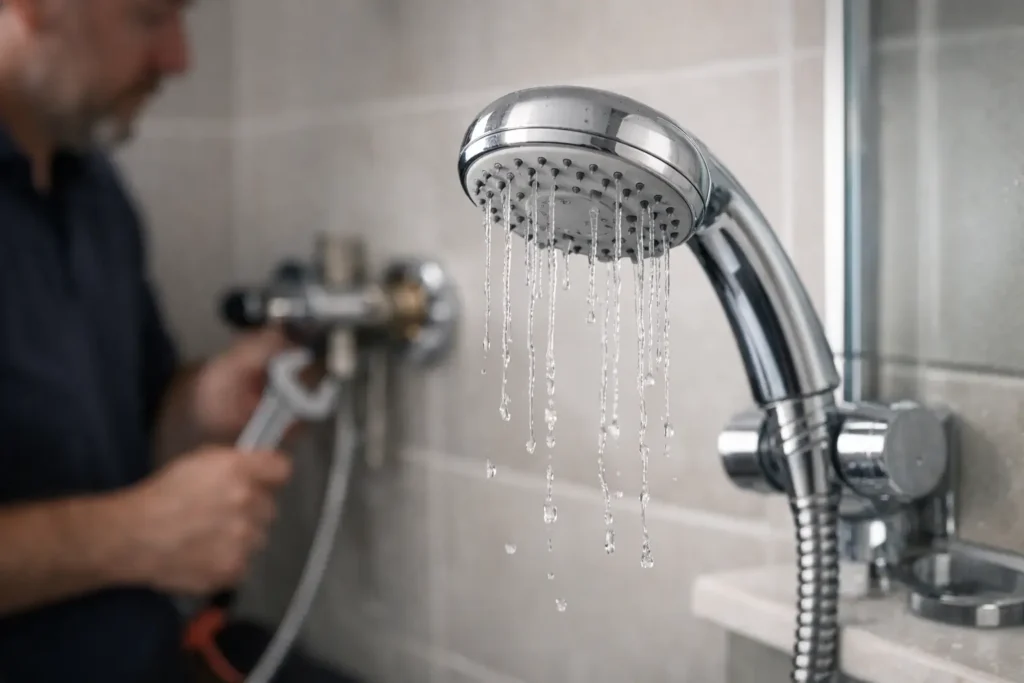
A blocked shower head is one of the most common causes, especially in hard water areas. Limescale and debris collect in the nozzles and reduce flow over time. The pressure may seem to drop gradually, which is why many people put up with it longer than they should.
A partially closed isolation valve can also cause trouble. These valves are often fitted near the shower or elsewhere on the pipework. If one has been knocked, adjusted during previous work, or not reopened properly, the shower may never perform as it should.
Faulty shower valves are another regular issue. If the valve is worn, blocked internally, or not mixing water properly, you may notice poor pressure, unstable temperature, or both. In mixer showers, internal parts can wear down and affect flow even when the pipework itself is fine.
Flexible shower hoses can split internally or become kinked. From the outside they may look acceptable, but inside they can restrict water movement. This is a simple fault, but it is often overlooked.
In some homes and business premises, older pipework is the problem. Build-up inside the pipes, poor pipe sizing, or past repair work that has left the system less efficient can all reduce shower performance. If the issue has always been there rather than appearing suddenly, installation quality or system design may be part of the story.
When pressure drops suddenly
A sudden loss of shower pressure usually means something has changed. It could be a leak, a blockage, a failed component, or a supply issue. If the shower was working well last week and is now struggling, that shift is useful information.
Start by checking whether other outlets are affected. If the kitchen tap, basin taps, or toilet filling are also slower than usual, the issue may not be isolated to the shower. If only the shower has changed, focus there first.
A hidden leak is one possibility that should not be ignored. Water escaping from a damaged pipe can reduce pressure and cause damage behind walls, under floors, or into ceilings below. Damp patches, staining, musty smells, or unexplained water marks alongside pressure problems are signs to take seriously.
For landlords, letting agents, hotels, and other occupied properties, a sudden pressure issue can quickly become a tenant complaint or an operational headache. Showers that do not work properly affect daily routines, guest satisfaction, and hygiene standards. Fast diagnosis matters.
Shower pressure problems explained in different property types
In a typical house, low pressure may only affect one bathroom because that shower is furthest from the supply or because its components are more worn than the rest. In flats and larger buildings, shared supply arrangements and pressure balancing can make diagnosis more complicated.
Commercial premises have their own challenges. In guest accommodation, gyms, staff washrooms, and changing areas, higher demand can expose weak points in the system. What seems like a small pressure issue in a domestic setting can become a repeated complaint when several people are using facilities across the day.
Rental properties also bring a practical consideration. If tenants report poor pressure, it is worth acting early rather than waiting until the issue develops into a leak or complete failure. A prompt repair is usually less disruptive and less expensive than dealing with damage after the fact.
What you can check before calling a plumber
There are a few sensible checks that can help narrow things down. Try the shower at different times of day. If the problem is worse during peak water use, supply demand may be playing a part. Check whether the issue affects hot, cold, or both. If only one side is weak, that points towards a specific feed or valve issue.
If your shower head can be removed safely, inspect it for limescale and debris. Also look at the hose for kinks or obvious wear. These are basic checks, but they can reveal simple faults quickly.
What you should not do is start dismantling concealed valves, forcing fittings, or opening up boxing without a clear idea of the system. A straightforward pressure issue can turn into a leak very quickly if the wrong part is disturbed.
When the problem is the shower, not the supply
Sometimes the water supply to the property is perfectly adequate and the shower itself is simply no longer performing well. This is common with ageing mixer units, worn cartridges, and showers that were never well matched to the available pressure in the first place.
That last point is important. Not every shower suits every system. A shower designed for stronger pressure may always feel disappointing if the property cannot provide what it needs. In that case, repair alone may not give a good result. Replacing it with a more suitable unit can be the better long-term option.
There is always a balance to strike between repair and replacement. If the shower is relatively modern and the fault is isolated, repairing it may be sensible. If the unit is old, unreliable, and already causing repeated issues, replacement is often the more cost-effective choice.
Why proper diagnosis saves money
Pressure problems are easy to underestimate because water is still coming through, just not properly. But ongoing poor pressure can be a warning sign of a bigger fault developing in the background. Delaying the investigation can mean more disruption later.
For homeowners, that might mean hidden water damage or a failed bathroom fitting at the worst possible time. For landlords and businesses, it can mean complaints, interrupted occupancy, inconvenience for staff or customers, and pressure to arrange urgent repairs instead of planned ones.
A good plumber will not just look at the shower head and guess. They will check how the system is configured, test where the pressure loss is happening, inspect likely restriction points, and explain whether the issue is local to the shower or part of a wider plumbing problem. That practical approach avoids wasted money on parts that were never going to solve the issue.
When to get help
If the shower pressure has dropped suddenly, if the temperature keeps fluctuating, if there are signs of leaking, or if simple cleaning has made no difference, it is time to get it checked. The same applies if the problem keeps returning after temporary fixes.
In busy homes and occupied commercial properties, it is usually better to deal with shower faults early. A weak or unreliable shower can be a sign of wear elsewhere in the system, and the longer it is left, the more inconvenient the repair may become.
If you need a clear answer and a practical fix, HJZ Plumbing can help identify the cause and carry out the right repair with minimal disruption. For shower faults, plumbing repairs, and urgent callouts, contact HJZ Plumbing on 01482 236483 or visit www.hjzplumbing.com. A quick check now can prevent a much bigger problem later.