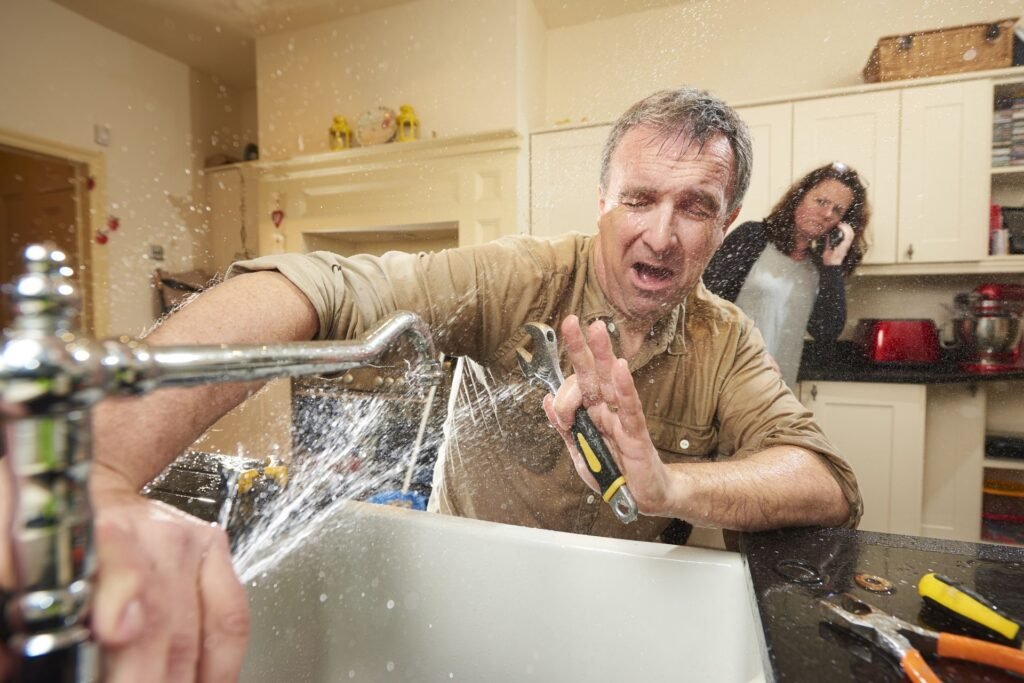
A blocked drain rarely stays a small inconvenience for long. Water that takes too long to disappear from the sink, a toilet that rises instead of flushing away, or a bad smell around a gully can quickly disrupt a home or business. Professional drain cleaning Bridlington services deal with the cause of the blockage, helping to protect your property from overflowing water, hygiene problems and avoidable damage.
For households, the pressure often comes when the kitchen sink cannot be used or the only toilet is unreliable. For landlords, letting agents and business owners, a drainage issue can mean tenant complaints, unhappy customers or a forced interruption to normal trading. Acting early is usually cleaner, simpler and less expensive than waiting for the drain to stop completely.
When a drain needs more than a quick fix
Many blockages begin gradually. A sink may gurgle after use, the shower tray may take a little longer to empty, or an unpleasant odour may appear intermittently. These signs can be easy to put off, particularly if the drain still works most of the time. However, they often indicate a restriction building up inside the pipework.
Kitchen drains commonly collect fat, grease, food waste and detergent residue. In bathrooms, soap deposits, hair and toiletries can narrow the pipe over time. Toilets may block because of excess paper, wipes or items that should never be flushed. Outside drains can be affected by leaves, silt, broken covers or debris washed into gullies during wet weather.
A plunger may be enough for a very minor, local blockage. It is less likely to solve a deeper obstruction, repeated problem or blockage affecting more than one fixture. If water backs up in a sink when the washing machine drains, for example, the issue may sit further along the waste pipe rather than in the trap under the sink.
Drain cleaning Bridlington for homes and businesses
The right approach depends on where the blockage is and what is causing it. A bathroom basin that drains slowly needs a different solution from an external drain overflowing near a commercial kitchen. A reliable plumber should assess the symptoms first, explain what is likely happening and use a suitable method to clear the restriction without causing unnecessary disruption.
At a domestic property, this may involve clearing a blocked trap, removing a build-up from waste pipes or dealing with a toilet blockage safely and hygienically. In rental homes, prompt action can prevent water overflowing into a hallway, kitchen unit or neighbouring flat. It also helps landlords resolve an issue properly rather than arranging repeated visits for the same fault.
For cafés, restaurants, hotels and takeaways, drainage problems need particular attention. Grease, food particles and high daily use can put substantial pressure on kitchen waste systems. A slow drain is not just inconvenient when staff are busy – it can create odours, hygiene concerns and disruption to service. Shops, offices, schools and other occupied premises also need work carried out with care, clear communication and respect for staff, visitors and customers.
HJZ Plumbing provides practical drain cleaning support across Bridlington and the wider East Yorkshire area, with a focus on getting the system working again and giving straightforward advice on preventing a repeat problem.
Signs you should arrange help promptly
A full blockage is not the only reason to call a plumber. Waiting can allow water to find its way into places it should not be, including cupboards, floors and wall finishes. Contact a professional sooner rather than later if you notice several warning signs at once, such as slow drainage, gurgling noises, foul smells and water rising in a toilet or shower tray.
Pay close attention if more than one drain is affected. A blocked kitchen sink on its own may be caused by waste close to the sink. But if the sink, toilet and bath are all draining poorly, this can point to a larger issue further along the drainage run. Similarly, an outside gully that fills after using appliances indoors should not be ignored.
Overflowing drains need urgent attention. Keep people and pets away from contaminated water where possible, avoid using affected sinks, toilets or appliances, and do not attempt to force the blockage through with large amounts of water. This can make the overflow worse and increase the clean-up required.
Why chemical drain cleaners can create problems
Shop-bought chemical cleaners may seem like a quick answer, but they are not always the safest or most effective choice. Some are only capable of shifting light surface build-up. If the blockage is caused by a solid object, heavy grease accumulation or an issue further down the pipe, the product may sit in the drain without solving anything.
Strong chemicals can also be unpleasant to handle and may damage certain pipework, seals or fittings if used repeatedly. They create a further risk for anyone who later needs to work on the drain, particularly if the chemical remains trapped in standing water. Never mix cleaning products, and do not use chemical products before a professional visit without mentioning exactly what has been used.
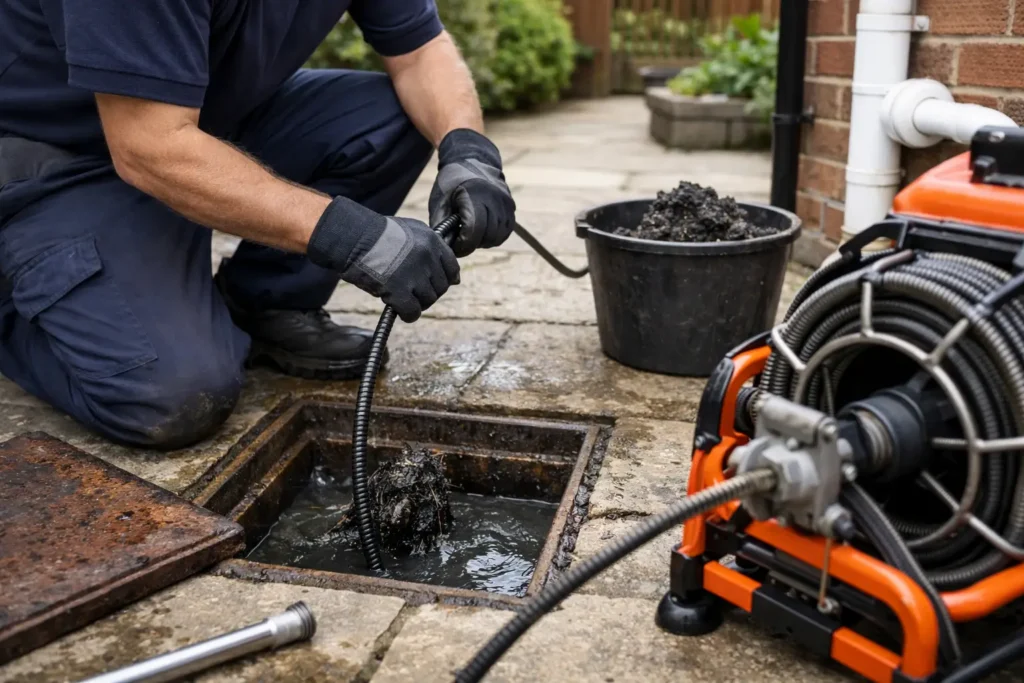
A mechanical clean is often the more sensible option. It targets the physical obstruction and allows the person carrying out the work to judge whether the drain is now flowing freely. If there is an underlying defect, such as damaged pipework or a recurring build-up point, that can be discussed clearly rather than masked for a few days.
Small habits that help keep drains clear
Good drainage maintenance does not need to be complicated, but it does need to be consistent. In kitchens, allow cooking fat and oil to cool, then dispose of it in the bin rather than pouring it down the sink. Use a sink strainer to catch food scraps, and clear it regularly.
In bathrooms, remove visible hair from the plughole after showering or bathing. Only flush toilet paper and human waste – wipes, sanitary products, cotton buds, paper towels and dental floss belong in the bin, even when packaging suggests they are flushable. Outside, clear leaves and debris from gullies before they become compacted, especially after windy weather.
These steps reduce everyday build-up, but they cannot correct a blockage caused by damaged pipes, a poorly draining section of pipework or a problem beyond the property’s internal plumbing. If the same drain keeps blocking despite sensible use, it is worth arranging an inspection rather than repeatedly trying temporary remedies.
What to expect from a professional visit
When you contact a local plumber about a blocked drain, giving a clear description helps them prepare. Explain which fixtures are affected, whether water is overflowing, when the problem started and whether it has happened before. If the property is commercial, mention any immediate hygiene or trading concerns.
On arrival, the work should begin with a practical assessment of the affected area. The aim is to identify whether the blockage is local to a sink, shower, toilet or waste pipe, or whether an outside drainage point is involved. The plumber can then clear the blockage using appropriate equipment and check that water is flowing away as it should.
Tidy working matters, particularly when drainage water is involved. A careful approach helps limit mess inside occupied homes and businesses, while clear advice afterwards gives you a better chance of avoiding the same issue. Sometimes the answer is a straightforward clear-out. At other times, repeated blockages may indicate that further investigation or repair is the sensible long-term choice.
A drain that is slow today can become an overflow at the worst possible time. For dependable drain cleaning in Bridlington, honest advice and prompt practical help, contact HJZ Plumbing directly on 01482 236483.