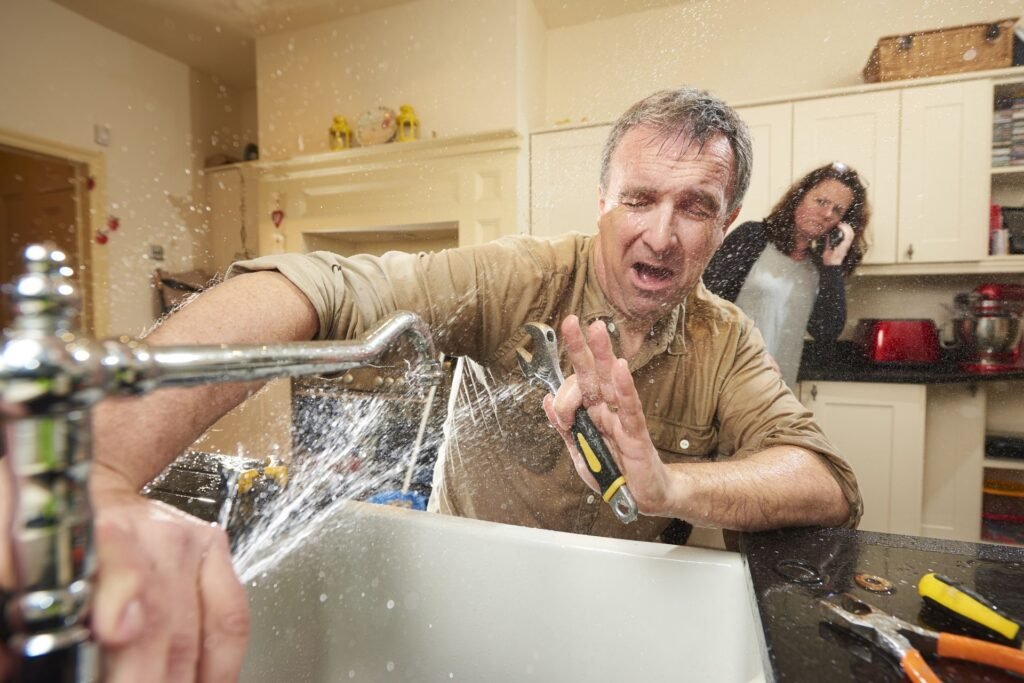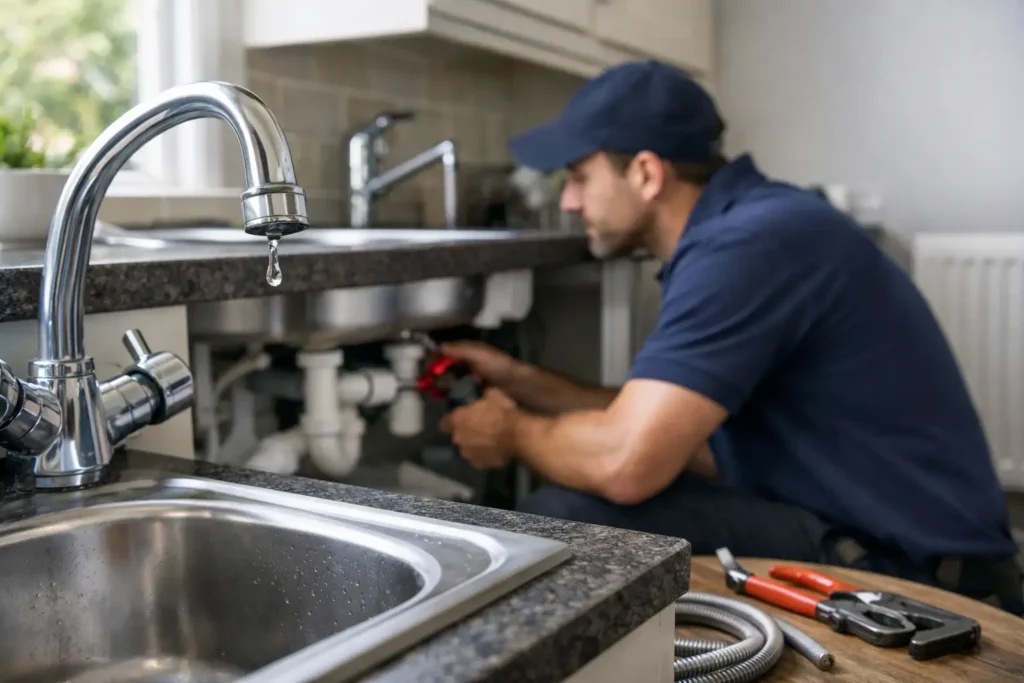
A tenant reports water dripping through the kitchen ceiling on a Sunday evening, the toilet will not flush, or the shower suddenly runs cold. These are not issues that can wait for the next routine inspection. Understanding landlord plumbing responsibilities UK helps landlords and letting agents act quickly, protect the property and give tenants a safe, usable home.
For most rental properties, the starting point is simple: if the plumbing installation or pipework has failed through age, wear, poor installation or an underlying defect, it is normally the landlord’s job to put it right. The difficult part is often establishing what has caused the problem, how urgent it is and whether the tenant has played a part.
What are a landlord’s plumbing responsibilities in the UK?
In England and Wales, landlords generally have repairing obligations under Section 11 of the Landlord and Tenant Act 1985. This includes keeping the structure and exterior of the property in repair, along with installations for the supply of water, sanitation and heating and hot water.
In practical plumbing terms, this commonly covers fixed pipework, water tanks, drains serving the property, sinks, baths, basins, toilets, taps, showers and associated waste pipes. A landlord should also deal with leaks caused by defective pipes or fittings, failed toilet components, damaged seals, persistent drainage faults and problems with the property’s fixed water supply.
The exact legal position can vary between England, Wales, Scotland and Northern Ireland, and tenancy agreements may add further obligations. However, a tenancy agreement cannot remove a landlord’s core legal repairing duties. If you manage properties across different parts of the UK, it is sensible to check the rules that apply where each property is located.
Repairs must be completed within a reasonable time
The law does not set one fixed number of days for every plumbing repair. Instead, landlords must carry out repairs within a reasonable time after they have been told about the problem. What is reasonable depends on the seriousness of the fault.
A burst pipe, active leak, overflowing toilet or blocked drain causing sewage backup needs urgent attention. Water can damage ceilings, flooring, electrics, stock and neighbouring properties within a short time. A property with only one toilet may become unsuitable to live in if it cannot be used, so this should be treated as a priority too.
A dripping tap or slow-draining basin may not require an emergency callout, but it should not be left for months. Small leaks can stain units, rot flooring and inflate water bills. Slow drainage can be the early warning sign of a developing blockage. Prompt repairs are usually cheaper, tidier and less disruptive than waiting for a minor issue to become an emergency.
Keeping a clear record is good practice. Note when the tenant reported the issue, what was reported, when access was arranged, what repair was completed and whether further work is needed. Clear communication can prevent a straightforward repair becoming a tenancy dispute.
When is a tenant responsible for plumbing damage?
Tenants are expected to use the property in a tenant-like manner. That means taking reasonable everyday care, reporting faults promptly and not causing avoidable damage.
For example, a tenant should not flush wipes, sanitary products, cotton buds, cooking fat or other unsuitable items down toilets and drains. They should also report a leaking pipe, loose toilet, faulty shower or blocked sink as soon as they notice it. Ignoring a visible leak until it damages a kitchen ceiling can make the resulting repair more expensive.
If a blockage or damage has clearly resulted from misuse, the tenant may be responsible for the cost. This might include a drain blocked by inappropriate items, a cracked basin caused by impact or damage caused by an unreported overflow. However, it is not always obvious what caused a problem. A blocked drain may stem from old pipework, poor falls, root ingress or a fault outside the tenant’s control.
That is why a proper inspection matters. Avoid making assumptions or automatically passing an invoice to the tenant. A plumber can investigate the fault, explain the likely cause and provide a practical recommendation based on what is actually found.
Access, notice and emergency repairs
Landlords need access to inspect and repair plumbing faults, but tenants are entitled to quiet enjoyment of their home. In normal circumstances, landlords should give at least 24 hours’ written notice before entering and arrange a reasonable time.
Emergencies are different. If water is escaping, a ceiling is bulging, a toilet is overflowing or there is an immediate risk of serious damage, access may be required without the usual notice. Even then, communication matters. Try calling and messaging the tenant, explain the risk and record the steps taken.
For managed properties, make sure tenants know who to contact outside normal hours. A simple instruction can reduce damage: turn off the internal stop tap if it is safe to do so, avoid using the affected fitting and move belongings away from the leak. Tenants should never be expected to carry out repairs themselves unless it is a straightforward, safe action such as turning off a water supply.
Common plumbing issues landlords should not ignore
Some faults look minor until they affect another part of the building. A regular maintenance plan is particularly useful in older homes, converted flats, shared houses and commercial lets where plumbing receives heavier use.
Watch for these recurring problems:
- Dripping taps, leaking toilet cisterns and loose pipe connections, which can cause hidden water damage and wasted water.
- Slow drains, unpleasant smells and recurring blockages, which may point to a partial obstruction or defective drainage.
- Damp patches beneath bathrooms, around shower trays or on ceilings below, often caused by failed seals, leaking wastes or damaged pipework.
- Toilets that run continuously, fail to flush properly or overflow, particularly where the property has only one bathroom.
- Poor radiator performance caused by leaks, air or sludge within the system, which can leave tenants uncomfortable and lead to further callouts.
Inspections between tenancies are a sensible time to test toilets, showers, taps, wastes and isolation valves. Look inside kitchen and bathroom units for staining, check silicone around baths and shower trays, and make sure tenants can identify the stop tap. It is far easier to repair a worn washer or leaking waste before a new tenant moves in than to arrange access after damage has appeared.
Landlord plumbing responsibilities UK: a practical response plan
When a tenant reports a plumbing problem, start by asking a few focused questions. Is water still running? Is the issue affecting the only toilet, kitchen sink or shower? Has there been a smell, overflow or visible ceiling damage? Can the tenant send photographs or a short video?
This information helps separate an urgent attendance from a repair that can be booked promptly. It also allows the plumber to arrive with a clearer understanding of the likely fault, reducing delays and repeat visits.
For an active leak, advise the tenant to stop using the affected fitting and turn off the water at the stop tap if they know where it is and can do so safely. If water is near lights, sockets or electrical equipment, they should keep clear of the area and seek urgent help. Do not ask tenants to remove panels, dismantle toilets or attempt improvised repairs.
Once the immediate fault is controlled, consider the underlying cause. Replacing a failed tap cartridge may be enough in one property. In another, repeated leaks from old pipework may justify a planned upgrade. The lowest upfront cost is not always the best choice if the same fault is likely to disrupt tenants again a few months later.
Protecting your property and your tenants
Good landlord maintenance is not about responding only when something fails. It is about giving tenants a clear reporting route, dealing with urgent faults without delay and using competent tradespeople who leave the property tidy and explain what has been done.
For landlords and letting agents in Hull, Beverley and the surrounding East Yorkshire area, HJZ Plumbing can help with urgent leaks, blocked drains, toilet and shower repairs, pipework faults and planned maintenance. If a plumbing issue is affecting your tenant or putting your property at risk, call 01482 236483 or contact HJZ Plumbing through www.hjzplumbing.com for clear advice and a practical repair.