A toilet that keeps hissing, trickling or refilling long after you have flushed it is more than a nuisance. If you are asking why does toilet keep running, the usual answer is that water is escaping from the cistern when it should be sealed, so the toilet keeps topping itself up. Left alone, that can waste a surprising amount of water, push up bills, and in some properties lead to staining, damp or a more serious fault if another part finally gives way.
In a busy home, a rental property or a customer toilet in a café, shop or office, a running toilet quickly becomes one of those problems that starts small and then causes ongoing frustration. The good news is that the fault is often straightforward. The less good news is that there is no single cause in every case, and guessing can mean replacing the wrong part.
Why does toilet keep running after flushing?
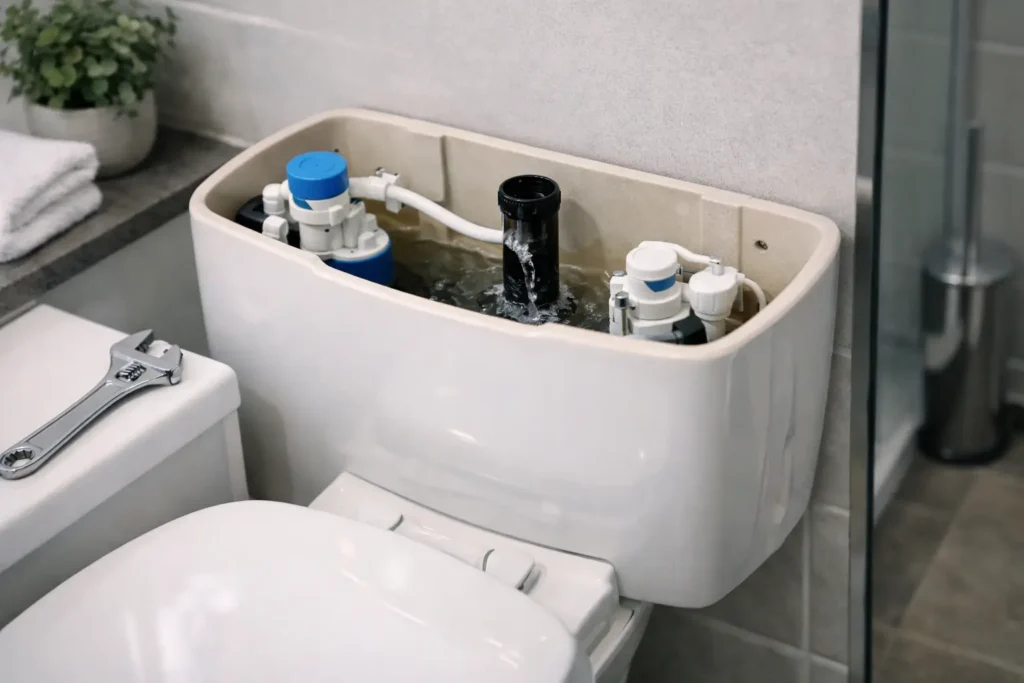
Most running toilets come down to one of three issues. The flush valve is not closing properly, the fill valve is letting too much water in, or the water level is set too high and spilling into the overflow. Different toilet designs use slightly different parts, but the principle is the same. The cistern should fill to the correct level, stop, and stay sealed until the next flush.
If any part of that process fails, the toilet will keep running in one of two ways. Either water continues to enter the cistern, or water leaks out of it into the pan. In many cases, both happen at once. The cistern loses water slowly, the fill valve senses the drop, and it keeps refilling in short bursts.
That is why some customers notice a constant trickle into the pan, while others hear the toilet refill every few minutes even though no one has used it.
The most common causes
A worn flush valve seal
This is one of the most common faults. The flush valve opens when you press the button or handle, then drops back down to seal the outlet at the bottom of the cistern. If the seal has become worn, distorted or coated with limescale, it may not sit properly. Water then seeps into the pan all the time.
In practical terms, this often shows up as a faint ripple in the toilet bowl or a quiet trickling sound. It may seem minor, but a slow leak can waste a lot of water over weeks and months.
The water level is too high
Inside the cistern, the fill valve controls how much water comes in. If it is set too high, or if it is sticking, the water level can rise above where it should. Once that happens, the excess water runs into the overflow and then into the pan.
This can look like a flush valve problem, but the cause is different. Instead of water leaking past a bad seal, the cistern is simply overfilling. That matters because the repair may be an adjustment or a fill valve replacement, not work on the flush valve.
A faulty fill valve
Fill valves wear out with age. Debris, limescale or general wear can stop them from shutting off cleanly. Sometimes they let water in continuously. Other times they work intermittently, which is why the problem can seem to come and go.
In some properties, especially where toilets get heavy daily use, these parts simply reach the end of their working life faster. Commercial premises, shared houses and family homes often see that sooner than a lightly used downstairs loo.
Problems with the float
Some cisterns use a float attached to the fill valve. If the float is damaged, jammed, set incorrectly or catching on the side of the cistern, it may not rise properly. That prevents the valve from shutting off at the right point.
It is a simple issue in theory, but there can still be a bit of trial and error. A float that looks fine at first glance may only stick once the cistern lid is back in place.
Limescale and internal wear
In older toilets, small deposits of limescale or wear on internal moving parts can stop valves from sealing or moving freely. That is why some toilets run constantly after flushing, while others only do it now and then. The part may be close to failure rather than completely gone.
What you can check safely
If you are comfortable lifting the cistern lid, there are a few sensible checks you can make before calling a plumber. Start by looking at the water level. If it is right up near the overflow, the fill valve may be overfilling. If the water level seems normal but you can still see water trickling into the pan, the flush valve seal is a likely suspect.
Try flushing once and watch what happens as the cistern refills. Does the water stop at the right level? Does the fill valve keep running? Does the flush mechanism drop back neatly, or does it look as though it is not seating properly?
If the toilet has an isolation valve on the supply pipe, you can turn the water off and see whether the cistern still loses water into the pan. If it does, that usually points to a leak past the flush valve rather than a fill issue.
That said, there is a limit to how far DIY checking should go. Toilet parts vary, concealed cisterns can be awkward to access, and forcing brittle plastic fittings often creates a bigger job than the original fault.
When a running toilet is more urgent than it seems
A lot of people put up with a running toilet because it still flushes. From a distance, it can feel like a minor annoyance rather than a repair that needs dealing with. In reality, it is worth sorting quickly.
For homeowners, the main issue is wasted water and the chance that a simple part failure becomes a leak. For landlords and letting agents, a toilet that runs constantly can lead to complaints, higher utility costs and avoidable call-backs. In hotels, cafés, restaurants, schools or offices, it can also create a poor impression and raise hygiene concerns if the toilet is not working as it should.
There is also the question of hidden strain on older fittings. A valve that keeps running today may stick fully open tomorrow. If the overflow is not coping properly, or if there is another weakness in the cistern, the risk of water damage goes up.
Why a proper diagnosis matters
When people search why does toilet keep running, they often want a quick fix, and sometimes a simple adjustment is all that is needed. But replacing parts based on guesswork can waste time and money. One toilet may need a new seal, another a full fill valve replacement, and another may have multiple worn components that make a partial repair poor value.
That is especially true with older cisterns, compact modern units, and concealed systems where access takes longer. In those cases, the best repair is not always the cheapest single part. Sometimes fitting a complete new internal mechanism is the more reliable option and saves another breakdown a few weeks later.
A good plumber will usually look at the condition of the whole cistern, how accessible it is, and whether the existing parts are worth preserving. Honest advice matters here because there is a difference between a quick patch and a repair that actually lasts.
Why does toilet keep running in rental and commercial properties?
In rental and commercial settings, toilet faults tend to show up faster because usage is heavier and maintenance is often delayed until the problem becomes disruptive. Tenants may ignore a small trickle for weeks. Staff may assume someone else has reported it. By the time a landlord, facilities contact or manager hears about it, the toilet has been wasting water for some time.
There is also less room for disruption. A running toilet in a family home is inconvenient. In a restaurant, office, shop or shared building, it can affect staff, customers and day-to-day use of the property. Fast repair is often the sensible option simply to keep everything working normally.
When to call a plumber
If you have checked the obvious and the toilet still runs, it is time to get it looked at. The same applies if the toilet is leaking externally, the flush button is stiff or unreliable, the cistern is concealed, or the fault keeps returning after a temporary fix.
A plumber can identify whether the problem is the fill valve, flush valve, seal, float, water level setting or a combination of faults. More importantly, they can repair it cleanly and test it properly so you are not left wondering whether it will start again the next day.
For customers in Hull, Beverley and surrounding parts of East Yorkshire, HJZ Plumbing helps with toilet repairs, leaks and other plumbing faults that need sorting quickly and properly. If your toilet keeps running, do not leave it to waste water or turn into a bigger problem. Call 01482 236483 or get in touch through www.hjzplumbing.com and get it fixed before the small annoyance becomes an expensive one.