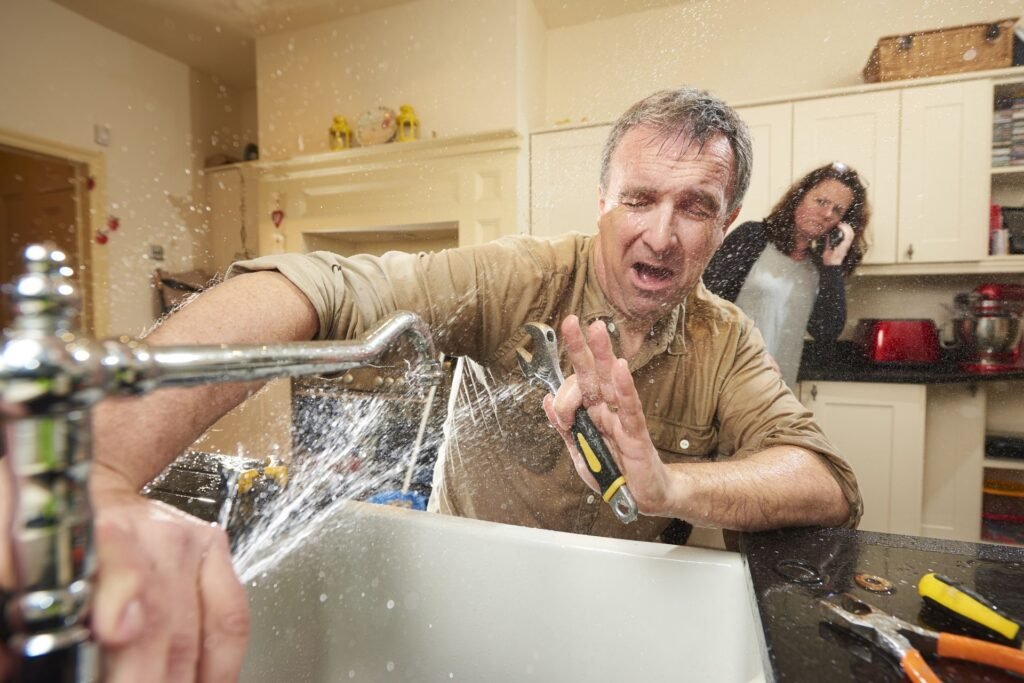
Water coming through a ceiling or pooling across a kitchen floor can turn a normal day into a costly mess in minutes. The right burst pipe emergency steps can make a real difference, not just to the repair bill, but to floors, plaster, electrics, stock, furniture, and how quickly your home or business gets back to normal.
The first thing to do is stop the water supply if you can do so safely. In most properties, that means turning off the internal stop tap, usually found under the kitchen sink, in a downstairs cupboard, or where the water main enters the building. Turn it clockwise until it stops. If you manage a commercial unit or a larger building, the isolation point may be in a plant room, service cupboard, or near the meter. If the burst is affecting one appliance line or a visible section of pipework with its own isolation valve, shutting off that section may be enough, but if there is any doubt, switch off the main supply.
Once the water is off, think about electricity. If water is near sockets, light fittings, consumer units, or any electrical equipment, do not step into standing water to investigate. If you can safely reach the power supply without going near the affected area, turn it off. If not, stay clear and get professional help. A burst pipe is not just a plumbing problem when water is spreading into walls, ceilings, or service areas.
After that, open taps to drain the remaining water from the system. Start with the cold taps and flush toilets if possible to reduce pressure in the pipework. This will not repair the burst, but it can slow drips and reduce the amount of water still trapped in the line. If the property has a hot water cylinder, you may need to be more cautious, especially if the damage is near hot pipework. For most people, the priority is simple – isolate the supply, drain what you safely can, and avoid making the situation worse.
Burst pipe emergency steps to take straight away
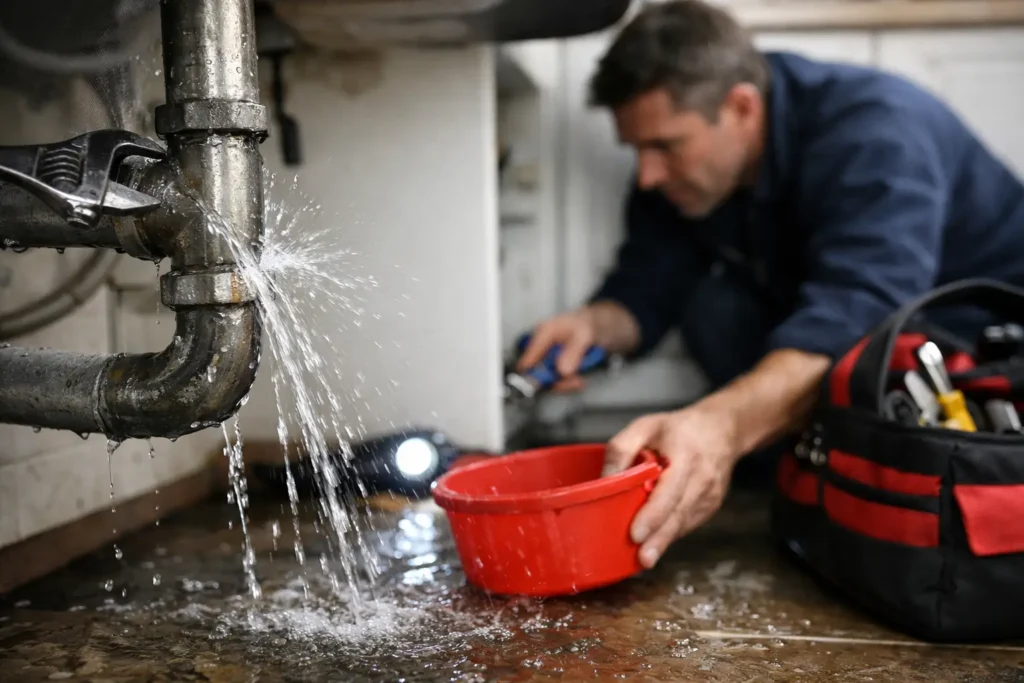
With the immediate risk reduced, focus on limiting damage inside the property. Move rugs, towels, paperwork, stock, soft furnishings, and small electrical items away from the leak. Put a bucket, washing-up bowl, or deep tray under the burst if the water is still dripping. Use towels to contain spread at doorways or along skirting boards. In a business setting such as a café, shop, office, or school, keeping water away from walkways matters just as much as protecting finishes, because slips become a risk very quickly.
If water is coming through a ceiling, do not ignore any bulging. A ceiling holding water can become unstable. It may be tempting to poke a hole and let the water out, but that depends on what is above it, where light fittings are, and whether electrics are involved. In many cases, the safer option is to keep people out of that room and wait for a professional to assess it.
Take photos once the situation is under control. That can help with insurance and also gives your plumber a clearer picture if the leak slows down before they arrive. Try to note where the water first appeared, whether it affected hot or cold supply, and whether there were warning signs beforehand such as banging pipes, loss of pressure, damp patches, or freezing weather.
What not to do during a burst pipe emergency
A rushed response often causes extra problems. One of the most common mistakes is assuming the leak has stopped just because the visible water flow has eased. There may still be water trapped in ceilings, wall cavities, floor voids, or insulation. Another is trying to patch the pipe with tape, sealant, or makeshift wraps and then turning the water back on too soon. Temporary fixes have their place, but only as a short-term measure while the system remains isolated.
It is also wise not to start cutting into walls, boxing, or ceilings unless you are certain where the pipe runs and what other services are nearby. In homes and occupied premises, tidy, careful access matters. In commercial properties, unnecessary damage can create downtime, hygiene concerns, and extra reinstatement costs.
Portable heaters can help dry a room, but they should never be used carelessly around wet materials or electrical hazards. If the burst has affected laminate flooring, cupboards, skirting, plasterboard, or commercial interiors, drying needs to be controlled properly. Speed matters, but so does doing it safely.
Temporary measures while waiting for a plumber
If the pipe is exposed and the water has been isolated, a pipe repair clamp or emergency pipe repair bandage may help hold the damage temporarily. These are not a substitute for a proper repair, but they can sometimes reduce residual dripping. The key point is that the water supply should remain off until the pipe has been professionally repaired and tested.
In colder months, if the burst appears to have been caused by a frozen pipe, do not use naked flames or aggressive heat to thaw the area. A gentle increase in room temperature is safer. Frozen sections can split in more than one place, so even if one crack is visible, there may be another further along the run.
For landlords and letting agents, communication matters as much as the repair itself. If a tenant reports a burst pipe, ask them to turn off the stop tap if they know where it is, move belongings away from the leak, and avoid electrics in wet areas. A quick, clear response can prevent a small failure becoming a major claim.
When a burst pipe is more urgent than it first looks
Some leaks are obvious emergencies. Others seem manageable at first and then escalate. Water staining on a ceiling, a sudden drop in pressure, noisy pipework, a damp smell, or unexplained pooling can all point to a hidden split. In restaurants, cafés, hotels, schools, and offices, even a modest leak can disrupt toilets, kitchens, wash areas, customer spaces, and staff facilities.
The more urgent cases usually involve one or more of the following: water near electrics, damage spreading between floors, a property that cannot be left without water for long, vulnerable occupants, or business premises where hygiene and access are affected. A burst pipe behind fitted units or in a wall can also become more serious because the water travels before it becomes visible.
This is where experience matters. A proper repair is not just about replacing a cracked section. It is about finding out why it failed. That could be freezing, corrosion, movement, poor previous workmanship, excess pressure, or ageing fittings. If the cause is missed, the same problem can return elsewhere.
Preventing the next burst pipe emergency
Prevention is usually cheaper than repair, but it depends on the property. In an older house, vulnerable spots might include exposed pipework, loft spaces, outside taps, and under-sink runs. In a rented property, the biggest issue may be not knowing there is a slow leak until a tenant reports staining or water loss. In a commercial building, busy kitchens, washrooms, staff areas, and service voids tend to need more regular checks.
Insulating exposed pipes helps in winter, but insulation alone is not a guarantee. If a building is left empty during cold weather, keeping some background heat and knowing where the isolation valves are can save a lot of trouble. It also helps to check for early signs such as green staining on copper, recurring damp smells, loose joints, or unexplained drops in pressure.
Routine maintenance is especially worthwhile for landlords, letting agents, and business owners with occupied premises. A small leak repaired early is far less disruptive than a burst pipe that closes a washroom, damages a tenant’s belongings, or forces part of a business to stop trading.
If you need fast help with a burst pipe, leak, or urgent plumbing fault, contact HJZ Plumbing on 01482 236483 or through www.hjzplumbing.com. If you are in Hull, Beverley, or the surrounding area, getting the problem assessed quickly can protect your property, reduce disruption, and give you a clear plan for putting things right.