A blocked drain in Hull rarely stays a small problem for long. What starts as a slow-draining sink or a toilet that struggles to clear can quickly turn into bad smells, backed-up wastewater and the sort of mess no household wants to deal with. When drainage problems start affecting your kitchen, bathroom or outside gullies, acting early usually saves time, stress and money.
Why blocked drains happen more often than people expect
Most drains do not fail all at once. In many homes, the blockage builds gradually as grease, soap residue, food waste, hair and everyday debris collect inside the pipework. At first, the signs are easy to brush off. Water takes a little longer to drain away, or there is an occasional gurgling sound after flushing the loo. Then one day the water stops moving altogether.
Older properties can be more prone to drainage issues, but newer homes are not immune. Sometimes the problem is inside the home, such as a build-up in a waste pipe under the sink. In other cases, the issue sits further out in the drainage run, where leaves, silt, wipes or even tree roots interfere with normal flow. It depends on the layout of the drainage system and what has been going down it over time.
For landlords and homeowners, that is why a blocked drain is not just a nuisance. It can affect hygiene, cause damage around fittings and flooring, and make kitchens and bathrooms difficult to use properly.
Signs you may have a blocked drain in Hull
Some drainage problems are obvious, but others creep up. If you notice water draining slowly from a basin, bath or shower, that is often the first sign that something is restricting the flow. Toilets that rise higher than usual before emptying, or need more than one flush, can point to a developing blockage too.
Unpleasant smells matter as well. If there is a foul odour coming from plugholes, outside drains or near the toilet, trapped waste may be sitting in the pipework. Gurgling noises are another common warning sign, especially when air is forced around a partial blockage.
Outside, standing water around gullies or drains after normal use can suggest the problem is beyond a single appliance. If more than one fitting is backing up at the same time, the blockage may be further along the system and worth dealing with quickly before it worsens.
What you can safely try before calling a plumber
Not every blocked drain needs major work straight away. If the issue is mild and limited to one sink or basin, there are a few sensible checks you can make. Removing visible debris from the plughole or trap can sometimes solve the problem, particularly in bathroom basins where hair and soap residue are common causes.
A careful flush with hot water and washing-up liquid may help shift greasy build-up in some kitchen wastes, but this only works for light blockages. If you use a plunger, make sure you create a proper seal and avoid forcing too aggressively, especially on older fittings.
What is usually not worth the risk is pouring harsh chemical drain cleaners down repeatedly. These products can damage pipework, create fumes and make later repair work more awkward. They also tend to mask the symptom rather than sort the real cause. If the drain remains slow or backs up again soon after, there is likely a deeper issue that needs proper attention.
When a blocked drain needs professional help
There is a point where DIY stops being practical. If wastewater is backing up into sinks, showers or toilets, if an outside drain is overflowing, or if the blockage keeps returning, it is best to bring in a professional. The same applies when several fixtures are affected at once.
A recurring blocked drain in Hull homes can point to a larger obstruction in the line, a damaged section of pipe, or a problem that cannot be reached with simple household tools. In those cases, guessing tends to waste time. A proper assessment helps identify where the blockage sits and what is causing it, so the fix is based on the condition of the drainage system rather than trial and error.
That matters even more in family homes and rental properties, where delays can disrupt day-to-day life quickly. A blocked kitchen sink is frustrating enough. A blocked toilet or overflowing external drain is something most people want sorted as soon as possible.
Common causes of a blocked drain Hull households deal with
In kitchens, grease is one of the biggest culprits. Even when poured away as a liquid, fats and oils cool inside the pipe and begin to stick to the internal surface. Over time, they catch food particles and narrow the pipe until water can barely pass.
In bathrooms, hair, soap scum and hygiene products are frequent causes. Toilets often become blocked because unsuitable items have been flushed – wipes, cotton pads, sanitary products and too much paper are common examples. Even products labelled as flushable can create problems once they meet bends, joins or existing residue in the system.
Outside drains bring another set of issues. Leaves, mud and general debris can collect in gullies, while root ingress may affect older underground pipework. Heavy rain can also expose existing weaknesses, especially if drains were already partially obstructed. The exact cause matters because the right solution for grease build-up is not the same as the right solution for root damage or a collapsed section of drain.
Why quick action saves bigger repair costs
People often put off dealing with drainage issues because the water still goes down eventually. The trouble is that partial blockages usually get worse, not better. As residue builds, pressure and standing water increase, and that can lead to leaks around joints, unpleasant contamination or damage to nearby surfaces.
In bathrooms, repeated overflows can affect flooring, skirting boards and sealant. In kitchens, blocked wastes can interrupt daily use and create lingering odours. Outside, overflowing drains can make paths and entrances unpleasant and, in some cases, unsafe.
For landlords, there is also the tenant issue to think about. Drainage problems can quickly turn into urgent complaints, especially if a property has only one bathroom. Dealing with the problem early is normally far easier than handling a larger repair after repeated backups.
What a professional drain unblocking visit usually involves
A good drainage callout should be straightforward and clear. The first step is usually to assess which fittings are affected and where the blockage is most likely to be. Sometimes the issue is local to a trap or short run of waste pipe. In other cases, it is further down the system and needs different equipment to clear safely.
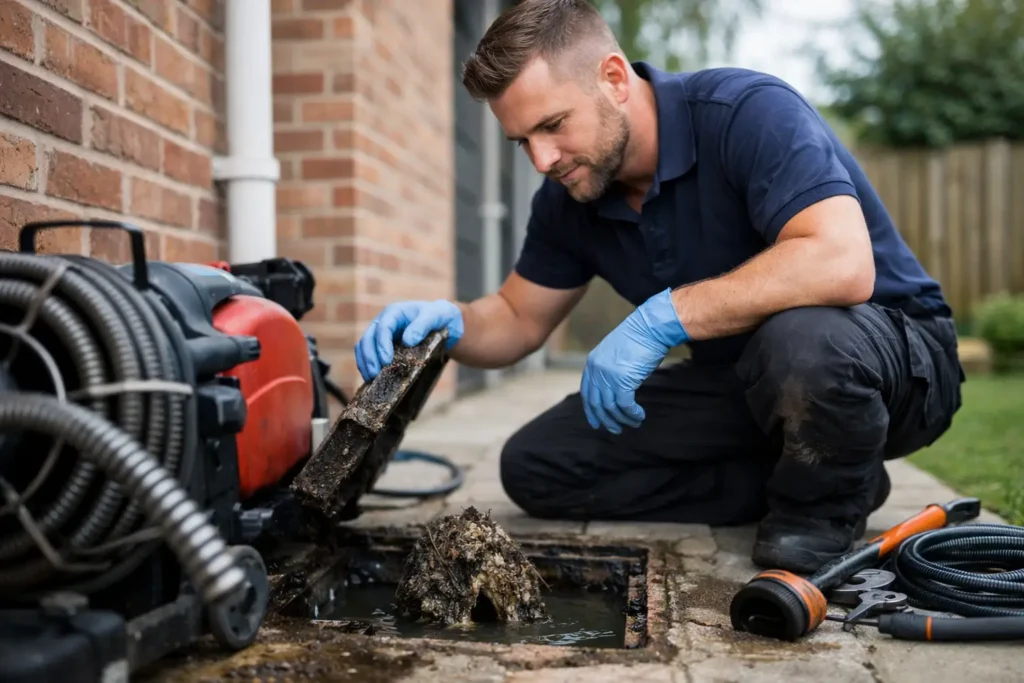
Professional drain unblocking may involve manual clearing, specialist rods or high-pressure methods, depending on the location and severity of the blockage. The goal is not simply to push water through once. It is to remove the obstruction properly and restore reliable flow.
If there are signs of a deeper fault, such as repeated blockages in the same area or obvious evidence of damaged drainage, further investigation may be advised. A dependable local plumber will explain what has been found in plain language and let you know whether the issue is a one-off blockage or part of a larger repair job.
Preventing the next blockage
Drain care is mostly about everyday habits. In the kitchen, avoid pouring fats, oils and grease down the sink, even with hot water. Use the bin for food waste where possible and keep a simple strainer over plugholes to catch debris.
In bathrooms, regular removal of hair from shower and basin wastes makes a noticeable difference. Toilets should only be used for toilet paper and human waste, regardless of what packaging claims. Outside, keeping gullies clear of leaves and surface debris can help reduce the chances of blockages developing further down.
That said, prevention is not always perfect. Some drainage systems are more awkward than others, and older pipework can be less forgiving. If a property suffers with repeated drain issues, it may be worth having the system looked at properly rather than treating each blockage as a separate event.
Choosing a local plumber you can trust
When you have drainage trouble, speed matters, but so does reliability. You want someone who turns up when expected, explains the problem clearly and treats your home with respect while they work. That is especially important when the issue is messy or urgent.
A local company with broad plumbing and drainage experience is often the most practical choice because blocked drains sometimes reveal related issues. A backup may be linked to a damaged toilet connection, a leaking waste pipe or a problem elsewhere in the plumbing system. Having one trusted contact who can deal with the full picture is often far less stressful.
At HJZ Plumbing, that approach matters. Customers want practical help, honest advice and work carried out with care, whether the problem is a simple waste blockage or part of a wider plumbing issue.
If your drain is slow, noisy or starting to back up, it is worth treating it as an early warning rather than waiting for a complete blockage. A quick response now is often the difference between a straightforward fix and a much bigger headache later.