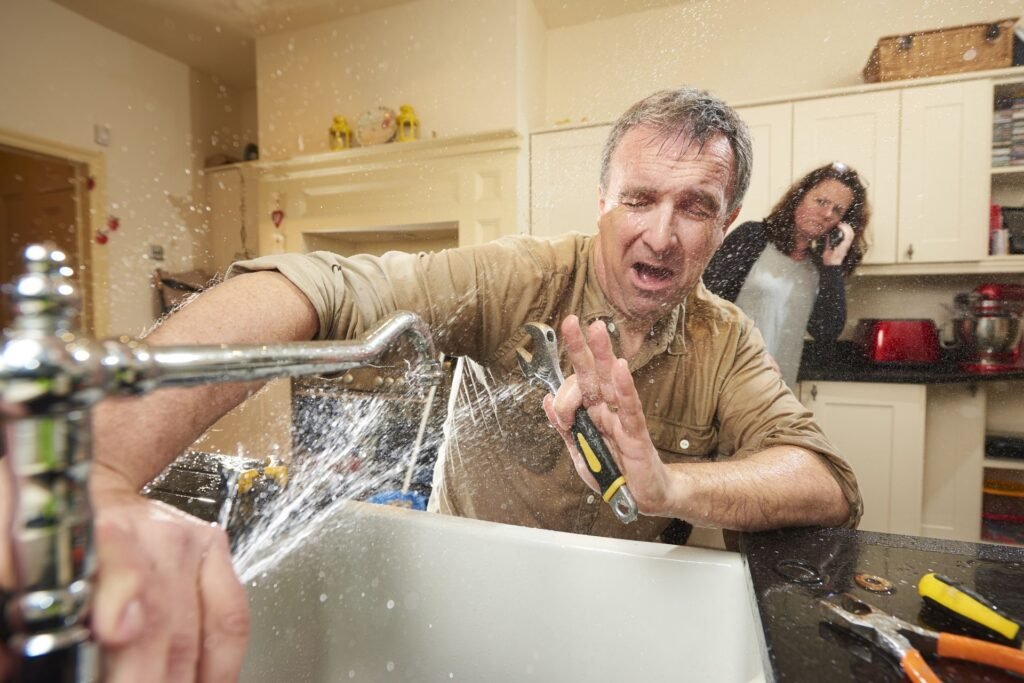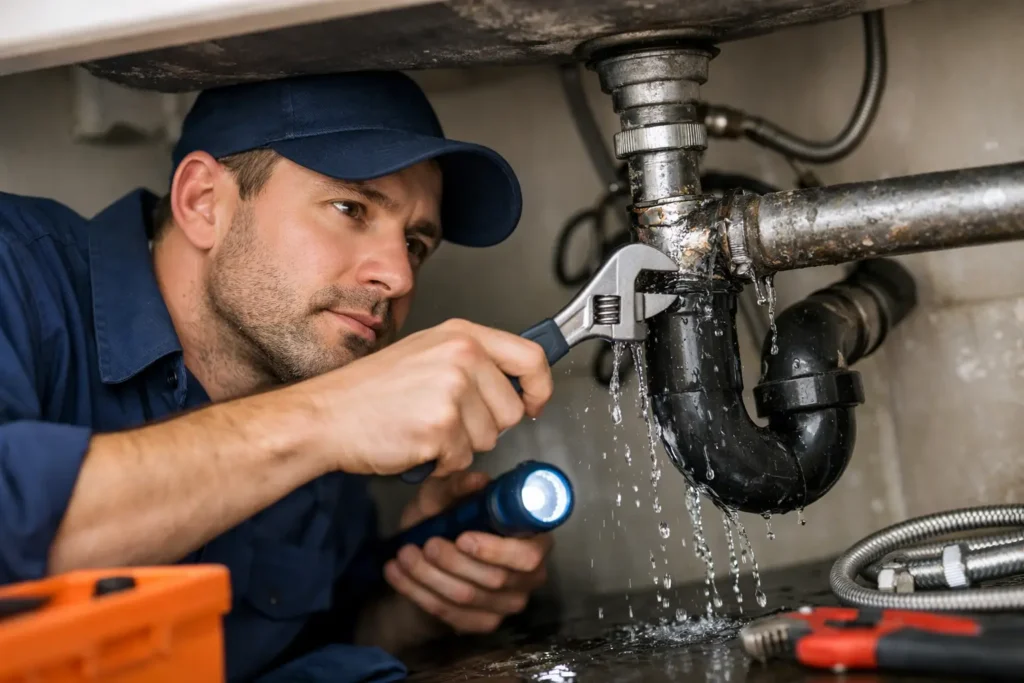
A leaking pipe rarely stays a small problem for long. What starts as a damp patch under the sink or a slow drip behind a toilet can quickly turn into damaged flooring, stained ceilings, mould growth, and a much bigger repair bill. If you need leaking pipe repair Hull homeowners can rely on, the first step is knowing what to do straight away and what should never be left until later.
Pipe leaks have a habit of appearing at the worst possible time. Sometimes it is obvious – a burst section under pressure, water running down a wall, or a puddle spreading across the kitchen floor. At other times, the signs are quieter. You might notice lower water pressure, a boiler topping up more often than normal, peeling paint, or a musty smell that was not there before. In both cases, speed matters.
When a pipe starts leaking, act first and inspect second
The safest first move is to stop the water supply if you can. For many homes, that means turning off the internal stop tap, usually found under the kitchen sink, in a utility area, or where the mains supply enters the property. If the leak is linked to a specific appliance or tap connection, isolating just that section may be enough.
Once the water is off, try to limit any further damage. Towels, buckets, and moving nearby belongings out of the way can make a real difference while you wait for a repair. If water is close to electrics, do not take chances. Keep clear and get professional help.
It is tempting to start taking pipework apart immediately, especially if the leak looks minor. Sometimes that works out. Just as often, it turns a manageable repair into a larger one. A joint that has failed may be hiding corrosion further back in the line, or a cracked pipe may be under more stress than it first appears.
Common causes of leaking pipe repair in Hull homes
Leaks are not all caused by the same thing, and the right repair depends on why the pipe failed in the first place. In older properties, wear and tear is often the main issue. Seals harden, fittings loosen, and metal pipework can corrode over time. In newer systems, poor installation, movement in the property, or pressure-related problems may be to blame.
During colder spells, frozen pipework is a common culprit. Water expands as it freezes, and that pressure can split a pipe or weaken a fitting. The leak may not show itself until the thaw begins, which can catch people off guard. A pipe that seemed fine overnight suddenly starts dripping or fully gives way in the morning.
There are also leaks caused by repeated strain rather than a single event. Pipes under sinks, behind toilets, around washing machines, and near boilers often deal with vibration, regular use, and occasional knocks from stored items or household cleaning. Over months or years, that can be enough to create a failure point.
Not all leaks are emergencies, but many are urgent
There is a difference between a plumbing emergency and a leak that still needs quick attention. A burst mains pipe, major ceiling leak, or water escaping near electrical fittings is clearly urgent. But even a slower leak should not be ignored just because it is not dramatic.
A small ongoing leak can damage timber, plaster, kitchen units, and floor coverings long before it becomes visible. For landlords and property owners, that can also mean issues with tenants, void periods, or extra remedial work that could have been avoided. For homeowners, it usually means the same repair ends up costing more because the surrounding area now needs attention too.
That is why leaking pipe repair Hull properties need is often less about panic and more about prompt action. The sooner the source is found and fixed properly, the less disruption there tends to be.
Temporary fixes can help, but they are not the finish line
There is a place for temporary measures. Pipe repair tape, leak seal products, or a simple catch container under a slow drip can help reduce immediate damage. If used carefully, they may buy you a bit of time until a plumber arrives.
What they cannot do is solve the underlying issue with confidence. A temporary repair on a pressurised pipe, especially on heating or mains-fed water lines, may fail without warning. Even when it holds, it can hide the extent of the problem and delay a proper inspection.
A good repair is not just about stopping visible water. It is about checking the condition of the surrounding pipework, fittings, valves, and pressure in the system. That is how you avoid a repeat callout for the same problem a week later.
What a proper leaking pipe repair should involve
A reliable repair starts with locating the exact source of the leak. That may sound obvious, but water often travels before it appears. A stain on the ceiling might be caused by a bathroom pipe some distance away. Damp under a kitchen cupboard might be from a waste connection, a tap tail, or even an appliance feed.
Once the source is confirmed, the damaged section needs to be assessed properly. In some cases, replacing a washer, tightening a joint, or renewing a short section of pipe is enough. In others, especially where age or corrosion is involved, a more substantial repair makes more sense.
There is always a balance between the fastest fix and the best long-term fix. If a single fitting has failed on otherwise sound pipework, a targeted repair is often the right choice. If several parts are showing wear, replacing more of the run can save time, mess, and cost later on.
For heating-related leaks, the system may also need repressurising, bleeding, or further checks to make sure everything is working as it should. Simply stopping the drip is only part of the job.
Leaking pipe repair Hull: when to call a local plumber
If you cannot safely isolate the leak, if water is affecting ceilings or electrics, or if the source is hidden behind walls or under floors, it is time to call a plumber straight away. The same applies if you have already tried a temporary measure and the leak is continuing.
A local plumber brings more than tools. They bring judgement. That matters when the leak is not straightforward, when access is awkward, or when there is a question over whether a repair or replacement is the better route. In homes across Hull and East Yorkshire, plumbing systems can vary widely depending on the age and layout of the property, so experience counts.
HJZ Plumbing deals with the sort of household leaks that need quick attention but also careful workmanship. That means not just making the pipe watertight again, but doing the work in a way that respects the home and reduces the chance of the same issue returning.
How to reduce the risk of future pipe leaks
No plumbing system lasts forever, but a few sensible checks can help catch problems early. Keep an eye on exposed pipe joints under sinks, around toilets, near the boiler, and behind appliances. If something looks damp, stained, or crusted with limescale, it is worth getting checked.
It also helps to know the warning signs that often come before a bigger problem. Unexplained drops in boiler pressure, recurring damp smells, banging pipes, reduced water flow, or discolouration on walls and ceilings should not be brushed off. They do not always mean a leak, but they often mean something needs attention.
In winter, protecting vulnerable pipework from freezing is a sensible step, particularly in lofts, garages, outbuildings, or less-used parts of the home. Good insulation can prevent a lot of trouble.
For landlords and property owners, regular maintenance is often the difference between a simple repair visit and a more disruptive job later. A leak in one flat or rented property can easily affect neighbouring spaces, so early action is usually the cheaper option.
The value of getting it sorted properly
A leaking pipe can feel like one of those jobs that might wait until next week, especially if the water has slowed and the mess seems under control. The trouble is that hidden moisture keeps working away in the background. Timber swells, plaster weakens, cupboards deteriorate, and mould finds the conditions it needs.
A proper repair gives you certainty. You know where the problem was, what caused it, and whether anything else nearby needs watching. That peace of mind matters just as much as the repair itself, especially when the leak has happened in a busy family home or a tenanted property.
If you spot a leak, trust your instincts and act early. A quick response today usually means a simpler job, less damage, and a home that gets back to normal much faster.