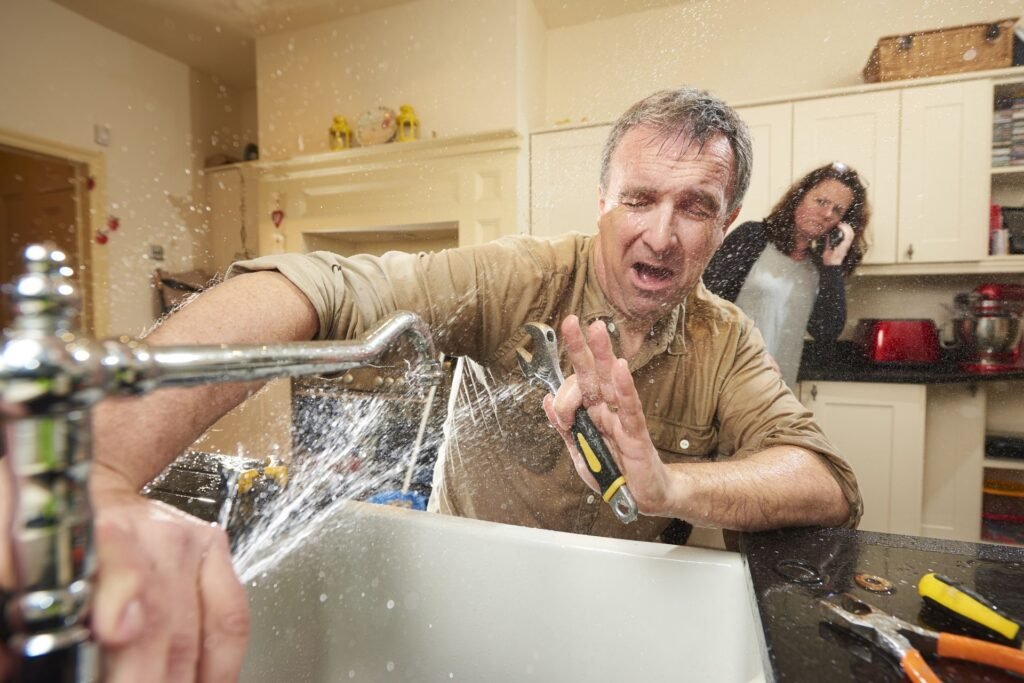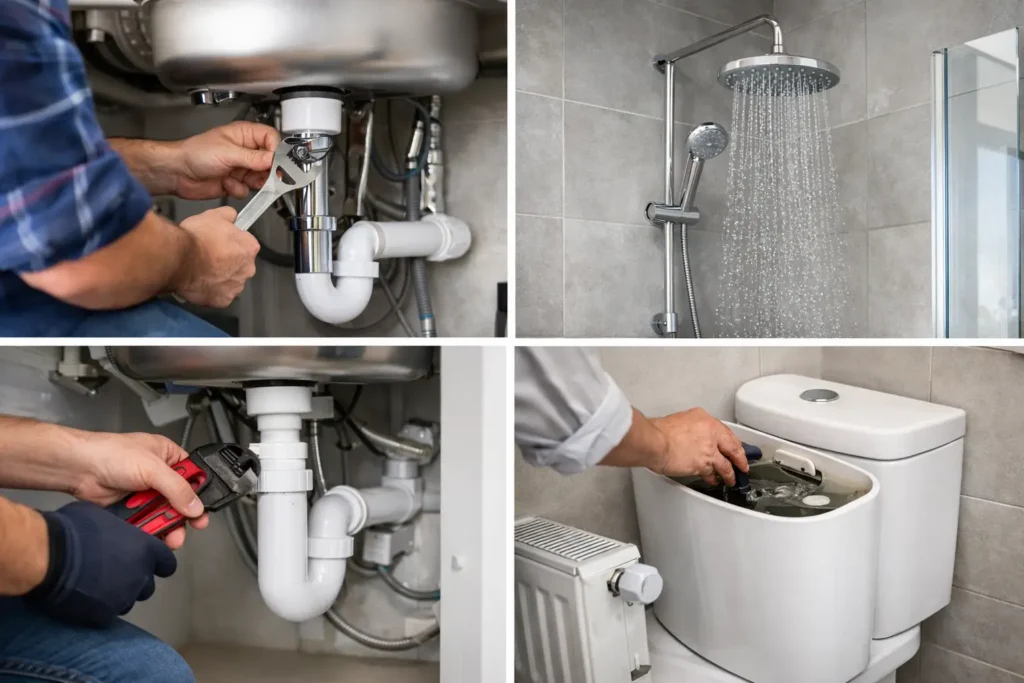
A tenant reports a dripping tap on Monday, a slow-draining shower on Wednesday, then a leaking toilet connection over the weekend. None of these faults may sound major on their own, but together they create avoidable callouts, dissatisfied tenants and a growing risk of water damage. The best plumbing upgrades landlords can make are the ones that reduce these repeat problems before they disrupt the property.
For landlords and letting agents, plumbing is not just about fitting a new bathroom when a tenancy changes. It is about choosing durable, repairable fittings, protecting pipework that cannot easily be seen, and making it simple for tenants to spot a problem early. The right improvements can save money over several tenancies, even where the initial cost is higher than a basic replacement.
Best plumbing upgrades landlords should prioritise
The order will depend on the age of the property, its condition and whether there is an active fault. A persistent leak or failing toilet should always be dealt with before cosmetic work. However, these upgrades are usually the most worthwhile places to start.
1. Fit isolation valves where they are needed
An isolation valve allows a plumber to shut off water to one tap, toilet, washing machine or other fitting without turning off the supply to the whole property. It is a small component, but it can make a significant difference when a leak occurs in an occupied home.
Without local isolation, a simple faulty tap or toilet valve can mean shutting off water to the kitchen, bathroom or entire flat while repairs are arranged. This is inconvenient for tenants and can make an urgent issue feel much more serious. Fitting accessible, good-quality isolation valves during kitchen, bathroom or appliance work is a sensible preventative measure.
They need to be installed where they can actually be reached and operated. A valve hidden behind a sealed bath panel or boxed in without an access point offers limited help during an emergency.
2. Upgrade old flexible hoses and worn toilet connections
Flexible tap tails, washing-machine hoses and toilet connectors are easy to overlook because they sit out of sight. Yet ageing, poorly fitted or damaged connectors can leak suddenly and cause serious damage to floors, ceilings and contents below.
During a planned inspection, it is worth checking for corrosion, bulging hoses, moisture around joints, staining inside vanity units and loose connections. Replacing suspect parts before they fail is considerably less disruptive than dealing with a leak after water has travelled through a ceiling.
This is particularly valuable in upstairs bathrooms, flats, converted properties and rentals that may stand empty between tenancies. In these settings, even a modest leak can go unnoticed for days.
3. Choose reliable, easy-to-repair toilets
A toilet that continues running after flushing can waste a surprising amount of water. A faulty fill valve, worn flush seal or unreliable push-button mechanism also creates a common tenant complaint, especially if the toilet becomes difficult to flush properly.
When replacing a toilet, prioritise a quality cistern with readily available internal parts rather than choosing purely on appearance. Concealed cisterns can give a bathroom a clean finish, but they should include a suitable access panel for maintenance. If access is poor, a minor internal repair can become a far larger job.
Dual-flush toilets are a practical option where the mechanism is dependable and adjusted correctly. The main aim is not simply to install a newer toilet. It is to install one that works consistently, is easy to service and will not leave tenants without a usable facility when a small component fails.
4. Improve shower drainage and access
Blocked or slow shower drains quickly become a hygiene problem. Hair, soap residue and product build-up can restrict the waste pipe, while poor falls beneath a shower tray can leave water sitting where it should drain away.
A shower upgrade should include more than a new screen or tray. A removable waste cover or accessible trap makes cleaning and maintenance much easier. If the shower tray is being replaced, it is also the right time to inspect the waste pipework, check for signs of previous leaks and ensure connections are sound.
Low-profile trays can look smart, but they are not always the best choice if they make pipework difficult to access. In a rental property, a design that allows straightforward repairs is often the better long-term decision.
5. Replace tired taps with durable cartridge models
Dripping taps are rarely an emergency, but they are a warning that internal parts are worn or the fitting is nearing the end of its useful life. Cheap taps can look acceptable when first installed, then become loose, stiff or difficult to repair after regular use.
A solid, practical tap with a serviceable cartridge is usually a better investment for a rental kitchen or bathroom. It should be suitable for the property’s water pressure and fitted securely, with isolation valves available beneath the basin or sink.
Avoid overly complicated tap designs if replacement cartridges are difficult to source. Stylish fittings can suit a high-end refurbishment, but they should still be practical for a tenant to use and for a plumber to maintain.
6. Protect pipes in cold or vulnerable areas
Frozen pipework and burst fittings can cause major damage, particularly in vacant homes, loft spaces, garages, outbuildings and cupboards on outside walls. Pipe insulation is a straightforward upgrade that helps reduce exposure to cold and can also protect against condensation forming on pipes.
Look beyond the obvious loft pipework. Pipes beneath kitchen units, in unheated porches and around external walls can be vulnerable too. Any insulation should be fitted properly around the pipe, without leaving exposed gaps at joints and bends.
Insulation will not solve every winter risk. Properties left empty still need sensible temperature management and checks during cold spells. But it is a low-cost improvement that can reduce the chance of a costly emergency callout.
7. Add leak detection where damage would be costly
Water leak alarms are useful in locations where a leak could develop unnoticed, such as under kitchen sinks, behind washing machines, beside toilets and near hot-water pipework. Some alarms simply sound when they detect moisture, while others can send an alert to a mobile phone.
For landlords managing several properties or homes that are occasionally vacant, this can provide valuable early warning. It is not a replacement for proper pipework, regular inspections or prompt repairs, but it can shorten the time between a leak starting and someone taking action.
More advanced automatic shut-off devices may suit higher-risk properties, but they need to be chosen carefully. A device that shuts off water unnecessarily can create its own tenant issues. The best option depends on the layout, occupancy and how quickly the property can be attended if an alert is received.
8. Plan access panels into bathrooms and kitchens
This is one of the most overlooked plumbing upgrades. Pipework, shower valves, traps and cisterns eventually need inspection or repair. If every connection is hidden behind tiles, fitted furniture or sealed panels, a simple leak can require unnecessary damage to reach it.
Neat, discreet access panels allow repairs to be completed faster and with less disruption. They are especially useful behind baths, in boxed-in toilet areas and around shower valves. When a bathroom is being renovated, planning access at the outset can prevent expensive remedial work later.
Make upgrades part of planned maintenance
The best results come from combining upgrades with routine checks between tenancies and during planned maintenance visits. Look for early signs of trouble: water marks around ceilings, mould near bathroom fittings, slow drains, loose taps, constantly running toilets and damp inside sink units. Tenants should also know who to contact promptly if they see a leak or notice a drainage problem.
Do not wait for a full refurbishment if a known weakness is already causing callouts. Replacing a failing toilet valve, renewing old hoses or fitting a proper access panel can be completed as targeted work. On the other hand, if a kitchen or bathroom is nearing the end of its life, doing the pipework and drainage properly during a larger renovation is usually more cost-effective than repeated patch repairs.
A well-maintained rental is easier to let, easier to manage and less likely to suffer the kind of water damage that turns a minor fault into a major insurance claim. For clear advice and tidy plumbing upgrades across Hull and East Yorkshire, contact HJZ Plumbing on 01482 236483.