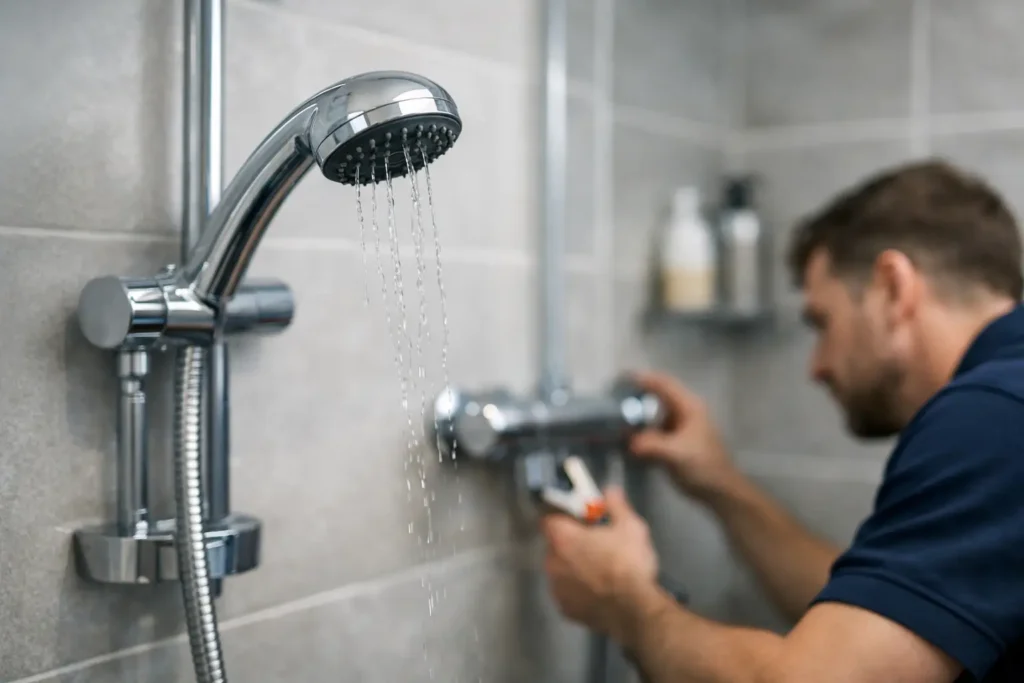
A shower that suddenly drops from a refreshing spray to a weak trickle is more than an inconvenience. It can make busy mornings harder, leave soap difficult to rinse away and, in a rental property, quickly become a tenant complaint. So, is low shower pressure normal? Sometimes, particularly in older properties or at peak-use times. But a noticeable change in shower performance is usually worth investigating.
The key question is whether the pressure has always been low or whether it has recently changed. A shower that has never been particularly powerful may be limited by the property’s water supply or plumbing layout. One that has become weak over a few days or weeks could have a blockage, faulty component, leak or supply problem that needs attention.
When low shower pressure can be normal
Not every shower will produce a strong, high-flow spray. Properties with gravity-fed water systems, where cold water is stored in a loft tank and hot water is supplied from a cylinder, can naturally have lower pressure than properties supplied directly from the mains. The height of the tank, the pipework route and the type of shower fitted all affect the result.
Pressure can also dip at busy times. If several people in the same home are using water, or if a hotel, café or shared building has high demand at a particular time of day, the flow available to one shower may reduce. This should be temporary rather than an all-day problem.
Some shower heads are designed to use less water. A water-saving head can feel gentler, especially if it is fitted to an already low-pressure system. That does not mean it is faulty, but it may not suit everyone’s expectations.
Even where lower pressure is expected, the shower should still be usable. If the flow is too weak to rinse properly, varies wildly from hot to cold, or has deteriorated without an obvious reason, it is not something to simply put up with.
Is low shower pressure normal if it only affects one shower?
Usually, no. If taps elsewhere in the property have a healthy flow but one shower is weak, the issue is often local to that shower rather than the incoming water supply. This is generally good news because the cause can often be identified and repaired without major work.
Limescale is one of the most common causes. Tiny holes in the shower head gradually clog with mineral deposits, reducing the spray until it feels noticeably weaker. The shower hose can also become restricted internally, particularly if it is old, kinked or damaged.
A blocked filter, worn cartridge or faulty thermostatic shower valve can have the same effect. These components control the mix and flow of hot and cold water. When they become worn or blocked, the shower may run weakly, become difficult to regulate or lose flow when another tap is used.
In some cases, an isolation valve on the pipework has not been fully opened after previous plumbing work. A partly closed valve can restrict the supply to a shower without causing an obvious problem elsewhere in the building.
Common reasons a shower loses pressure
A gradual reduction in pressure often points to a build-up of scale or debris. This is common in shower heads, hoses, filters and valve cartridges. Removing and cleaning a shower head may help, but care is needed with older fittings as seals and plastic parts can become brittle.
A sudden drop in pressure needs more attention. It may follow repair work, a change to the water supply, or a problem with a valve. If both the shower and other outlets are weak, check whether neighbours are experiencing the same issue. A temporary supply issue may be affecting the area, but an ongoing problem within the property should be assessed.
If only the hot side is weak, while cold water remains strong, the issue is likely to be within the hot-water pipework or shower controls. If both hot and cold are weak only at the shower, the shower head, hose or mixing valve are more likely suspects.
A hidden leak can also reduce available pressure. Look out for damp patches, staining, mould, a musty smell, unusually high water use or the sound of water running when all taps are off. Leaks do not always announce themselves with a visible puddle. Left alone, they can damage ceilings, floors, walls and neighbouring flats or commercial units.
Simple checks you can make safely
Before arranging a repair, there are a few sensible observations that can help narrow down the fault. Run the shower on cold only, then hot only, and note whether one side is weaker. Check the basin and kitchen taps at the same time to see whether their flow has also reduced.
If the shower head can be removed easily, inspect it for visible limescale and clean it according to the manufacturer’s guidance. Do not force seized fittings, as this can damage the shower arm or pipework behind the wall. It is also worth checking that the hose is not twisted, trapped or sharply bent.
For landlords and facilities managers, ask occupants when the problem began and whether it affects every shower or only one. A clear description can save time, reduce disruption and help prevent repeated visits for the same issue.
Avoid taking apart concealed valves or adjusting pipework if you are unsure. A small issue can become a leak behind tiled walls, which is far more disruptive and expensive than a straightforward shower repair.
When weak shower pressure needs a plumber
Call for professional help if the pressure has dropped suddenly, if you can see signs of a leak, or if the shower is fluctuating between hot and cold. These symptoms can indicate a failing valve, a blockage in the supply, damaged pipework or another fault that needs more than a replacement shower head.
It is also sensible to arrange an inspection when low pressure affects more than one outlet, particularly in a business premises. Weak showers can affect guest comfort in hotels, staff facilities in offices and hygiene routines in care, education or hospitality settings. Waiting until the shower stops completely can create avoidable disruption.
A plumber can test the flow at different outlets, inspect the shower valve and connections, identify restrictions, and recommend the most practical repair. Depending on the cause, the solution may be as simple as replacing a hose or cartridge. In other cases, improving the pipework layout, fitting a suitable shower for the available pressure or repairing a leak may be the better long-term answer.
Preventing repeat shower pressure problems
Regular cleaning of shower heads helps reduce limescale build-up, especially where the spray pattern is starting to become uneven. Replacing worn hoses before they split or restrict flow can also prevent a minor annoyance turning into a leak.
If you are planning a bathroom renovation, choose shower fittings that are compatible with the pressure available in the property. A stylish shower designed for high pressure may disappoint when connected to a low-pressure system. Getting practical advice before installation can prevent wasted money and avoid having to alter a finished bathroom later.
For managed properties, treat a report of weak pressure as an early maintenance issue rather than a minor complaint. Prompt action protects tenant comfort, reduces the risk of hidden water damage and shows occupants that the property is being properly looked after.
A weak shower is not always an emergency, but it should not become part of daily life without finding out why. For clear advice, tidy repairs and dependable local support across Hull and East Yorkshire, contact HJZ Plumbing on 01482 236483 or through www.hjzplumbing.com.