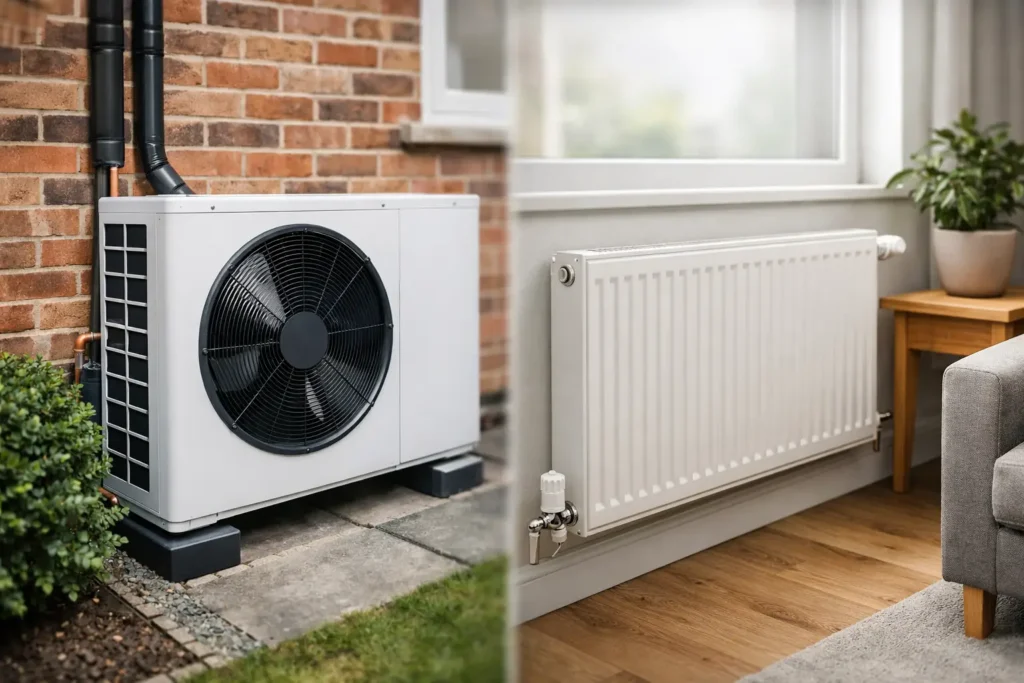
An air source heat pump vs radiators comparison can sound like a choice between two competing heating systems. In most homes, it is not. An air source heat pump still needs a way to release warmth indoors, and radiators are often the practical answer. The real question is whether your existing radiators, pipework and controls can provide enough heat at the lower water temperatures a heat pump generally uses.
That matters before any installation work starts. A system that has not been properly assessed may leave certain rooms slow to warm up, create uneven temperatures, or lead to unnecessary changes being recommended. A careful survey looks at the property as a whole: heat loss, insulation, room use, radiator size, pipework condition and the state of the existing heating circuit.
Do air source heat pumps work with radiators?
Yes. An air source heat pump can work with radiators, including radiators already fitted in a property. However, some may need to be larger, upgraded or supplemented to maintain comfortable room temperatures in colder weather.
Traditional heating systems often send very hot water around the radiators. Heat pumps normally work more efficiently when they circulate cooler water over a longer period. A radiator that feels very hot to the touch can give out a lot of heat even if it is relatively small. When the water temperature is lower, that same radiator gives out less heat.
This does not mean every radiator has to be replaced. Larger rooms, exposed extensions, north-facing rooms and spaces with poor insulation are more likely to need attention. In a well-insulated home, some existing radiators may be perfectly adequate. Bedrooms may also have different requirements from a busy living room, kitchen or open-plan area.
The right approach is based on room-by-room heat-loss calculations, not a quick visual judgement. This is particularly useful in older Hull and East Yorkshire properties, where solid walls, draughts and different extension styles can make one part of a house behave very differently from another.
Why radiator size matters with a heat pump
Radiators transfer heat from the water inside them into the room. Their output depends on their size, design and water temperature. Lower the water temperature and their output falls, unless there is more radiator surface area to compensate.
For that reason, a heat pump installation may involve replacing selected radiators with larger models or higher-output alternatives. This can be less disruptive than people expect, especially where existing pipe positions can be used. It is often a targeted improvement rather than a full-house replacement.
There are a few practical options:
- Fit larger conventional radiators in rooms that need more output.
- Use double-panel or higher-output radiators where wall space is limited.
- Consider fan-assisted radiators in suitable areas where a large radiator would be impractical.
- Improve insulation and draught-proofing first, which can reduce the heat required from each radiator.
There is no single best option for every property. A large, poorly insulated lounge may benefit most from reducing heat loss as well as improving the radiator. A compact, well-insulated bedroom might need no change at all.
Air source heat pump vs radiators: the key difference
The key difference is not that one replaces the other. The heat pump produces heat, while the radiators distribute it around the building. What changes is the way the system is designed and operated.
Radiator systems paired with a heat pump are usually intended to maintain a steady, comfortable temperature rather than deliver short bursts of intense heat. Turning the heating on only when a room feels cold can be less effective than allowing the system to run steadily under suitable controls.
This can take a little adjustment for households used to a different routine. It can also be a positive change: rooms may feel more consistently comfortable, rather than alternating between overheated and chilly. The best set-up will depend on how the building is occupied, how quickly it loses heat and which rooms are used most.
For landlords and commercial property operators, this planning is particularly valuable. A cold bedroom, reception area, café seating space or office can quickly become a tenant, staff or customer issue. Understanding radiator capacity before work is carried out helps avoid later disruption and repeat visits.
What about existing pipework?
Pipework is an important part of the assessment. Heat pumps generally move a larger volume of water around the system than some older arrangements. Restricted, undersized, corroded or poorly balanced pipework can prevent radiators from receiving the flow they need.
That does not automatically mean pipework throughout the property needs replacing. A competent installer should check the system layout, identify bottlenecks and explain what is necessary. In some homes, existing pipework is suitable after cleaning, balancing and making limited alterations. In others, sections may need upgrading to support reliable circulation.
Sludge and debris are also worth taking seriously. Over time, deposits can settle in radiators and pipes, reducing flow and creating cold areas on radiators. If this is left unresolved, it can affect comfort and place unnecessary strain on circulation components. Power flushing or a more targeted clean may be recommended where the system condition supports it.
A radiator that is cold at the bottom, warm only near the top, noisy, or slower than the others is worth investigating before making wider heating changes. Fixing these issues early is usually less disruptive than discovering them after other work has been completed.
Controls and balancing make a real difference
Even well-sized radiators will not perform properly if the system is poorly balanced. Balancing makes sure each radiator receives an appropriate share of the heated water, so one room is not roasting while another remains cold.
Thermostatic radiator valves can help manage individual rooms, but they need to be used sensibly alongside the main controls. A hallway thermostat, for example, should not be affected by a nearby radiator heating the space too quickly. Zoning can be useful in larger homes, rental properties and premises with separate areas that have different opening hours or occupancy patterns.
Good controls should make daily use simple, not leave you constantly adjusting settings. The aim is dependable warmth where it is needed, without wasting energy heating unused areas to the same level.
When radiators may not be the only answer
Radiators are not the only way to distribute heat from an air source heat pump. Underfloor heating works at lower water temperatures and can be an excellent match in a new extension, a renovation where floors are already being lifted, or a new-build property.
However, it is not automatically the better choice for an existing occupied home. Installing underfloor heating can involve significant work to floors, doors, kitchen units, bathrooms and furniture. For many homeowners, upgrading a few radiators and improving the existing system offers a more proportionate route with less upheaval.
A mixed system can also make sense. For example, underfloor heating may suit a ground-floor extension, while upgraded radiators serve bedrooms and existing rooms upstairs. The practical choice should reflect the building, budget and level of disruption you can accommodate.
Questions to ask before changing your heating system
Before committing to changes, ask whether each room has had a heat-loss calculation, whether the existing radiators have been assessed at the intended operating temperature, and whether pipework condition and flow have been checked. You should also understand which radiators, if any, need replacing and why.
Ask how the system will be cleaned, filled, balanced and tested afterwards. These details may sound routine, but they protect the comfort and reliability of the finished installation. Clear explanations are especially important in rental and commercial premises, where poor heating performance can affect tenants, trading hours and staff welfare.
If a radiator is leaking, corroded, noisy or simply failing to heat properly, deal with it promptly rather than waiting for a larger project. Small faults can cause water damage, staining and avoidable disruption, particularly in occupied properties.
For practical advice on radiator condition, pipework, power flushing or heating distribution improvements in Hull and the surrounding area, contact HJZ Plumbing on 01482 236483 or through www.hjzplumbing.com. A proper assessment now can help keep your property warm, tidy and free from avoidable problems later.