A kitchen sink that suddenly gurgles when the toilet is flushed is not just an annoying noise. It can be one of the earliest signs of blocked sewer drain trouble – and acting early can prevent dirty water backing up into your home, rental property or business premises.
A blocked sewer drain affects the pipework carrying wastewater away from the property. Unlike a simple blockage in one sink trap, it can affect several toilets, basins, showers and appliances at once. For homeowners, it brings the risk of unpleasant smells and damage. For landlords, cafés, hotels, shops and offices, it can quickly become a hygiene issue that disrupts tenants, staff and customers.
1. More than one drain is running slowly
One slow basin may simply have hair, soap residue or toothpaste build-up in the waste trap. But when the kitchen sink, shower, bath or toilet are all draining more slowly than usual, the restriction is likely to be further along the drainage system.
Pay attention to when the problem occurs. If the shower tray fills while the washing machine is emptying, or the downstairs sink drains poorly after flushing the toilet, wastewater may be meeting an obstruction in the shared pipe leading to the sewer.
2. Gurgling sounds from toilets or plugholes
A drainage system should move wastewater away quietly. Gurgling, bubbling or glugging sounds usually mean air is being forced back through the pipe because water cannot pass freely.
You may hear this from a toilet after flushing, from a sink when the bath drains, or from a shower waste. It does not always mean a complete blockage has formed, but it is a clear warning that the system is struggling. Leaving it can turn a manageable drain cleaning job into an urgent call-out.
3. Unpleasant sewer smells indoors or outside
A persistent foul smell around a toilet, kitchen sink, utility area, bathroom, external gully or manhole should never be ignored. Wastewater sitting behind a blockage can release odours back through drains, particularly when water is used elsewhere in the property.
Not every unpleasant smell points to a blocked sewer. A rarely used shower, floor drain or sink can smell if the water seal in the trap has dried out. Run water into unused fittings first. If the odour remains, is getting worse, or appears alongside slow drainage and gurgling, arrange for the drain to be checked.
4. The toilet water rises, falls or bubbles
A toilet that takes longer to clear, bubbles after flushing or sees its water level rise higher than normal needs attention. These symptoms can mean wastewater is meeting resistance beyond the toilet pan.
Do not repeatedly flush in the hope it will clear. Each flush adds more water to a system that may already be restricted, increasing the risk of an overflow. Keep use to a minimum until the cause is identified, especially if other fixtures are also affected.
5. Water backs up in the lowest drain
One of the most serious signs of a blocked sewer drain is water appearing where it should not. In many properties, this shows first at the lowest point in the drainage system – often a ground-floor shower, bath, toilet, floor drain or outside gully.
If wastewater is backing up, stop using taps, toilets, dishwashers and washing machines where possible. Keep children, pets, tenants, staff and customers away from the affected area. Sewage-contaminated water is a hygiene concern, not a cleaning job to put off until later.
6. An outside gully is full or overflowing
External gullies are designed to receive wastewater and direct it into the underground drain. If a gully is full of standing water, overflowing, or releasing foul smells, the blockage may be in the drain run beyond it.
Leaves, silt and surface debris can block a gully itself, while fat, wipes, sanitary products, food waste, scale, damaged pipes or tree roots can cause deeper restrictions. It is sensible to remove visible leaves from around a gully, but avoid poking rods or improvised tools into underground pipework. This can damage fittings, compact the blockage or create a mess without solving the real problem.
7. Problems return after a temporary fix
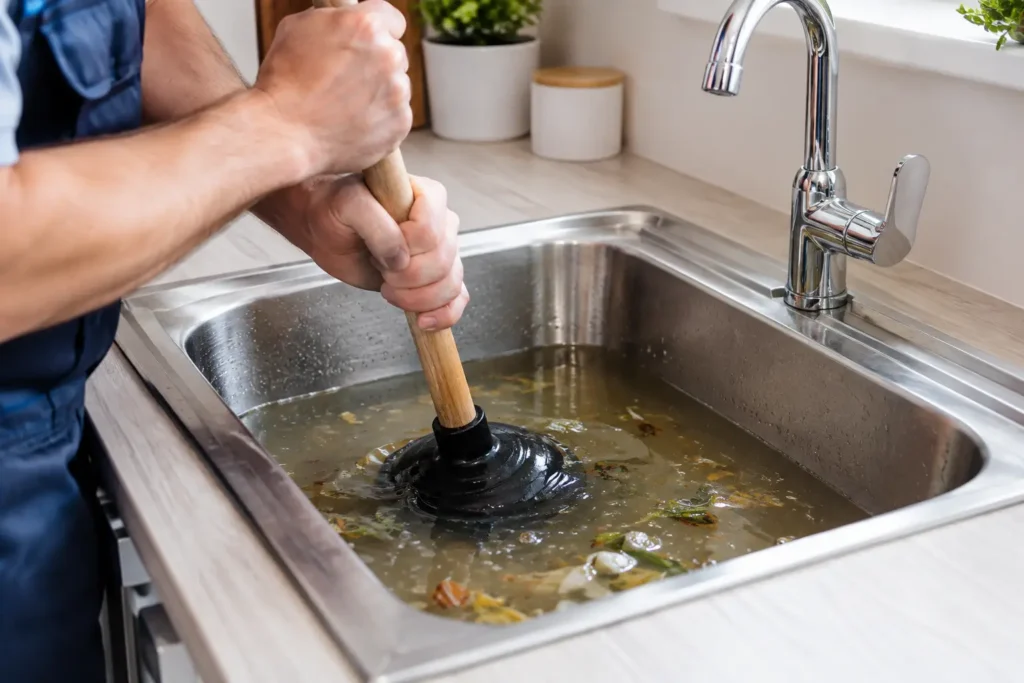
A plunger or drain cleaner may improve a minor local blockage. If the same sink, toilet or gully blocks again within days or weeks, there is usually a reason. The obstruction may be further down the line, pipework may be damaged, or grease and waste may have built up over time.
Chemical drain cleaners are not a reliable answer for a suspected sewer blockage. They can be hazardous to handle, may damage some pipework and often do little against wipes, roots or compacted debris. They can also make conditions more dangerous for anyone working on the drain afterwards. A proper inspection and mechanical clearance is the safer approach when the issue keeps returning.
8. Neighbours or connected properties have similar issues
Some homes, flats and commercial units share sections of drainage before wastewater reaches the public sewer. If neighbours are experiencing slow drains, overflowing gullies or sewer odours at the same time, the issue may not be limited to your own internal pipework.
For landlords and property managers, reports from separate tenants should be treated as useful evidence rather than isolated complaints. Prompt investigation helps protect the property, avoids repeated disruption and gives you a clearer record of what has been found and repaired.
9. You can see sewage around a drain cover or inspection chamber
Sewage or murky water around an inspection chamber is an urgent warning. A blocked or damaged drain may be preventing wastewater from flowing onward, causing it to rise and escape at the nearest available point.
Do not lift heavy or damaged covers without suitable equipment, and do not enter any chamber. Restrict access to the area and arrange professional help. Depending on where the fault lies, the responsible party may differ, but the immediate priority is stopping further wastewater from entering the system and assessing the blockage safely.
What causes sewer drains to block?
Most sewer drain blockages build up gradually. In kitchens, cooking fat, oil, grease and food debris can cling to pipe walls and narrow the flow path. In bathrooms and toilets, wipes, sanitary products, cotton buds, hair and excess paper are common causes. Even products labelled as flushable can cause problems once they meet other waste in the drain.
Outside the property, leaves and silt can enter gullies, while tree roots may find their way into cracks or displaced pipe joints. Older drainage can also suffer from collapsed sections, poor connections or movement in the ground. The right solution depends on the cause. Clearing a blockage restores flow, but recurring problems may need further investigation to prevent another call-out.
What to do before help arrives
If you suspect a sewer blockage, reduce water use immediately. Avoid flushing toilets unnecessarily and do not run washing machines, dishwashers or large amounts of water down sinks. If wastewater has backed up indoors, ventilate the area if it is safe, keep people away and avoid direct contact with contaminated water.
Make a note of which fixtures are affected, when the issue began and whether an outside gully is overflowing. This helps a plumber diagnose the problem more quickly. For businesses, take practical steps to protect customers and staff, including closing off affected toilets or food-preparation areas where necessary.
Do not wait for a full overflow
Drainage problems rarely become cheaper or less disruptive by being ignored. A slow drain can be an early warning. A gurgling toilet can be the point at which there is still time to act before foul water reaches floors, stock, furnishings or occupied rooms.
HJZ Plumbing provides practical drain unblocking support for homes and commercial properties across Hull, Beverley and the surrounding East Yorkshire area. If you have noticed more than one warning sign, or wastewater is backing up now, contact HJZ Plumbing directly on 01482 236483 or through www.hjzplumbing.com.