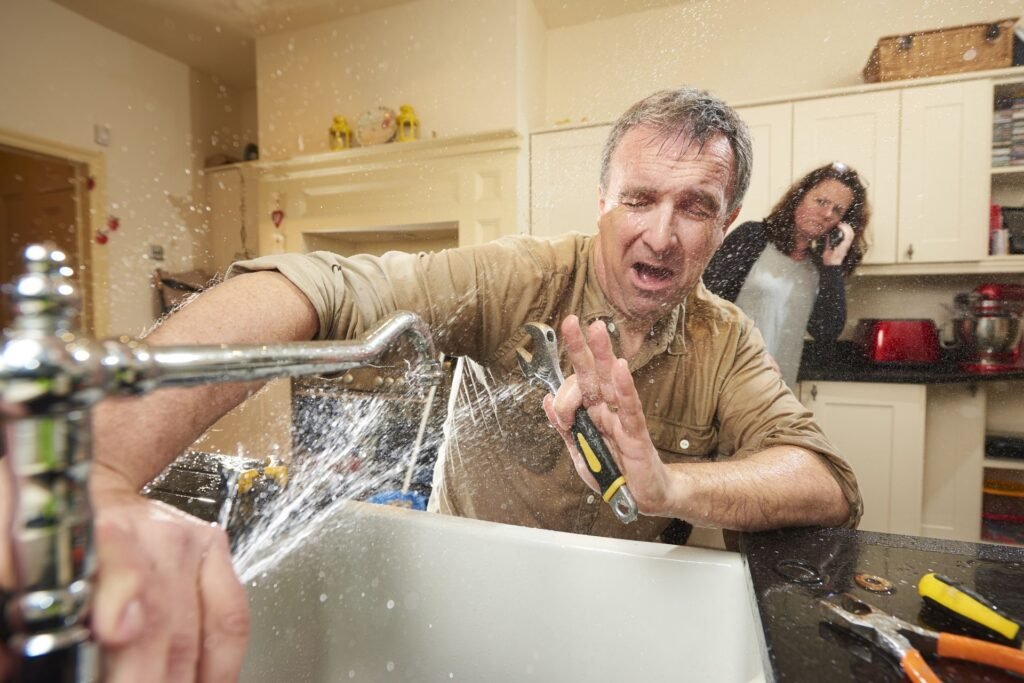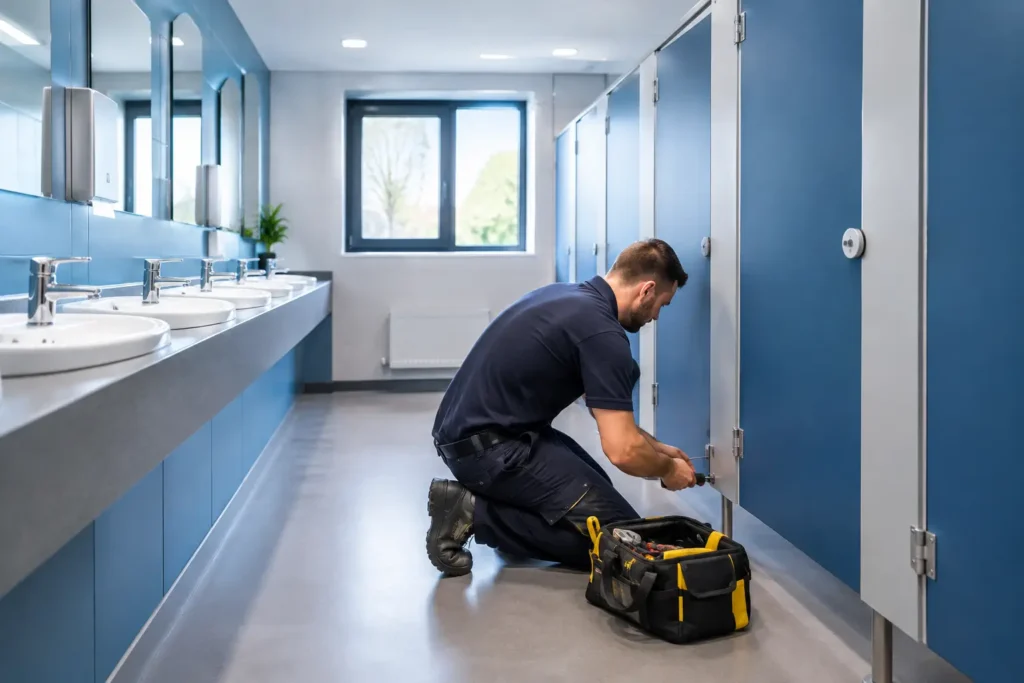
A failing school washroom rarely stays a small problem for long. A dripping cistern can become a flooded cubicle, a blocked toilet can close an entire area, and worn surfaces can quickly create hygiene concerns for pupils and staff. This school washroom refurbishment example shows how a planned upgrade can replace repeated repairs with a practical, hard-wearing facility that is easier to clean, safer to use and less likely to disrupt the school day.
Why school washroom refurbishment needs careful planning
School toilets work harder than most washrooms. They are used throughout the day by large numbers of pupils, often in short, busy intervals. That constant use exposes weak points quickly: loose toilet seats, sticking taps, leaking pipework, damaged partitions, poor drainage and tired sealant around sanitaryware.
A refurbishment is not simply about making the room look newer. It is an opportunity to deal with the causes of repeated faults, improve water efficiency, make cleaning more straightforward and give pupils a washroom they can use with confidence. For a headteacher, site manager or academy trust, the real value is fewer emergency callouts, fewer closures and less time spent managing complaints.
The right scope depends on the condition of the existing washroom. Sometimes replacing damaged toilets, basins and taps is enough. In other cases, concealed leaks, old supply pipes, poor waste runs or inadequate ventilation mean a more complete strip-out is the sensible long-term choice.
School washroom refurbishment example: from faults to a reliable facility
Consider a typical older school washroom with six toilet cubicles, a run of basins and urinals. Staff have reported recurring blockages, two toilets that do not flush reliably, taps that continue to drip, and a persistent damp smell near the basin wall. Several cubicle doors are difficult to close, while cracked floor finishes make thorough cleaning harder.
The immediate temptation may be to repair each issue as it appears. That can keep facilities operating in the short term, but it often means paying repeatedly for callouts while the underlying plumbing continues to deteriorate. In this example, a survey identifies worn internal components, ageing pipework connections and a slow waste run as the main causes of the recurring problems.
Starting with a proper survey
Before any refurbishment work is agreed, the plumbing system should be assessed properly. This includes checking the condition of toilets, basins, taps, traps, wastes, isolation valves, visible pipework and drainage performance. A plumber should also look for signs of leaks behind panels or below floors, where water damage can develop unnoticed.
For a school, the survey also needs to consider practical use. Are the basins positioned at a suitable height for the age group? Is there enough handwashing capacity at busy times? Do taps withstand constant use? Are isolation valves accessible if there is a leak? Small decisions at this stage can prevent major inconvenience later.
If an accessible washroom is included, its layout and fittings need particular care. Schools should ensure any proposed changes are reviewed against the relevant accessibility requirements and their own building responsibilities, rather than assuming a standard layout will suit every site.
The planned refurbishment works
In this example, the school chooses a full washroom refresh rather than another round of patch repairs. The old sanitaryware is removed, and the plumbing connections behind it are inspected and renewed where needed. Faulty valves and deteriorated sections of pipework are replaced before the new fittings are installed.
New close-coupled toilets are selected for reliable flushing and straightforward maintenance. Durable basins and commercial-grade taps are fitted to cope with frequent daily use. Depending on the building and budget, push-button or sensor-operated taps may help reduce unnecessary water use and limit the number of handles touched during the day. However, sensor taps are not automatically the best option in every school. They need correct installation, dependable power arrangements where required and settings that work reliably for younger pupils.
The waste pipework is improved to support better drainage, and all connections are tested before finishes are completed. Fresh sanitary sealant, properly secured fittings and accessible isolation points make future maintenance easier. If the floor or wall finishes are being renewed, the plumbing work should be completed first, avoiding the costly disruption of removing new panels or tiles later to fix a hidden leak.
The cubicles are also upgraded with sturdy doors, reliable locks and easy-clean surfaces. While partitions are not a plumbing item, coordinating this work with the washroom installation avoids clashes over pipe routes, boxing and access panels.
Keeping disruption to a minimum
A school washroom cannot usually be taken out of use for weeks without a plan. The best approach is often phased work during school holidays, inset days or quieter periods. Where that is not possible, work can sometimes be split between separate washroom blocks so alternative facilities remain available.
Clear communication matters just as much as the schedule. Staff need to know which areas are closed, when water supplies may be isolated and who to contact if a problem arises. Contractors working in a school environment should respect safeguarding procedures, sign-in requirements, restricted areas and the need to leave the site tidy at the end of each working day.
There can be a trade-off between completing everything quickly and maintaining normal access. A full closure may allow the job to be finished faster, while phased works reduce pressure on pupils and staff but can extend the overall programme. The best option depends on the school layout, available alternative facilities and the urgency of the plumbing issues.
Choosing fittings that stand up to school use
Domestic-style fittings can look attractive initially, but they may not be the right choice for a busy school washroom. Durability, replacement-part availability and ease of cleaning should carry as much weight as appearance.
Toilets should have dependable flushing mechanisms that can be serviced without unnecessary dismantling. Taps should be resistant to wear and chosen with pupil use in mind. Basins, flush plates, pipes and boxing should be arranged to reduce places where dirt can build up or where damage is likely.
Water-saving fittings can help control running costs, but they should not compromise performance. A low-flow tap that takes too long to rinse hands, or a reduced-flush toilet that struggles with the existing drainage arrangement, can create frustration and more maintenance work. This is why an on-site assessment is more useful than choosing products from a catalogue alone.
Hygiene, maintenance and early repairs
Once the refurbishment is complete, routine checks help protect the investment. Staff or caretakers should report dripping taps, slow-draining basins, loose toilet seats, damaged sealant and toilets that continue to run after flushing. These are often early warnings, not minor cosmetic issues.
A small leak can damage wall finishes and flooring over time. A slow waste can become a full blockage at the busiest point of the school day. Dealing with problems early is usually cleaner, less disruptive and more cost-effective than waiting for a washroom to fail completely.
Planned maintenance is particularly useful in older school buildings, where pipework may be hidden behind boxed-in areas or beneath floors. Regular inspection gives the school a clearer picture of what needs attention now and what can be budgeted for later.
A well-planned washroom refurbishment gives pupils and staff a cleaner, more dependable space and gives site teams fewer urgent problems to manage. If your school has recurring leaks, blocked toilets, unreliable taps or tired washroom plumbing, contact HJZ Plumbing on 01482 236483 or visit www.hjzplumbing.com to discuss practical refurbishment or repair support.