A shower can look smart on the wall and still be frustrating to use if the valve behind it is wrong. Poor temperature control, weak flow, sudden bursts of hot or cold water, and a shower that drips after use are often linked to the valve or its installation. Knowing how to choose shower valve options properly helps you avoid disruption now and expensive alterations later.
The right choice depends on your water pressure, existing pipework, the people using the shower, and whether you are updating one fitting or renovating the whole bathroom. A valve that works well in a small family bathroom may not suit a hotel en-suite, rental property, or busy commercial changing area.
How to choose shower valve: start with your water system
Before choosing a style or finish, establish how water reaches your shower. This is the part that has the greatest effect on performance.
Homes generally have either a gravity-fed system, where cold water is stored in a tank and hot water comes from a cylinder, or a mains-pressure system. Mains-pressure systems often provide stronger, more consistent flow. Gravity-fed systems can have lower pressure, particularly upstairs, and may need a valve designed to work effectively at low pressure.
Do not assume a large shower head will give a powerful shower. If the supply cannot deliver enough water, a wide rainfall head may feel disappointing. Equally, fitting a high-pressure valve to a low-pressure system can leave you with poor flow and an avoidable callout.
If you are unsure what system you have, a plumber can assess the pipework, flow and pressure before you buy anything. This is especially useful in older Hull and East Yorkshire properties, where previous alterations may mean the bathroom plumbing is not as straightforward as it first appears.
Choose thermostatic control for safer, steadier showers
For most homes and occupied properties, a thermostatic shower valve is the sensible option. It blends hot and cold water to maintain the selected temperature, even when someone turns on a tap or flushes a toilet elsewhere in the building.
This matters when children, older people or vulnerable residents use the bathroom. It also makes everyday showering more comfortable, as you are not constantly adjusting the controls when water demand changes.
Many thermostatic valves include a safety stop, commonly set around 38°C, which prevents the handle being turned hotter by accident. You can override it when needed, but the stop provides useful protection against scalding. For landlords, hotels and other commercial premises, this feature can help reduce a very real safety risk for tenants, guests and staff.
Manual mixer valves cost less and can be suitable where the water supply is stable and the bathroom has limited use. However, they react more noticeably to changes in pressure. A saving on the valve may not feel worthwhile if the shower temperature regularly swings when the kitchen tap is used.
Decide between exposed and concealed shower valves
The next decision is how the valve will sit in the bathroom.
An exposed shower valve is fitted on the finished wall, with the controls and pipe connections visible. It is usually quicker and less costly to install, makes future servicing easier, and is a practical replacement choice when you do not want to disturb tiles. For a rental property or a bathroom that needs to be back in use quickly, that accessibility can be a major advantage.
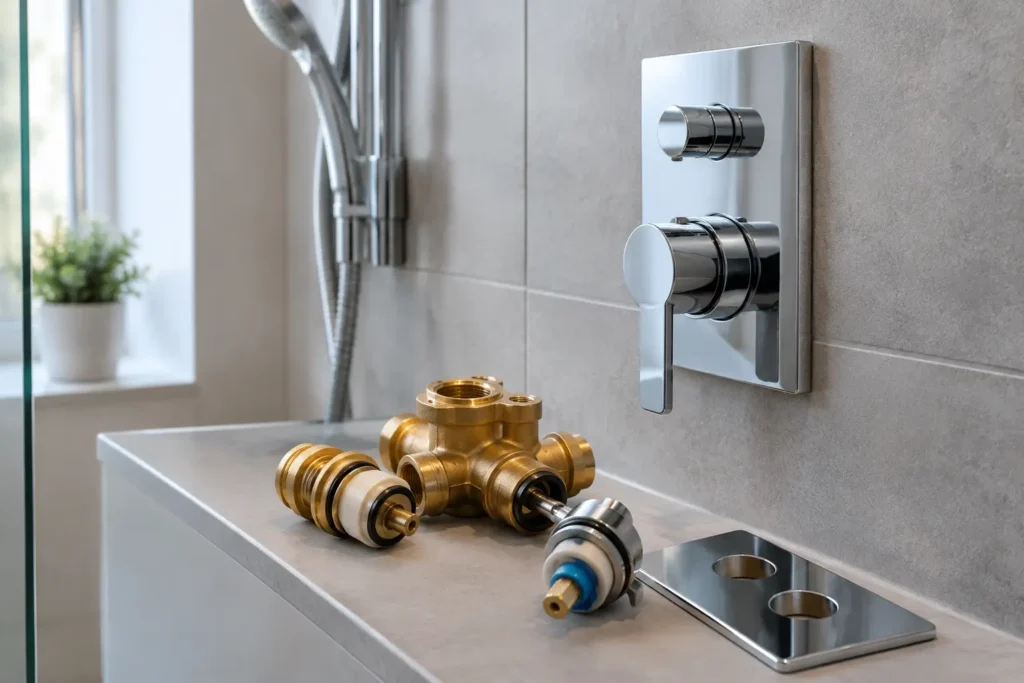
A concealed shower valve is installed behind the wall, leaving only the control plate and handles visible. It creates a cleaner, more modern appearance and can be a good fit for a full bathroom refurbishment. The trade-off is that installation needs more planning. Pipework has to be positioned accurately, the wall may need opening up, and the valve must be accessible for future maintenance through the front plate or another planned access point.
Concealed does not automatically mean better. If the bathroom wall is solid masonry, space is tight, or you are trying to minimise work and cost, an exposed valve may be the more reliable choice. A tidy, well-fitted exposed valve is far better than a concealed installation that creates difficult access when a cartridge eventually needs replacing.
Match the valve to the shower outlet and controls
Think about how you want to use the shower each day. A simple setup may have one outlet feeding a fixed shower head or a riser rail handset. A two-outlet valve can run both an overhead head and a separate handset, allowing you to switch between them.
If you want both outlets operating at the same time, check that the valve is designed for that use and that the water system can provide sufficient flow. Running a large rainfall head and a handset together looks appealing, but it can reduce performance on a modest supply.
The number of controls also affects ease of use. A two-control valve usually has one handle for temperature and one for flow. A three-control valve may add a separate diverter for choosing between outlets. There are also single-control designs, but separate temperature and flow controls can be more practical because you can keep your preferred temperature setting in place.
For busy family homes, rental bathrooms and commercial washrooms, straightforward controls are usually the best choice. They are easier for visitors to understand and less likely to be forced or damaged through confusion.
Check pipe centres, fittings and compatibility before buying
A shower valve is not a one-size-fits-all replacement. Existing exposed valves commonly use standard pipe centres, but measurements can vary, especially in older bathrooms or where pipework has been altered. Measure carefully from the centre of one pipe to the centre of the other, and check whether your hot supply enters from the left. Most valves are designed that way, but reversing supplies can prevent a thermostatic valve from working correctly.
Also consider the position of the pipework, the depth of the wall for a concealed valve, and whether the shower rail, head and hose are compatible with the chosen fittings. Small differences in connection sizes can lead to delays, extra parts and unnecessary returns.
If you are replacing a leaking or faulty shower valve, do not cover up the problem with a new trim plate. Damaged pipework, loose fittings or water getting behind tiles need attention first. A slow leak can rot timber, stain ceilings below and create mould problems that are far more costly than dealing with the source promptly.
Do not choose on appearance alone
Chrome remains popular because it is easy to match with most taps and accessories. Brushed brass, black and nickel finishes can give a bathroom more character, but they need a little more thought. Choose a finish you can maintain and one that is available from a reputable manufacturer with replacement parts.
Cartridges, seals and thermostatic components wear over time. With a recognised valve, it is generally easier to identify and replace the part rather than remove the whole installation. This is valuable for landlords and property managers who need repairs completed quickly with minimal inconvenience for tenants.
Very cheap valves can be tempting during a refurbishment, but the initial saving can disappear if the controls become stiff, the finish deteriorates, or replacement parts cannot be sourced. Spend where it matters: reliable temperature control, suitable pressure rating, solid fittings and a valve that can be serviced.
Plan the installation, not just the purchase
The valve is only one part of a dependable shower. The condition of the hot and cold supplies, isolation valves, pipe sizing, wall structure and shower enclosure all matter. During a renovation, it is worth checking these while the area is accessible. Replacing a tired isolation valve or correcting poorly supported pipework at this stage can prevent future leaks and avoid opening the wall again.
For commercial premises, plan the work around trading hours, guest occupancy or school use where possible. A clear installation plan reduces downtime and helps protect the building from water damage while the work is underway.
A properly chosen and fitted shower valve should make the bathroom easier to use, not give you another thing to worry about. If you need advice on replacing a faulty valve or planning a new shower in Hull, Beverley or the surrounding area, contact HJZ Plumbing on 01482 236483 or through www.hjzplumbing.com. Acting before a small leak or unreliable shower becomes a larger repair keeps your property safer, drier and more comfortable.