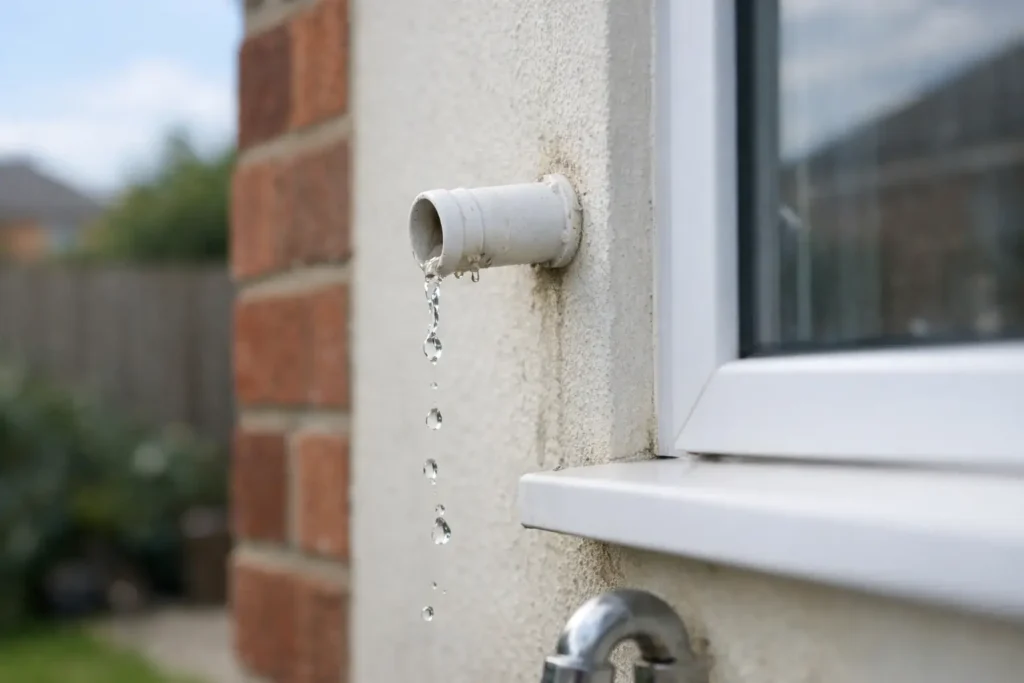
A steady drip from an outside overflow pipe is easy to ignore, especially if it only appears after someone uses the toilet. But dripping overflow pipe causes are rarely problems that fix themselves. The water is a warning that a valve, float or internal seal is no longer controlling the water level properly. Left alone, it can waste water, stain brickwork and turn a small repair into a more disruptive leak.
If the pipe is dripping outside your home, rental property or business premises, first work out whether it is connected to a toilet cistern or a water storage tank. That gives a useful clue, but a proper inspection is the safest way to identify the fault and stop it returning.
What an overflow pipe is telling you
An overflow pipe is a safety outlet. It allows excess water to escape instead of flooding from a cistern or tank indoors. It should normally be dry. When water appears at the outlet, the water level inside has risen above its intended limit.
The immediate risk is not always dramatic, but it should still be dealt with promptly. A constant drip wastes water and may become a steady flow without warning. In a busy café, hotel, school or rented property, a hidden fault can also lead to complaints, higher water use and avoidable disruption.
The location of the pipe matters. A small pipe emerging through an external wall near a bathroom often relates to a toilet cistern. A pipe from a loft tank or high-level storage tank may appear under the eaves. Do not assume the source based on the pipe alone, particularly in older properties where plumbing has been altered over time.
Common dripping overflow pipe causes
A faulty toilet fill valve
This is one of the most common causes. After flushing, a fill valve lets water back into the cistern. Once the correct level is reached, it should shut off completely. If the valve is worn, stiff with limescale or has debris caught inside it, water keeps entering the cistern and eventually reaches the overflow.
You may hear a faint hissing noise after the toilet has finished filling, notice the toilet running intermittently, or see water trickling into the pan. Modern cisterns generally use an internal overflow, so not every faulty fill valve creates an external drip. Older installations are more likely to send excess water through an outside pipe.
The repair may be a simple adjustment, cleaning or replacement of the fill valve. The right answer depends on the age and condition of the cistern. Replacing a badly worn valve is often better value than repeatedly adjusting a part that is near the end of its working life.
A float set too high or damaged
The float tells the fill valve when to stop. On older systems, it may be a ball float on an arm. On newer cisterns and tanks, it is usually a compact internal float. If it has been set too high, catches on another part, takes on water or becomes damaged, it may fail to close the valve at the right point.
This can happen after DIY work, a replacement part being fitted incorrectly, or normal wear over years of use. The adjustment itself can be straightforward, but forcing brittle plastic or bending old metal components can make matters worse. If the cistern is concealed behind furniture or tiles, it is usually best to have it checked professionally.
A worn flush valve or seal
Sometimes the problem is not that too much water is entering the cistern. It is that water is constantly leaking from the cistern into the toilet pan through a failed flush valve seal. The fill valve then keeps topping up the lost water, which can lead to an overflow if it cannot shut off cleanly.
A tell-tale sign is a slow ripple or trickle in the toilet pan long after flushing. You may also find the cistern refills briefly every few minutes, even when nobody has used the toilet. This fault can waste a surprising amount of water and is particularly worth resolving quickly in rental and commercial properties.
Debris or limescale in the valve
Tiny pieces of grit, scale or deteriorating washer material can prevent a valve from closing fully. Areas with hard water are more prone to limescale build-up, but debris can affect any plumbing system after supply work or repairs.
Occasionally, cleaning the valve restores normal operation. In other cases, the diaphragm, washer or valve body has already deteriorated and needs replacing. A plumber can assess whether a repair is sensible or whether fitting a new compatible component will provide a more reliable result.
A water storage tank issue in the loft
If the overflow comes from a tank in the loft, the cause is often a faulty ball valve or float valve. The tank may be overfilling because the valve is not shutting off, or because the float is stuck. This should not be ignored. Water in a loft can damage insulation, ceilings, electrical fittings and stored belongings if the overflow becomes blocked or cannot keep up.
Do not climb into a loft with poor boarding, limited lighting or a wet area beneath the tank. If there is any sign of water around the tank, staining on ceilings, a sagging ceiling or a sudden increase in flow from the overflow pipe, arrange urgent plumbing help.
Frozen or damaged pipework
During cold weather, an overflow can drip because pipework or a valve has been affected by frost. A frozen section may prevent normal movement in a valve, while a crack can show itself as temperatures rise. External pipework can also become loose, split or poorly supported over time.
The visible pipe may not be the original fault. It could simply be carrying water away from a problem inside. That is why sealing the end of an overflow pipe or trying to block it is never a fix. Doing so removes the safety route and increases the chance of an indoor flood.
What you can check safely before calling a plumber
Start by checking whether the drip is constant or only happens after flushing a particular toilet. If it is safe to do so, remove the cistern lid carefully and watch the water level after a flush. Water should stop below the overflow level. If it continues to rise, the fill valve or float needs attention.
You can also listen for a persistent hiss or look for water moving into the toilet pan. Avoid dismantling valves unless you are confident with the system and can isolate the water supply. Older stop valves can seize or fail when disturbed, and concealed cisterns are more complicated than they look.
For a loft tank, inspect only from a safe, properly boarded position. Look for visible overflow, but do not lean across the tank or disturb pipework. If the flow is more than a drip, or if water is affecting rooms below, turn off the relevant water supply only if you know where it is and can do so safely, then call for urgent help.
Why an early repair saves money and disruption
A dripping overflow can seem minor because the water is leaving outside rather than pooling on the floor. However, the underlying component is continuing to fail. The drip may worsen, the water bill can rise, and a valve that is running constantly is more likely to cause further damage.
For landlords and letting agents, a prompt repair also protects the property and avoids a small tenant report becoming an out-of-hours issue. For restaurants, shops and offices, it helps prevent a toilet or washroom being taken out of use at the worst possible time. A tidy repair and a clear explanation of the cause make it easier to plan maintenance with confidence.
When to arrange prompt plumbing help
Call a plumber promptly if the overflow is running continuously, the toilet will not stop filling, the cistern is concealed, or you can see any sign of water damage. The same applies if the issue involves a loft tank, if the pipe has frozen or split, or if you manage an occupied property where hygiene and access to toilets matter.
HJZ Plumbing can trace the cause of a dripping overflow, repair the faulty component and check that the system is shutting off correctly. For fast, practical help across Hull and the surrounding area, call HJZ Plumbing on 01482 236483.