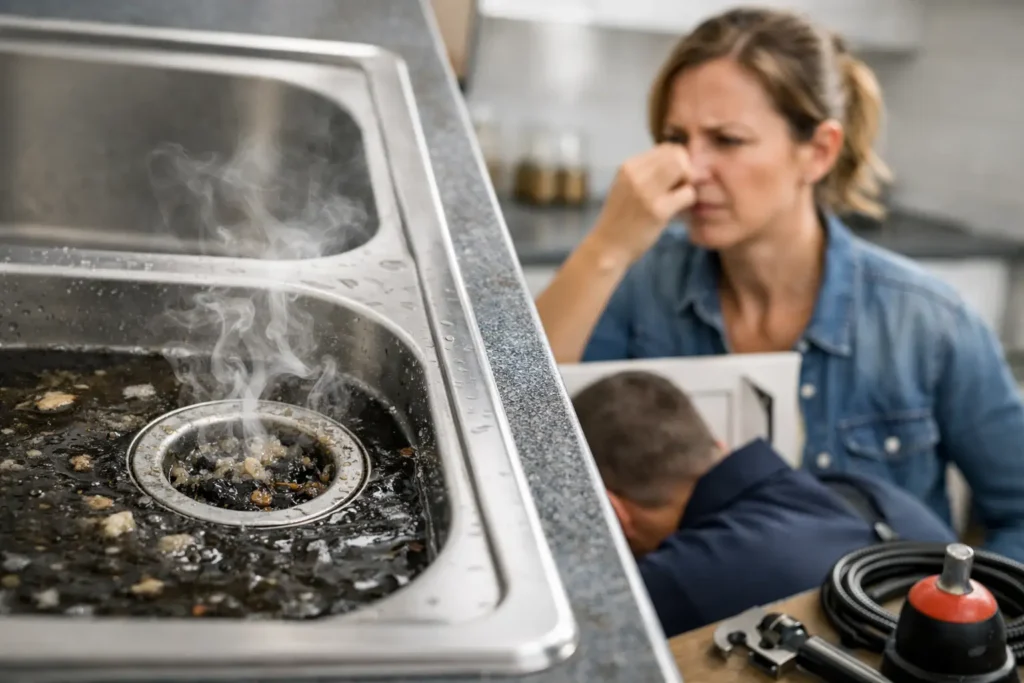
A sour smell around the kitchen sink, a sewage-like odour near the toilet, or a musty whiff from a shower drain is more than an unpleasant nuisance. Can blocked drains cause smells? Yes, very often. A partial blockage can hold food waste, grease, hair, soap residue and other debris in the pipework, giving bacteria the ideal place to grow.
The sooner the cause is identified, the better. What starts as an occasional bad smell can turn into slow drainage, gurgling pipes, a backed-up toilet or wastewater escaping where it should not. For households, landlords and busy commercial premises, dealing with the problem early helps protect hygiene, avoid disruption and reduce the risk of a more expensive emergency.
Why blocked drains start to smell
Drains are designed to carry wastewater away quickly. When the flow is restricted, waste lingers in the pipe instead of moving through the system. Food particles rot, grease becomes rancid, and hair and soap scum trap further debris. This creates the familiar unpleasant odour that can rise through plugholes or drain covers.
The exact smell depends on what is causing the blockage and where it sits. A kitchen drain often smells stale or greasy because of fats, oils and food waste. Bathroom drains may smell musty due to hair, soap and standing water. A strong sewage smell around a toilet, gulley or outside drain needs more urgent attention, particularly if there is also slow flushing, bubbling water or a rise in the water level.
A blockage does not have to be complete to cause trouble. In fact, smells commonly appear while water still drains away, just more slowly than usual. That is a useful warning sign rather than something to mask with air freshener.
Can blocked drains cause smells even when water drains away?
Yes. Water can still find a narrow route through a partially blocked pipe, while the waste caught around it continues to decay. You may notice the basin empties eventually, but the smell returns after washing up, showering or using the washing machine.
Gurgling is another clue. It can mean air is struggling to move through the drainage system because of a restriction. If water begins to back up into another fitting, such as a shower tray filling when a toilet is flushed, the issue may be further along the internal pipework or in the external drain.
For a restaurant, café, takeaway or hotel, grease is a particularly common cause. Even small amounts of cooking fat poured into a sink can cool and harden inside the pipes. Over time, it catches food debris and creates a stubborn, foul-smelling build-up. Regular cleaning and sensible disposal habits make a real difference, but an established blockage usually needs proper removal rather than repeated chemical treatment.
Other causes of drain smells worth checking
Not every unpleasant drain smell means there is a blockage. A plumber will consider the full picture before recommending a repair. The most common alternatives are a dry trap, a problem with a toilet seal, damaged pipework or an issue with drainage ventilation.
A dry trap
Most sinks, showers, baths and floor drains have a U-shaped section of pipe called a trap. It holds a small amount of water that forms a seal against odours from the drainage system. In an unused guest bathroom, empty property, holiday let or little-used utility room, that water can evaporate. Odours can then travel back up the pipe even when there is no blockage.
Running water for a minute or two may restore the seal. If the smell quickly returns, there may be another issue that needs investigating.
Build-up in the plughole or overflow
Sometimes the blockage is local rather than deep in the drain. In bathroom basins, a mixture of toothpaste, soap, hair and skincare products can collect around the waste fitting and overflow channel. Kitchen plugholes can hold food residue beneath the strainer. These areas are easy to overlook and can smell surprisingly bad.
Careful cleaning can help, but avoid forcing sharp objects into the pipe or dismantling fittings if you are unsure how they go back together. A damaged seal under a basin can lead to a leak inside a vanity unit or cupboard.
A loose toilet connection or failed seal
A sewage smell close to the base of a toilet may point to a faulty seal or connection rather than a blocked drain. It should not be ignored. Even where there is no visible leak, escaping odours can affect the room and indicate a fitting that needs attention.
Problems outside the property
If the smell is strongest near an outside gulley, manhole cover or drain run, leaves, silt, wipes, fat or other debris could be restricting the external drainage. Heavy rain can make an existing issue more obvious, especially where a drain is already slow to clear.
Shared drainage can add another layer of complexity for flats, rented properties and commercial units. The source may not be inside one premises, so a proper assessment helps avoid treating the wrong section of pipework.
What you can do safely before calling a plumber
If there is no flooding or sewage backing up, start with the simple checks. Remove visible debris from the plughole or waste strainer, clean the surrounding area, and run hot water through the fitting. For a dry trap, run water long enough to refill it. A plunger can sometimes clear a small, local obstruction in a sink or basin.
Take care with chemical drain cleaners. They can be harsh on pipework and seals, may not shift a solid blockage, and create a safety risk if they splash or are mixed with another product. Do not use them if you plan to plunge the drain or if a plumber may need to work on it soon. Never mix cleaning chemicals.
Avoid pushing wipes, paper towels, sanitary products, cotton buds, cooking fat or large food scraps down the drain. Products described as flushable can still contribute to blockages, particularly in older pipework or shared systems.
When a bad drain smell needs prompt attention
Call for professional help promptly if the smell is persistent, gets worse after using water, or is accompanied by slow drainage. You should also act quickly where a toilet will not flush properly, drains are gurgling, wastewater is backing up, or you can see water around a pipe, toilet base or outside drain.
For landlords and letting agents, drain odours should be dealt with before they become a tenant complaint or a hygiene issue. In cafés, schools, offices, shops and hospitality settings, a foul smell can affect staff, customers and trading. A quick inspection and targeted clearance is usually far less disruptive than waiting for a complete blockage.
HJZ Plumbing can identify whether the problem is a local waste blockage, a deeper internal restriction or an external drainage issue, then recommend the most practical repair. The aim is not simply to make the smell disappear for a few days, but to remove the cause and help prevent it returning.
Preventing blocked-drain smells from coming back
Good daily habits are the best defence. In kitchens, scrape plates into the bin and allow fats and oils to cool before disposing of them with household waste. Use sink strainers to catch food particles. In bathrooms, clear hair from the plughole regularly and avoid washing excess product down the basin.
Properties that are empty for a period need a little attention too. Run taps, showers and baths occasionally to keep traps filled with water. This is especially useful for landlords between tenancies and for businesses with little-used toilets or staff facilities.
If a smell keeps returning despite cleaning, treat that as a sign to investigate rather than cover it up. Drainage faults rarely improve on their own, and early action can spare you the stress of a flooded floor, unusable toilet or disruption to your home or business.
If your drains smell, gurgle or are draining slowly, contact HJZ Plumbing on 01482 236483 for clear advice and dependable local help. A timely repair can restore a clean, comfortable property before a small drainage issue becomes a much bigger one.