A radiator that is cold at the top, noisy pipework, a pressure drop or a small stain beneath a valve can seem like a minor inconvenience. Left alone, each can lead to poor heating performance, water damage or an avoidable callout at the worst possible time. This guide to central heating maintenance focuses on the practical checks that help homes, rental properties and busy premises stay comfortable, while making it easier to spot when a plumber is needed.
Central heating is easy to forget when it is working properly. Yet it relies on water moving freely around pipework, valves and radiators. A little regular attention can improve warmth in the rooms you use, reduce strain on the system and catch leaks before they affect floors, ceilings, décor or neighbouring properties.
Start with what your radiators are telling you
Your radiators provide the clearest day-to-day indication of how the water side of the heating system is performing. When the heating is on and has had time to warm up, carefully feel each radiator from top to bottom. It should generally feel warm across its surface, although the pipework and lower area may feel hottest depending on the system.
A radiator that is cold at the top but warm below often has trapped air inside. This stops hot water reaching the upper section and can leave a room slow to heat. Bleeding the radiator can release that air, but do it only when the system is cool enough to handle safely. Use a radiator key, open the bleed point slowly and keep a cloth or small container underneath. Close it as soon as water appears.
If several radiators need bleeding repeatedly, do not treat it as a routine job forever. Air returning to the system may point to a leak, a fault or another underlying issue. The same applies if you notice pressure falling regularly. Repeatedly topping up a system masks the problem rather than solving it.
A radiator that is cold at the bottom, especially when the top is warm, may have a build-up of sludge or debris. This restricts circulation and reduces heat output. In an older property, one underperforming radiator can be a local issue, while cold spots across several rooms may suggest the system would benefit from professional cleaning or power flushing. The right answer depends on the condition of the pipework and radiators, so it is worth having the cause assessed before paying for major work.
Check radiator valves before replacing anything
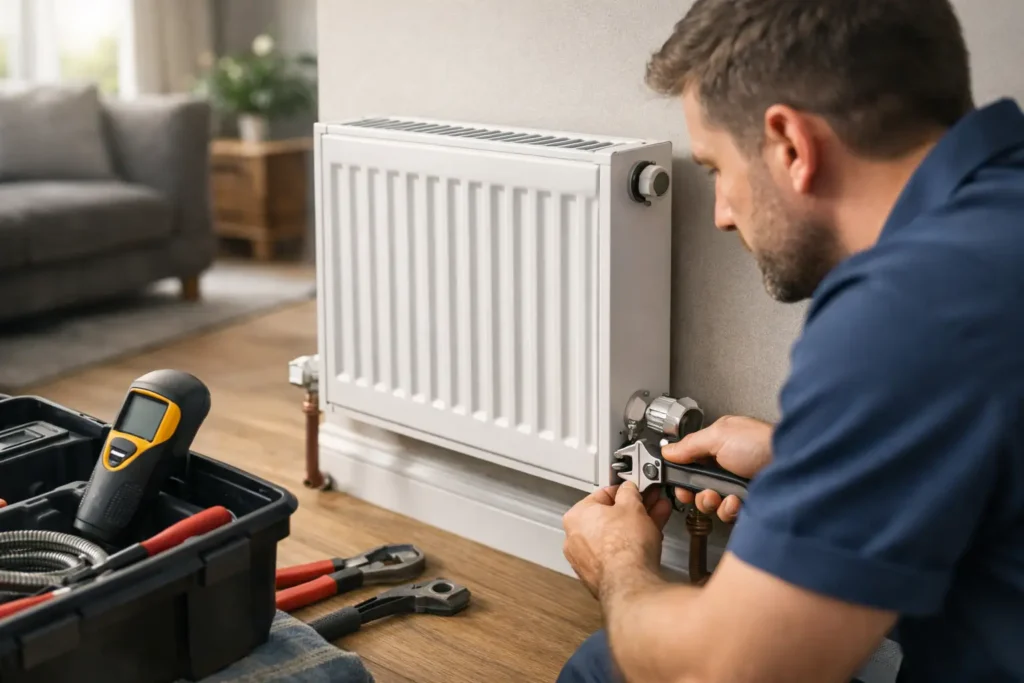
Thermostatic radiator valves allow you to adjust the temperature of individual rooms. Turn them gently from low to high at the start of the colder season and check that the radiator responds. A valve that has been left in one position for months can sometimes stick, particularly after summer.
Do not force a stiff valve. The internal pin can be delicate, and forcing it may create a leak or damage the valve further. A plumber can free or replace a faulty valve and check whether the radiator needs balancing at the same time.
Look around the valve body, pipe connection and bleed point for moisture, green staining, rust or marks on carpets and skirting boards. Even a slow seep can damage flooring over time. In rental homes, hotels, offices and shops, a small radiator leak can also become a tenant, guest or staff complaint very quickly. Early repair is usually cleaner, less disruptive and less expensive than waiting for the fitting to fail.
Keep an eye on system pressure and visible pipework
Many central heating systems have a pressure gauge. The acceptable range varies by installation, so follow the guidance supplied for your own system. What matters most is a noticeable change. If pressure continually drops, rises sharply when the heating is on, or requires frequent adjustment, arrange an inspection.
Check visible pipework in cupboards, beneath sinks, near radiators and around any exposed joints. You are looking for drips, damp patches, white or green residue, corrosion and unexplained marks on walls or ceilings. Pay particular attention after a period of very cold weather, when pipework in lofts, garages, empty rooms and outside walls may be more vulnerable.
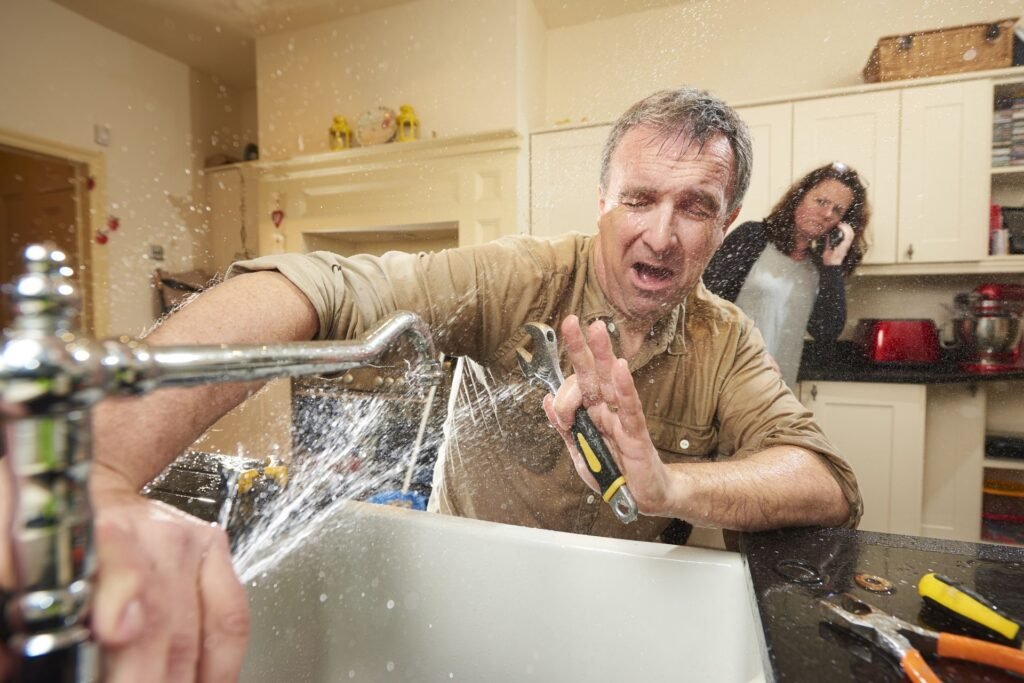
If you find active water escaping, contain it with towels or a tray where safe to do so and move belongings out of the way. Avoid dismantling fittings yourself. Turn off the water supply if the leak is significant and you know where the stop tap is, then call for help. Fast action can protect plaster, flooring, electrics and stock in commercial premises.
A practical guide to central heating maintenance through the year
The best time for routine checks is before you rely on the heating every day. Late summer or early autumn gives you time to identify cold radiators, stuck valves and minor leaks before a cold spell. Run the heating, walk through every room and make a note of anything different: odd noises, poor heat, damp smells or areas that take much longer to warm up.
During winter, keep furniture and heavy curtains from blocking radiators where possible. A sofa directly against a radiator does not cause a fault, but it can trap heat and make a room feel colder than it should. In rooms that are rarely used, a low, steady level of heat can help reduce the risk of damp and frozen pipework during severe weather.
In spring, inspect for issues that became apparent during the heating season. This is a sensible time to deal with a dripping radiator valve, replace a corroded fitting or improve an old radiator before the next cold spell. If a property will be vacant, make sure the water supply arrangements and frost protection are considered carefully. Landlords and property managers should also give occupants clear instructions on reporting leaks or loss of heat promptly.
Know when a power flush may be worthwhile
A power flush is not automatically needed just because a heating system is old. It can be useful where sludge, rust particles and debris are restricting circulation through radiators and pipework. Common warning signs include radiators cold at the bottom, dirty water released during bleeding, repeated circulation issues, persistent cold rooms and noisy flow through the system.
A proper assessment matters. In some cases, a single radiator repair, valve replacement or balancing adjustment is enough. In others, a flush can restore heat distribution and help protect the wider system from further debris. Older radiators and weakened pipework need careful consideration, which is why this work should be planned rather than treated as a quick fix.
Do not ignore noise, smells or changing performance
Gurgling can indicate trapped air, while knocking or ticking pipework may be caused by expansion, loose clips or pipes rubbing against timber or flooring. Not every sound is urgent, but a new noise that continues or becomes worse deserves attention.
A damp or musty smell near pipework, under floors or around a radiator may be the first sign of a concealed leak. Equally, a room that was once warm but is now noticeably colder should not simply be compensated for by turning every control higher. Poor circulation and failing valves waste energy and often get worse over time.
For commercial properties, react quickly to changes in toilets, kitchen areas and staff rooms as well as radiator performance. A water leak near a customer area, a school corridor or a restaurant kitchen can create hygiene concerns, slip risks and disruption to trading. Planned maintenance is useful, but prompt repairs protect the building when something changes unexpectedly.
Simple checks are useful, but repairs need a clear diagnosis
Homeowners can safely monitor radiator warmth, look for visible leaks and report changes early. Beyond that, central heating faults are rarely helped by guesswork. Draining a system, replacing valves, repairing pipework or power flushing all require the right tools and an understanding of the condition of the installation.
Good maintenance is not about carrying out unnecessary work. It is about identifying the reason a radiator is cold, a valve is leaking or pressure is changing, then choosing a repair that makes sense for the property. That is especially valuable in occupied homes and businesses, where tidy work, clear communication and minimal disruption matter as much as the repair itself.
If you have cold radiators, a dripping valve, suspected pipe leak or heating pipework that needs attention in Hull, Beverley or the surrounding area, contact HJZ Plumbing on 01482 236483 or through www.hjzplumbing.com. Acting early can keep a small heating issue from becoming water damage, downtime or a much bigger repair.