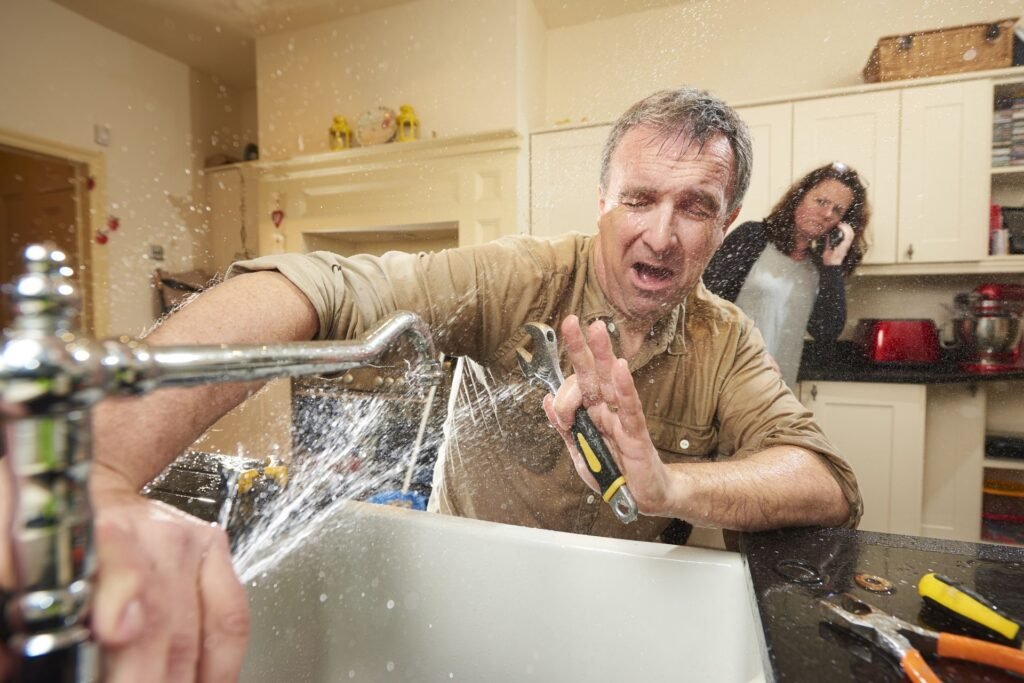
A blocked drain rarely gives much warning. Water may start draining slowly, a toilet may gurgle after flushing, or an unpleasant smell may appear around a kitchen sink or outside gully. When the blockage will not shift with basic measures, the question often becomes drain jetting vs rodding: which method is right for the job?
Both are proven ways to clear drains, but they work differently and suit different types of obstruction. Choosing the right approach matters. It can mean the difference between a quick, clean repair and a blockage that returns a few weeks later, potentially causing overflowing waste water, disruption for tenants or lost trade for a business.
Drain Jetting vs Rodding: The Main Difference
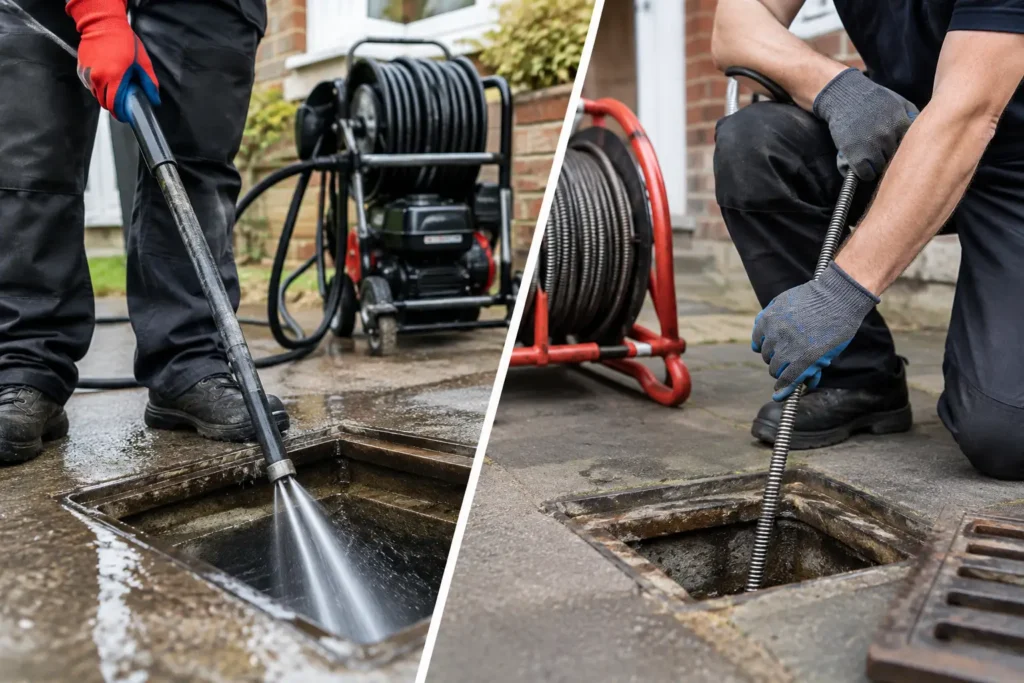
Drain rodding uses connected, flexible rods that are fed carefully through a drain to reach and break up, dislodge or retrieve a blockage. A suitable attachment is fitted to the end depending on the problem. It is a direct, mechanical method and has been used for many years on domestic and commercial drainage.
Drain jetting uses a specialist hose with a jetting nozzle that sends high-pressure water through the pipe. The forward water jets help the hose travel along the drain, while rear-facing jets scour material away and flush it back towards an access point. Rather than simply punching through a blockage, jetting can clean a longer section of the pipe wall.
Neither method is automatically better in every situation. The condition of the pipework, the location of the blockage and what is causing it all need to be considered before work starts.
When Drain Rodding Is the Sensible Choice
Rodding is often effective where there is a localised, solid blockage close to a drain access point. For example, compacted paper, wipes, a build-up of waste or debris around an outside gully may be cleared quickly with rods. It can also be useful when an item needs to be moved or recovered rather than washed further down the line.
For a straightforward blockage, rodding can be a practical first option. It does not require the same level of equipment as jetting, and a trained plumber can feel how the rods are moving through the drain. That feedback can help identify whether the obstruction is breaking up or whether something more serious may be present.
There are limits, however. Rodding tends to create a passage through a blockage rather than fully cleaning grease, soap residue, scale or silt from the inside of the pipe. If the drain has narrowed over time, water may start flowing again but the underlying build-up can remain. This is why repeated kitchen drain blockages, particularly in cafés, restaurants and takeaway premises, often need more than rods alone.
Rods must also be used with care. Forcing them through an obstruction, especially in older or damaged drainage, risks worsening a crack, dislodging a joint or pushing the blockage into a more awkward position. A professional will assess access and pipe condition rather than applying force blindly.
When Drain Jetting Is More Effective
Drain jetting is usually the stronger option for stubborn, recurring or widespread blockages. It is particularly useful for grease and fat deposits, soap scum, sludge, silt, leaves, food waste and other material that has attached itself to the inner wall of a pipe.
In a household, jetting may be appropriate where a kitchen waste pipe repeatedly slows down despite being cleared before. In commercial kitchens, it can help remove the greasy build-up that accumulates from day-to-day food preparation and washing up. For landlords and property managers, it can be a sensible way to deal with drainage problems between tenancies or before they develop into an emergency callout.
A properly carried out jetting job can clean much further along the line than a rod, helping restore the normal bore of the pipe. That makes it less likely for the same loose debris to catch immediately and form another blockage. It is also highly effective for outdoor drains affected by mud, leaves and general debris after poor weather.
Jetting is not simply a matter of turning up the pressure. Older clay pipes, poorly fitted joints and already damaged drainage may need a more cautious approach. If there are signs of a collapsed pipe, displaced joint or root intrusion, clearing the water flow is only part of the answer. The cause needs investigating so that the problem is not left to return.
What Causes the Blockage Matters Most
The method should follow the diagnosis, not the other way around. A toilet blockage caused by excessive paper or unsuitable items may respond well to careful rodding. A kitchen drain that clogs every few months is more likely to benefit from jetting because grease and residue are usually coating the pipe.
Tree roots are another example. Roots can enter drains through small gaps in older pipework, catching waste and restricting flow. Jetting may help clear loose roots and debris, but it cannot repair the point where roots are getting in. If the pipe has been compromised, repairs may be needed to prevent a repeat problem.
The same applies to damaged drains. If water drains away slowly because a pipe has shifted, cracked or partially collapsed, repeatedly clearing it may only delay the inevitable. Honest advice should include whether cleaning is likely to provide a lasting fix or whether further investigation is the sensible next step.
Can You Try Rodding Yourself?
Basic drain rods are widely available, but they are easy to misuse. Joining the rods incorrectly or turning them the wrong way can cause sections to loosen and become stuck in the drain. Pushing too hard can damage pipework, while poor handling can bring contaminated waste back towards the property.
Chemical drain cleaners are not a reliable substitute either. They can be hazardous to handle, may damage certain pipe materials or seals, and often do little against a solid blockage or deep build-up. Mixing products is particularly dangerous.
If a sink is only draining slowly, removing and cleaning an accessible trap may be reasonable. Once waste water is backing up, a toilet is affected, multiple fittings are slow to drain, or an outside drain is overflowing, it is time to arrange professional help. Acting early can protect flooring, kitchen units, bathroom finishes and the hygiene of the property.
How a Professional Chooses the Right Method
A dependable plumber will start by asking practical questions: which fittings are affected, when did the problem start, has it happened before, and is there any overflow outside? They will then check accessible points and decide whether rodding, jetting or another approach is most appropriate.
For homes, the priority is often restoring normal use quickly while keeping the work clean and contained. For businesses, schools, hotels and food premises, the priority may also include protecting staff, customers and trading hours. In either case, clear communication matters. You should know what has been found, what work is being carried out and what can be done to reduce the chance of another blockage.
Preventing the Next Blockage
No drain cleaning method can prevent every problem, but simple habits make a real difference. Keep fats, oils and food scraps out of kitchen sinks, use strainers where suitable, and only flush toilet paper down toilets. Wipes, sanitary products, cotton buds and similar items belong in a bin, even when packaging describes them as flushable.
For commercial kitchens and busy rental properties, planned drain maintenance can be worthwhile. It gives developing grease or debris build-up a chance to be removed before it causes a closure, tenant complaint or out-of-hours emergency.
If you have a blocked, slow-running or overflowing drain in Hull or the surrounding East Yorkshire area, do not wait for it to become a water damage or hygiene issue. Contact HJZ Plumbing directly on 01482 236483 or through our website for clear advice and practical help.