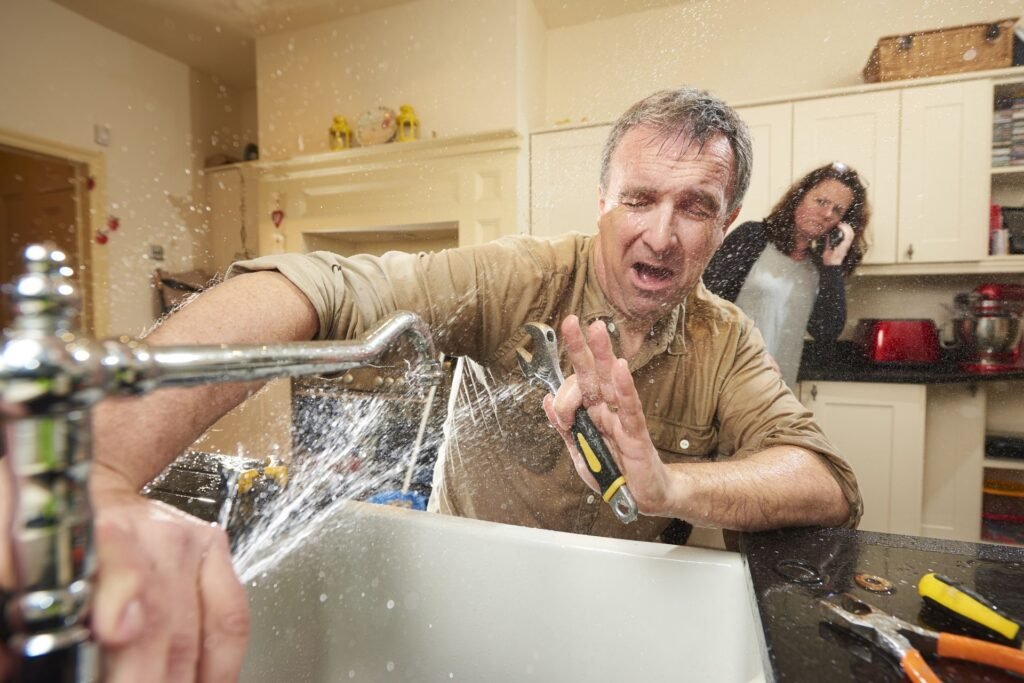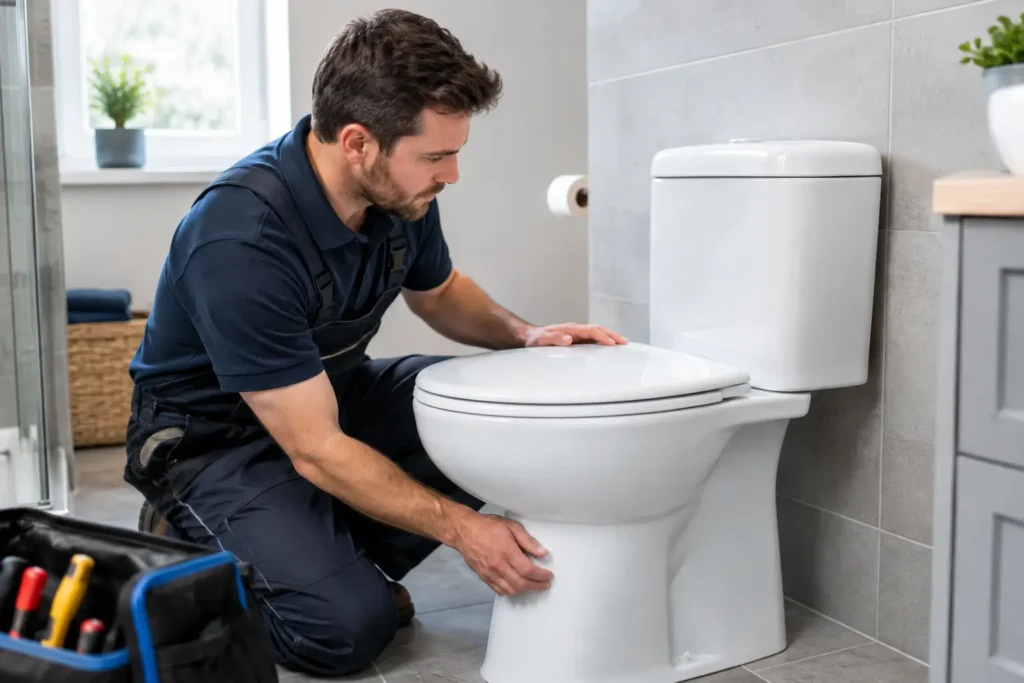
A toilet that will not flush, keeps running or leaks around the base can quickly become more than an inconvenience. The right choice between toilet repair or replacement depends on the fault, the age of the fitting and whether a repair will provide a dependable fix rather than just delay the next problem.
For a homeowner, it may mean deciding whether a small part is worth replacing. For a landlord, café, hotel or office, it can affect hygiene, customer comfort and whether a washroom has to be taken out of use. Acting early usually keeps disruption, water waste and repair costs under control.
When toilet repair is usually the sensible choice
Many common toilet faults are caused by hard-working parts inside the cistern rather than a problem with the toilet itself. A worn flush valve, faulty fill valve, broken flush handle or deteriorated seal can often be replaced without removing the pan or changing the whole suite.
A toilet that constantly trickles into the bowl is a good example. This is often caused by a flush valve that is no longer sealing properly. It wastes a surprising amount of water over time, but a professional repair is normally straightforward. Similarly, a cistern that takes too long to fill, overfills or makes a persistent hissing sound may need its inlet valve adjusted or renewed.
A weak or incomplete flush can also be repairable. The cause could be a poorly adjusted mechanism, a partially blocked rim, a worn siphon or an issue with the flush button. Before assuming the toilet needs replacing, it is worth having the fault properly diagnosed.
Small leaks are another situation where repair is often worthwhile. Water around the cistern may come from loose fittings, failed washers or a leaking connection. If the water is appearing at the base of the toilet, the cause may be a failed pan connector or seal. These faults should not be ignored, but they do not automatically mean the ceramic toilet needs to be replaced.
Repair is generally the better option where the toilet is in otherwise good condition, the fault is isolated, replacement parts are readily available and there is no damage to the pan, cistern or waste pipe. It is less wasteful and can restore normal use quickly.
Signs a replacement will save trouble later
There comes a point where repeatedly repairing an old toilet stops being good value. If you are calling someone out for the same issue every few months, replacing the unit may be the more practical long-term decision.
Cracks in the ceramic are one of the clearest warning signs. Even a hairline crack can worsen with use, particularly where it is holding water. A cracked cistern can leak unexpectedly, while damage to the pan can create a hygiene issue and may eventually cause the toilet to become unstable. Ceramic repairs are rarely a reliable answer for a toilet that is in daily use.
Replacement is also worth considering if the toilet moves when sat on, the base has been damaged, or the fixing points can no longer be secured safely. Sometimes the issue is simply worn fixings, but movement can also indicate a problem with the floor, the pan connection or the toilet itself. The cause needs checking before a new toilet is fitted.
Older toilets may have obsolete internal components that are difficult to source, especially if they have unusual cistern fittings. It is possible to adapt some parts, but this can become an expensive cycle of small repairs. A modern replacement can provide more dependable flushing, easier-to-find components and improved water efficiency.
Appearance matters too, particularly in bathrooms being renovated or commercial washrooms used by customers. Heavy staining, crazed glaze, persistent odours caused by hidden leaks, and a toilet that no longer matches the room can make replacement a sensible planned improvement rather than an emergency expense.
The cost question: cheap repair or proper value?
The cheapest immediate option is not always the least expensive over a year or two. A single faulty valve is usually worth repairing. But if an ageing toilet needs new internals, fresh seals, attention to the pipework and has visible damage, those separate jobs can add up.
A plumber should be able to explain what has failed, what can realistically be repaired and what further work may be needed. This lets you decide based on the condition of the installation rather than being pushed into an unnecessary replacement.
For landlords and property managers, this judgement is particularly useful between tenancies. Replacing a toilet during a planned void period can be easier and less disruptive than arranging repeated visits while tenants are living in the property. The same applies to businesses that need their customer toilets available during trading hours.
Toilet repair or replacement: faults that need prompt attention
Some problems should be dealt with quickly regardless of whether repair or replacement is ultimately required. A toilet may still appear usable, but continued use can damage flooring, ceilings below or nearby fittings.
If wastewater is backing up into the bowl, the problem may be a blockage in the toilet trap or drainage pipe rather than a faulty toilet. Avoid repeated flushing, as this can cause an overflow. Do not rely on harsh chemical drain cleaners either. They may not shift the obstruction and can make later work more unpleasant or damage older pipework.
Water leaking from the base should also be treated seriously. It may be clean water from a nearby connection, but it can also indicate that the seal between the toilet and waste pipe has failed. If the leak appears after flushing, minimise use until the cause has been checked.
A toilet that is constantly running needs attention too. It may not flood the room, but it can waste substantial water and leave you with a higher bill. In a commercial property, a constantly filling cistern can also create unwanted noise and complaints from staff, guests or customers.
If there is active flooding, turn off the toilet’s isolation valve if you can do so safely. This is normally the small valve on the water supply pipe near the toilet. If there is no local valve, use the main stopcock where appropriate, then arrange professional help.
What is involved in replacing a toilet?
A straightforward replacement is often completed with limited disruption, but the details matter. The old toilet needs to be removed carefully, the waste connection inspected, and the new unit aligned properly with the existing pipework. A poor fit can lead to slow leaks, bad smells, instability or flushing problems later.
The available space is important. Close-coupled, back-to-wall and wall-hung toilets each have different fitting requirements. In a small cloakroom, the projection from the wall and the position of the soil pipe can determine what will fit comfortably. A toilet selected online because it looks right may not suit the existing connections without additional work.
Floor condition should be checked at the same time. A long-term leak can soften timber flooring, damage laminate or affect the subfloor beneath tiles. Fitting a new toilet onto an unstable surface simply hides the underlying problem for a while.
For commercial premises, planning the timing of the work is just as important as the product choice. A replacement can often be arranged around quieter periods to reduce disruption for staff, tenants or customers. Where there is only one toilet, a prompt and organised response makes a real difference.
Choosing a practical toilet for your property
A replacement toilet does not need to be the most expensive model to be a good choice. Prioritise a reliable flushing mechanism, readily available spare parts and a design that suits the room and existing pipework. Standard fittings are often a sensible option for rental homes and busy commercial properties because future maintenance is simpler.
For family homes, easy-clean surfaces and a comfortable height can be more useful than fashionable details. For restaurants, cafés and hotels, durability and ease of cleaning should be high on the list. If accessibility is a concern, a comfort-height toilet or suitable adapted arrangement may be worth discussing before work begins.
The best decision is usually the one that prevents repeat disruption. A well-targeted repair can give years of further service, while a replacement is the better answer when the toilet is damaged, unreliable or no longer suited to the property.
If your toilet is leaking, blocked, running constantly or simply past its best, do not wait for a small fault to affect your floor, tenants or business premises. For clear advice and tidy, dependable work across Hull and the surrounding area, contact HJZ Plumbing directly on 01482 236483.