A toilet can be leaking for days or weeks without leaving a puddle on the bathroom floor. Water may be escaping into the pan, beneath the cistern, around a hidden pipe or under the flooring instead. Knowing how to detect concealed toilet leaks can help you act before a small fault turns into damaged ceilings, stained walls, loose flooring, mould or an unexpectedly high water bill.
For homeowners, landlords and busy premises, the warning signs are often easy to miss because toilets are used so frequently. A little investigation can reveal whether the issue is likely to be a simple washer, a faulty flush valve, a failed seal or a leak that needs professional repair.
Why concealed toilet leaks cause bigger problems
Not every toilet leak is dramatic. The most common concealed leak is an internal cistern leak, where water quietly runs into the toilet pan after flushing. You may hear a faint refill, but no water reaches the floor. It can waste a surprising amount of water over time.
Other leaks occur at pipe connections, beneath a close-coupled cistern, around the toilet base or from a concealed cistern behind tiles or a boxed-in wall. These can damage materials that do not dry quickly, particularly chipboard flooring, plasterboard, skirting boards and the ceiling below an upstairs bathroom.
In rental homes and commercial properties, a slow toilet leak can also create hygiene concerns and disruption for tenants, staff or customers. Acting early usually means a more straightforward repair and less remedial work afterwards.
How to detect concealed toilet leaks inside the cistern
Start by listening. When nobody has used the toilet, a healthy cistern should be quiet. A regular hiss, trickle or short burst of refilling can indicate that water is passing through the flush valve into the pan. This is sometimes called a running toilet, although the flow may be too slight to see easily.
Try the food colouring test
The colouring test is a simple way to check for an internal leak. Remove the cistern lid carefully and add a few drops of food colouring to the water. Do not flush the toilet. Leave it for around 20 to 30 minutes, then look in the pan.
If coloured water appears in the pan, water is escaping past the flush valve seal. The likely cause may be a worn seal, scale build-up, a damaged valve or an incorrectly adjusted mechanism. Avoid leaving the test for hours, as coloured water can mark an older or porous toilet bowl.
A concealed cistern behind a wall panel can be harder to access, but persistent refilling, water in the pan and a rising bill are still strong clues. Do not force flush plates or access panels if you are unsure how they release, as clips and fittings can be easily damaged.
Check the water level
If you can see inside the cistern, look at where the water sits in relation to the overflow pipe. Water should stop below the top of the overflow. If it is constantly running into the overflow, the fill valve may not be shutting off correctly.
This is not always the same as a failed flush valve. Water running down the overflow may be visible as a steady ripple or trickle in the pan, while a flush valve leak may be slower and only show up during a colouring test. Either way, the toilet is wasting water and needs attention.
Look for signs around the toilet, not just in it
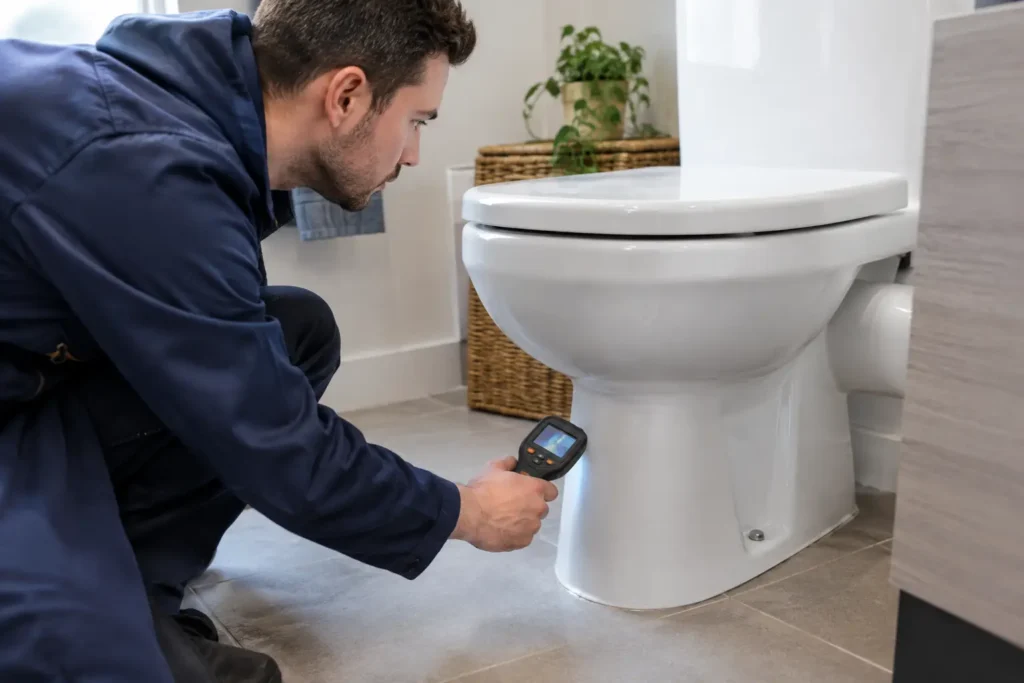
A hidden leak outside the cistern often leaves indirect evidence. Run your hand around accessible pipe joints, the water supply valve and the underside of the cistern. Use dry kitchen roll or tissue rather than relying on your fingers alone. Even a tiny bead of moisture will show on the paper.
Check the floor around the base of the toilet after several flushes. A failed pan connector, seal or cistern-to-pan connection may only leak while water is moving through the system. Pay close attention to vinyl edges, grout lines, silicone and the area where the toilet meets the floor.
There should not be a persistent musty smell in a bathroom or cloakroom. Peeling sealant, discoloured flooring, lifted vinyl, swollen skirting, cracked grout or dark marks on a ceiling below are all reasons to investigate. These signs do not prove the toilet is responsible, but they should not be ignored.
If the toilet rocks when you sit on it, avoid repeated use until it has been checked. Movement can break seals and allow waste water to escape beneath the pan. Tightening visible fixings without finding the cause can make matters worse, especially where flooring or the pan itself has already been damaged.
Use your water meter to confirm a hidden leak
A water meter is useful when there is no obvious source. First, make sure nobody is using water in the property. Do not run taps, operate appliances or flush toilets during the test. Take a clear meter reading, then wait for at least 30 minutes, or longer if practical.
If the reading changes, water is being used somewhere. Turn the toilet isolation valve off, if it is accessible and working, then repeat the test. If the meter stops moving, the toilet is likely to be involved.
This test does have limits. More than one appliance or fitting may be leaking, and some properties have shared or difficult-to-access meters. It is still a useful indication that a quiet leak needs tracing, particularly for landlords checking an empty property or facilities managers dealing with unexplained water use.
When a toilet leak may be hidden behind walls or floors
Modern bathrooms often hide pipework behind tiled boxing, vanity units or false walls. This creates a cleaner finish but makes a leak harder to spot. Watch for loose tiles, softened wall finishes, recurring mildew, unexplained damp patches, or a patch of flooring that feels soft or colder than the surrounding area.
Do not start removing tiles or cutting into boxing as a first step. Water can travel away from the original leak, so the visible damage is not always directly beside the fault. A professional plumber can inspect the toilet fittings, test connections and identify the most likely source before unnecessary damage is caused.
For a toilet above a kitchen, hallway or commercial ceiling, a brown mark or bubbling paint below should be treated as urgent. If water is dripping near electrical fittings, switch off the affected circuit only if it is safe to do so and seek help promptly. Avoid using the toilet until the leak has been assessed.
What to do when you find a suspected leak
If water is actively escaping onto the floor, stop using the toilet and turn off its local isolation valve if possible. This is usually a small valve on the supply pipe close to the cistern. Turn it carefully rather than forcing a stiff valve. If there is no local valve, the property’s main stop tap may be needed.
Place towels around the affected area to limit spread, but do not assume the problem is contained just because the surface looks dry. Take photographs of any staining or damage, particularly in rented or managed properties, then arrange a repair as soon as possible.
A running cistern may not require the water supply to be shut off if it is only leaking internally, but it should still be repaired promptly to prevent waste and further wear. Where the cause is unclear, a proper inspection is safer than replacing parts at random. Toilet components vary, and an incorrect fitting can create a new leak or stop the toilet flushing reliably.
Get a concealed toilet leak checked early
A concealed toilet leak is rarely something that improves on its own. The earlier it is traced, the better the chance of protecting floors, walls, ceilings and the people using the property. HJZ Plumbing provides practical toilet leak repairs and fault finding for homes, rentals and commercial premises across Hull and surrounding East Yorkshire areas.
If your toilet is constantly refilling, showing signs of damp or leaking after flushing, contact HJZ Plumbing on 01482 236483 or through www.hjzplumbing.com. A prompt repair can keep a small hidden fault from becoming a much larger disruption.