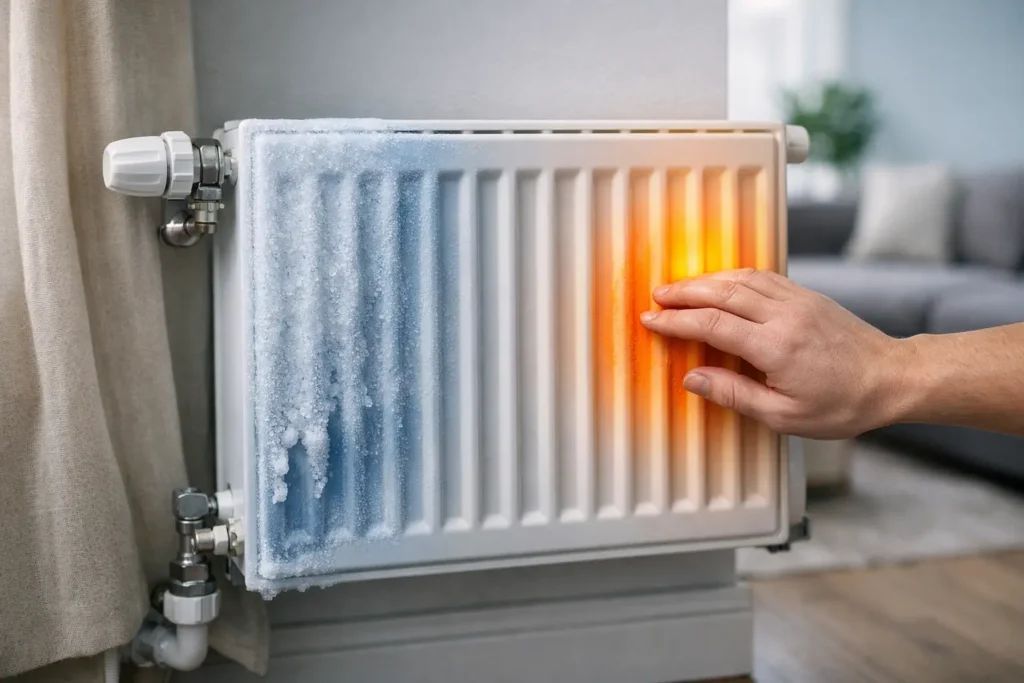
A radiator that is hot at the top but cold along the bottom is not just frustrating on a chilly Hull morning. It is often a sign that water is not circulating through it properly. If you are asking what causes radiator cold spots, the answer usually comes down to trapped air, sludge, a valve issue or an imbalance in the heating system. Finding the pattern of the cold area is the quickest way to understand what needs attention.
A cold radiator can leave one room uncomfortable, increase the time your heating needs to run and create avoidable complaints in rented homes, offices, cafés and other occupied properties. Acting early can often prevent a small circulation issue becoming a more expensive repair.
The position of the cold spot matters
Not all cold spots point to the same fault. Before changing settings or arranging a repair, carefully feel the radiator when the heating has been running long enough to warm the rest of the property. Take care around hot surfaces, especially in homes with young children.
A radiator that is cold at the top is commonly holding air. Air rises above the water inside the radiator and stops hot water reaching the upper section.
A radiator that is cold at the bottom, particularly if the top is warm, is more likely to contain sludge or debris. This settles at the base and restricts the flow of water through the lower channels.
If one side is hot and the other side stays cold, the problem may be a partly closed valve, a stuck thermostatic radiator valve, or poor system balancing. A radiator that is cold all over needs a broader check, as both valves, the pipework and the wider circulation may be involved.
What causes radiator cold spots most often?
Trapped air inside the radiator
Air can enter a central heating system gradually through small pressure changes, minor leaks or work carried out on pipework. Once it reaches a radiator, it collects at the highest point. The usual signs are a cool top edge, gurgling sounds or a radiator that takes much longer to heat than the others.
Bleeding the radiator may release the air and restore heat. This should be done with the heating turned off and the radiator cool enough to handle safely. Use a proper bleed key, hold a cloth beneath the valve and close it as soon as water begins to come out steadily. Do not leave the valve open or force it if it is stiff.
If air returns repeatedly, bleeding is only treating the symptom. There may be a small leak, an issue elsewhere in the system or ongoing corrosion producing gases. That needs professional investigation rather than continual topping up and bleeding.
Sludge and corrosion deposits
Cold patches at the bottom are often caused by sludge. Over time, metal particles and corrosion deposits can build up in heating water. They sink and gather in radiators, narrow pipework and other low-flow areas.
This is more common in older systems, but it can affect any property where water quality and circulation have not been managed well. You may notice that some rooms remain cooler than others, radiators heat unevenly, or the lower edge of several radiators feels noticeably cooler.
A single affected radiator may sometimes be removed and cleaned. Where several radiators show the same symptoms, a professional power flush may be a better option. This uses specialist equipment to circulate cleaning solution and water through the system, helping remove stubborn debris. It is not a cure for every fault, and it will not repair heavily corroded radiators or damaged valves, but it can make a major difference when sludge is the underlying cause.
Stuck or restricted radiator valves
Each radiator relies on valves to control the flow of hot water. One may be a thermostatic radiator valve, usually with a numbered control, while the other is often a lockshield valve hidden beneath a cap. If either valve is closed, partly closed or stuck, the radiator may only heat on one side or fail to warm at all.
Thermostatic valves can stick after being left in the same position for months, particularly after warmer weather. Turning the control up may not solve the issue if the small internal pin has seized. Avoid applying excessive force, as this can damage the valve or cause a leak. A plumber can assess the valve, free or replace it where appropriate, and check that the radiator is receiving the flow it needs.
Poor system balancing
Balancing is the process of setting the flow through each radiator so heat is distributed fairly across the property. Without it, radiators nearest to the main pipework may heat quickly while those further away remain lukewarm or develop cold areas.
This can become noticeable after a radiator has been replaced, an extension has been added, or valves have been adjusted without being reset correctly. It is particularly disruptive in larger homes, shared accommodation, hotels, shops and offices where different rooms are used at different times.
Balancing is not simply a matter of turning every valve fully open. Doing that can make the imbalance worse. It requires measured adjustments and patience, which is why it is often best handled as part of a professional radiator service.
A failing radiator or damaged pipework
Occasionally, the radiator itself is beyond an economical clean or repair. Internal corrosion can restrict its waterways, while external rust around joints and fittings can signal a leak risk. A radiator that has been damaged, repeatedly leaks, or remains cold after cleaning and valve checks may need replacing.
Pipework restrictions can also affect circulation. Old pipework, poor installation work or debris lodged in a narrow section can stop enough heat reaching one radiator. A practical inspection can identify whether the fault is local to the radiator or part of a wider issue.
Safe checks you can make before booking a repair
Start with the simple things. Make sure the radiator control is set to a suitable temperature and that neither valve has been knocked fully closed. Compare the affected radiator with others nearby, noting whether it is cold at the top, bottom, one side or all over.
Listen for gurgling and look closely for staining, rust, damp carpet, swelling skirting boards or moisture around valves and pipe joints. Even a slow drip can lead to water damage if ignored. Do not dismantle fittings, loosen pipe connections or keep trying to bleed a radiator that repeatedly fills with air.
For landlords and property managers, it is worth recording which rooms are affected and whether the issue has returned after previous bleeding. This gives a clearer picture when arranging maintenance and helps avoid repeated tenant disruption.
When professional help is the sensible next step
Call a plumber if the radiator is cold at the bottom, if several radiators are heating unevenly, if a valve is leaking or stuck, or if bleeding has only helped temporarily. These signs usually mean the issue needs more than a quick adjustment.
A proper visit can establish whether the best option is valve repair, radiator cleaning, replacement, balancing or power flushing. The right fix depends on the condition of the system, the age of the radiator and whether one room or the whole property is affected. Clear diagnosis matters, because replacing a radiator will not solve a circulation problem elsewhere.
Do not put up with a cold room or wait for a minor heating issue to affect tenants, customers or your daily routine. For straightforward advice and tidy, practical radiator repairs across Hull and East Yorkshire, contact HJZ Plumbing on 01482 236483 or through the HJZ Plumbing website.