A heat pump can be working hard outside while poor air source heat pump plumbing lets the whole property down indoors. Cold rooms, noisy pipework, poor hot water recovery, dripping discharge pipes or frozen condensate drains are not minor annoyances. They can waste energy, cause disruption and leave a home, rental property or business premises uncomfortable when it needs to function properly.
The outdoor unit attracts most of the attention, but the plumbing around it has a major effect on how reliably the system performs. From suitable pipework and well-balanced radiators to safe drainage and insulation, the water side of the installation needs the same careful planning as every other part of the job.
What air source heat pump plumbing includes
An air source heat pump moves heat into water, which is then circulated around radiators, underfloor heating or a hot water cylinder. The plumbing is the route that carries that heat where it is needed. If that route is restricted, poorly insulated, incorrectly sized or leaking, the system has to work harder for less benefit.
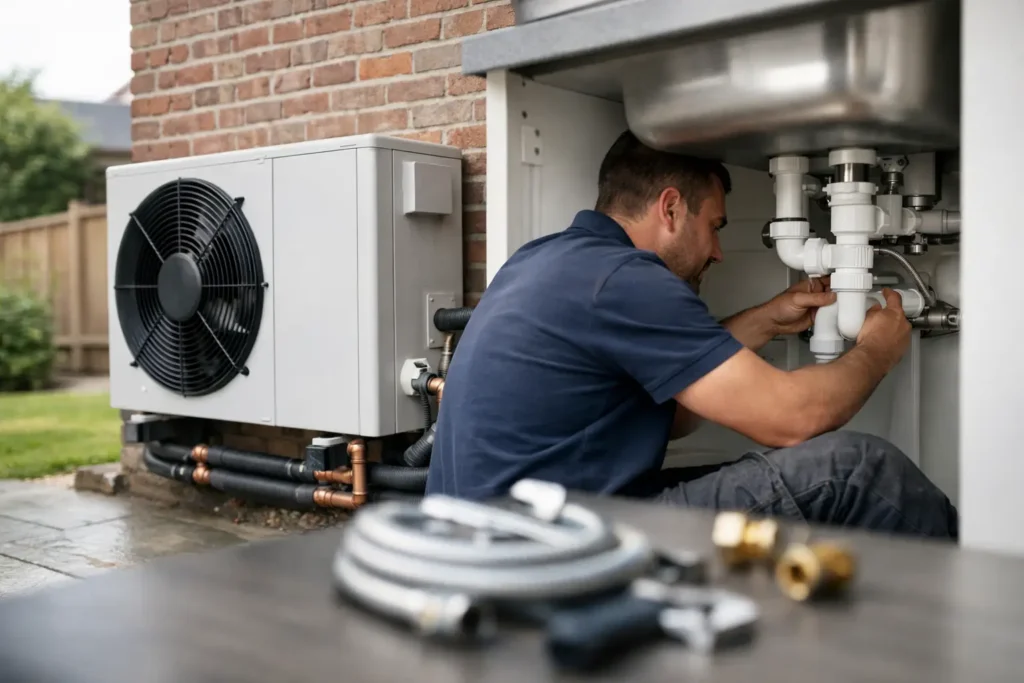
A typical arrangement may include flow and return pipework between the outdoor unit and the property, circulation pumps, valves, filters, a hot water cylinder, expansion equipment and heating emitters. Some properties also need a buffer vessel or low-loss arrangement to maintain stable water flow. The right setup depends on the building, its heat loss, the heating layout and how the property is used.
There is no one-size-fits-all answer. A compact, well-insulated home with underfloor heating has very different plumbing requirements from an older East Yorkshire house with small radiators and long pipe runs. A café, hotel or office may also have busy periods when hot water demand and heating needs rise sharply.
Pipework size and insulation matter more than many expect
Heat pumps generally circulate a larger volume of water at a lower temperature than older heating systems. That means undersized pipework can become a real problem. It may restrict flow, create noise, increase running costs and prevent rooms from reaching a comfortable temperature.
The pipework should be sized for the system output, length of run and required flow rate. Long external runs need particular care. Heat lost between the outdoor unit and the property is heat you have paid to produce, so suitable weather-resistant insulation and a tidy, protected installation are essential.
Existing pipework may sometimes be retained, but it should not be assumed to be suitable simply because it was already there. A proper assessment can identify narrow sections, poor joints, corrosion, old valves or areas where heat loss is likely. Replacing a short problematic section early is often far less disruptive than chasing poor performance after the system is in use.
Radiators need to suit lower flow temperatures
A heat pump is most efficient when it can run at lower water temperatures. This is where radiator performance becomes especially important. Radiators designed around hotter water may still give out some heat, but they may not provide enough warmth when the system runs efficiently.
That does not always mean every radiator must be replaced. Room-by-room heat loss, radiator size, insulation levels and how each room is used all need to be considered. Bedrooms may need less output than a large living area with external walls, while a bathroom may require a radiator or towel rail that performs well without forcing the whole system to run hotter.
Larger radiators, upgraded emitters or underfloor heating can often allow lower operating temperatures and steadier comfort. Correct balancing also matters. Without it, rooms near the main pipework can take more heat while distant rooms remain cool.
Clean water protects the system
Older heating systems can contain sludge, scale and debris from years of use. Once water begins circulating through a new heat pump arrangement, that debris can block filters, affect valves and reduce flow. It can also contribute to uneven heating and repeat call-outs.
A professional clean, flush where appropriate and suitable filtration help protect the plumbing side of the system. This is particularly worthwhile in properties where radiators have cold spots, the water has discoloured, or leaks and repairs have been carried out over time. Keeping the system water clean is not glamorous work, but it helps prevent costly faults later.
Condensate drainage should not be an afterthought
When an air source heat pump operates, moisture in the air can condense and must drain away safely. In cold weather, this water can freeze if the drainage route has been poorly planned. A frozen condensate drain may lead to ice around the unit, nuisance water run-off and reduced performance.
The drain needs a suitable fall, an appropriate outlet and protection against freezing conditions. It should not discharge where it creates a slip risk near a doorway, access route or customer entrance. For landlords and commercial property operators, this is not just a maintenance issue. It is also a practical safety concern for tenants, staff and visitors.
Drainage should be checked as part of routine maintenance, particularly before winter. Leaves, dirt and debris can block outlets, while ground movement or damaged clips can alter the fall of pipework. A small correction made early can prevent a much more inconvenient problem during a cold spell.
Pressure relief and safety discharge pipework
Heating systems need measures to deal with pressure changes safely. Expansion vessels, pressure relief valves and discharge pipework all have a role. If a discharge pipe drips continually, the system pressure keeps dropping, or a relief valve is regularly opening, it needs investigation rather than repeated topping up.
Water escaping from a relief pipe can be a warning sign of an underlying fault, such as a failed expansion vessel, excessive pressure or an issue with controls. Ignoring it can lead to corrosion, water damage or a system that repeatedly loses pressure when occupants need heating and hot water.
The discharge route must also be installed safely and visibly enough that problems can be spotted. Hiding a symptom behind boxing or allowing water to run onto a path only delays the repair and can create a larger issue.
Common plumbing faults to act on quickly
Some heat pump plumbing problems develop gradually, while others need prompt attention. Watch for rooms that no longer warm up evenly, new gurgling or rushing sounds, frequent pressure loss, visible leaks, damp patches, rusty radiator valves, water around the outdoor unit or a condensate pipe that has frozen.
A landlord may first hear about the problem when a tenant has no heating in one room. A restaurant may notice it as an uncomfortable dining area or a washroom with poor hot water performance. In either case, delaying an inspection can allow a minor leak, blocked filter or circulation issue to become a more expensive repair.
Regular visual checks are useful, but repairs should be based on the cause, not guesswork. Re-pressurising a system without finding where pressure is being lost, for example, does not fix the fault. It merely postpones it.
Planning plumbing work around an occupied property
Good planning keeps disruption down. Before work starts, consider access routes, whether water needs to be isolated, where pipework will run and how rooms will be protected. This matters in family homes, but it is just as important in shops, schools, hotels and rented properties where downtime affects other people.
Tidy pipe runs, secure brackets, properly finished wall penetrations and clear labelling make future maintenance easier. They also help protect interiors from damage and give property owners a clearer understanding of what has been installed. If existing plumbing needs adapting, honest advice about what can be retained and what should be upgraded will usually save money in the long term.
For homeowners and property managers across Hull and the surrounding area, a reliable local plumber can help assess leaks, radiator issues, pipework alterations, drainage concerns and the wider water-side condition of a heat pump system. Where specialist heat pump installation work is required, clear coordination between trades is the sensible way to avoid missed details.
If you have noticed a leak, poor radiator performance, frozen drainage or recurring pressure problems, do not wait for water damage or a complete loss of heating. Contact HJZ Plumbing directly on 01482 236483 or through www.hjzplumbing.com for practical advice and tidy, dependable plumbing support.