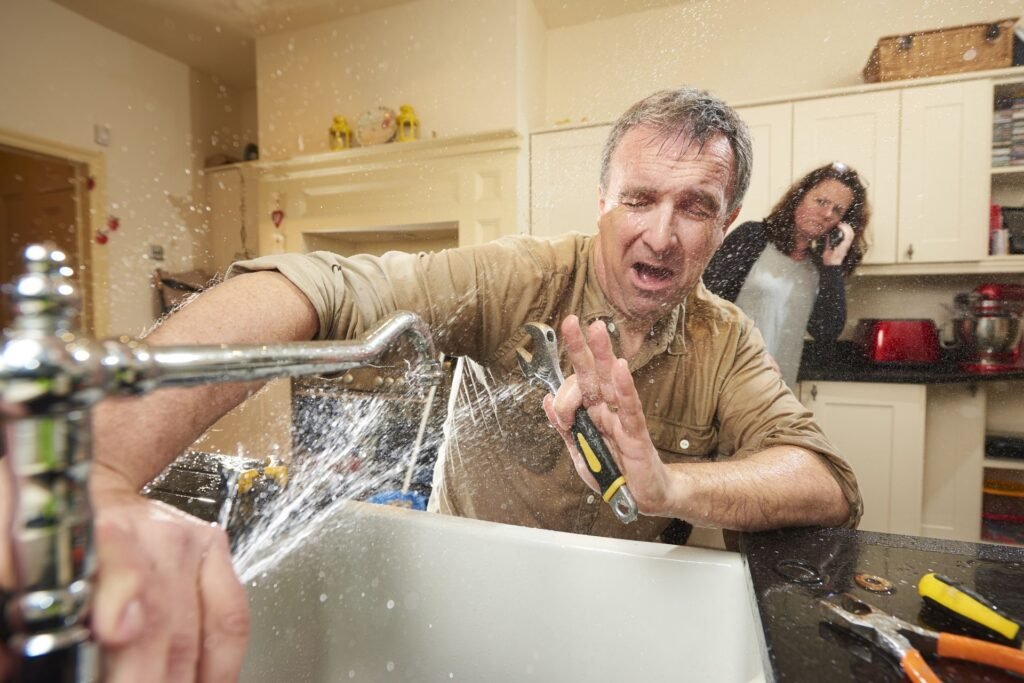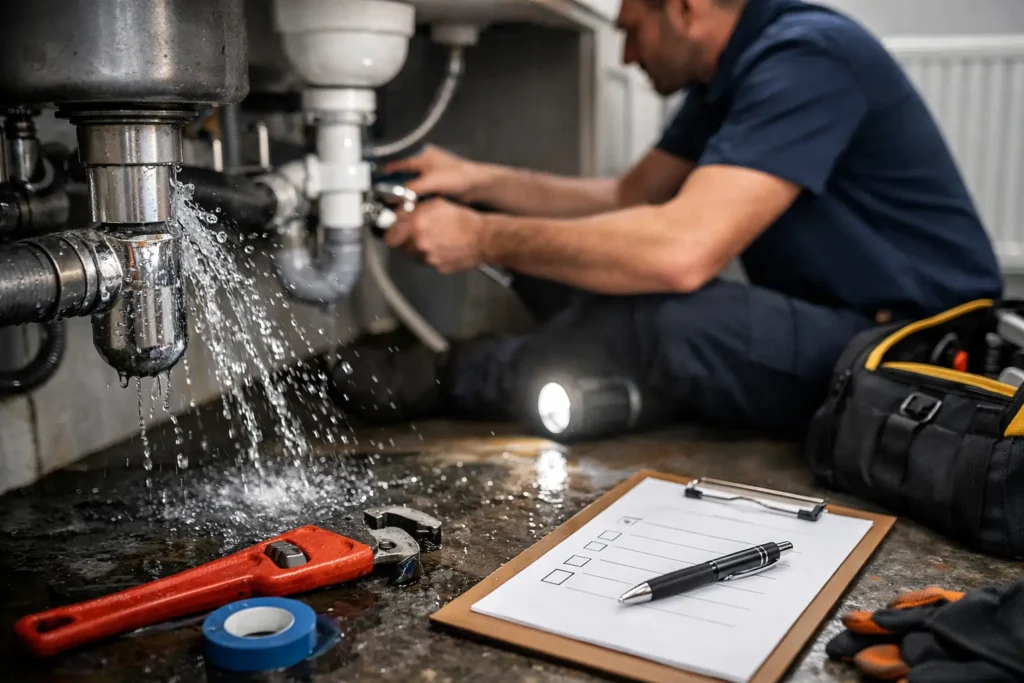
A leaking pipe can soak a kitchen unit, stain a ceiling or flood a shop floor far quicker than most people expect. This emergency leak repair checklist helps you take calm, practical action while protecting your home, tenants, customers or business premises until a plumber can attend.
The priority is not to diagnose every part of the problem. It is to stop or reduce the water flow, make the area safe and avoid turning a manageable repair into costly damage.
Emergency Leak Repair Checklist: The First 15 Minutes
1. Turn off the water supply
If water is flowing continuously from a pipe, appliance connection, toilet or fitting, turn off the stopcock as soon as possible. In many homes, it is under the kitchen sink, but it may also be in a utility room, downstairs cupboard, garage or near the water meter. Turn it clockwise to close it.
For a localised leak, you may be able to isolate just that fixture using a small isolation valve on the pipework. This can be useful if the leak is under a sink or behind a toilet and you need to keep water available elsewhere in the property. If you are unsure which valve controls what, shut off the main supply instead. A short period without water is usually better than allowing a leak to continue.
In commercial premises, make sure the person responsible for the building knows where the main stop valve is located. Hotels, cafés, restaurants, schools and offices should keep this information accessible, including outside normal working hours.
2. Keep water away from electricity
Water and electrics are a dangerous combination. If water is near sockets, extension leads, electrical equipment, light fittings or the consumer unit, do not stand in pooled water or touch electrical items.
If it is safe to do so from a dry area, switch off the relevant electrical circuit at the consumer unit. If you cannot do this safely, keep people away from the affected area and call for professional help. A ceiling bulging with water is particularly serious, as it can collapse without warning and may affect lights or wiring above.
3. Contain the water and protect what you can
Put buckets, washing-up bowls or sturdy containers beneath drips. Use towels, old sheets or mops to soak up water spreading across floors, but do not waste time trying to dry the entire area before the supply has been stopped.
Move furniture, stock, paperwork, rugs and electrical items away from the leak where it is safe to do so. For a leak inside a kitchen unit, remove stored items and leave cupboard doors open once the water is isolated. This helps you see the source and allows the area to dry more effectively afterwards.
If water has reached a neighbouring flat, shared corridor or adjoining business unit, tell the affected person or building manager straight away. Prompt communication can prevent confusion and speed up access for repairs.
4. Relieve pressure where appropriate
Once the main water supply is off, turn on the cold taps briefly to drain residual water from the pipes. This can reduce dripping and pressure around the damaged section. Flush the toilet once if the leak is connected to the toilet supply, but only if there is no risk of overflowing water.
Do not keep operating taps, showers, washing machines or dishwashers to test the issue. If the source is unclear, using the system can make a hidden leak worse or send water into an already damaged area.
5. Take clear photos before anything is moved
Photograph the leaking fitting, wet flooring, damaged ceiling, cupboard interior or surrounding area. A few clear images may help with insurance records, landlord reporting and explaining the problem to your plumber.
You do not need to dismantle pipework to get a better picture. A photograph of the visible leak, plus a note of when it started and whether the water was clean or dirty, is normally enough to provide useful initial information.
6. Call a plumber when the leak is controlled
Temporary containment is not a repair. A plumber can identify whether the cause is a split pipe, failed connector, loose joint, worn tap component, damaged waste pipe, faulty toilet fitting or an issue concealed behind a wall, unit or floor.
For properties across Hull, Beverley and the surrounding East Yorkshire area, a fast callout can limit the disruption and help protect the building fabric before damp, mould or swelling materials create a larger job.
When a Leak Needs Emergency Help
Some drips can wait for a planned appointment, particularly if they are contained, the water supply is isolated and no damage is spreading. A tap that drips into a sink overnight is frustrating and wasteful, but it is not always an immediate emergency.
A leak needs urgent attention when water cannot be stopped, is spreading into floors, walls or ceilings, affects electrics, comes through a ceiling, threatens a neighbouring property or prevents a toilet, kitchen or washroom from being used safely. For a café, restaurant, hotel or shop, the decision also depends on hygiene and trading. Water around a customer area, food preparation space or staff toilet may require immediate action even if the visible leak seems small.
Wastewater leaks should always be treated more seriously than clean-water leaks. Keep people away from the area, avoid trying to clean it without appropriate protection and arrange prompt professional repair. The same applies to repeated toilet overflows, blocked drains backing up indoors and leaks from pipework that you cannot safely reach.
What Not to Do During an Emergency Leak Repair
It is tempting to wrap tape around a pipe, tighten every nearby fitting or force a valve that has not moved for years. These quick fixes can sometimes buy a few minutes, but they also carry risks.
Do not overtighten nuts or connectors. A fitting that looks loose may have a damaged seal, cracked thread or corroded pipe behind it. Extra force can turn a small leak into a broken connection. Avoid using sealants or repair tape on wet, pressurised pipework as a substitute for a proper repair, particularly on concealed pipes or plastic fittings.
Do not remove boxing, kitchen units, flooring or ceiling sections unless there is a clear safety reason and you know what is behind them. Water may have travelled from another point, so the visible stain is not always the source. A tidy inspection by a plumber is usually safer and can prevent unnecessary damage to the property.
After the Water Is Off: Reducing Damage
Even after a leak is repaired, moisture left behind can cause trouble. Dry the area as quickly as possible using ventilation, towels and, where safe, fans or a dehumidifier. Keep cupboards and doors open to allow air to circulate, but do not use electrical equipment in a wet area.
Check nearby rooms over the following days. Look for lifting floor coverings, peeling paint, soft plaster, musty smells, staining or damp patches that continue to grow. A slow leak under a bath, behind a washing machine or inside a wall can go unnoticed until materials begin to fail.
Landlords and letting agents should record the report, the action taken and any follow-up drying or restoration work. This protects tenants, creates a clear maintenance trail and helps ensure a small fault does not return as a larger complaint. For commercial property managers, documenting the incident also helps with insurance, hygiene procedures and planned maintenance decisions.
Prepare Before the Next Leak
The best time to find the stopcock is not when water is pouring through a ceiling. Locate it now, check that it turns freely and make sure everyone responsible for the property knows where it is. In rented and managed buildings, include the location in tenant or staff information.
It is also worth checking visible pipework under sinks, behind toilets and around washing machines for corrosion, staining, loose connections or recurring damp. Early repairs are often straightforward. Waiting until a fitting fails can mean damaged units, flooring, stock and decorating as well as the plumbing repair itself.
If you have a leak that will not stop, water damage that is spreading, or pipework that needs a proper repair, contact HJZ Plumbing directly on 01482 236483 for a prompt, practical response.