A radiator that is merely slow to warm up can be frustrating. One that is leaking, rusting through or leaving a room cold can quickly become a risk to your comfort and your property. If you are asking when should radiators be replaced, the answer is usually found in their condition, heating performance and whether repairs are likely to last.
A well-maintained radiator can serve a property for many years. However, internal corrosion, repeated leaks and poor heat output eventually make replacement the more sensible and cost-effective option. Acting early can prevent stained carpets, damaged flooring, tenant complaints and disruption in a busy home, shop, office or hospitality premises.
When should radiators be replaced rather than repaired?
A repair is often worthwhile where the fault is isolated. A loose valve, a worn bleed point or a small issue with one connection may be put right without changing the radiator itself. Replacement becomes the better choice when the radiator body has deteriorated or when the same fault keeps returning.
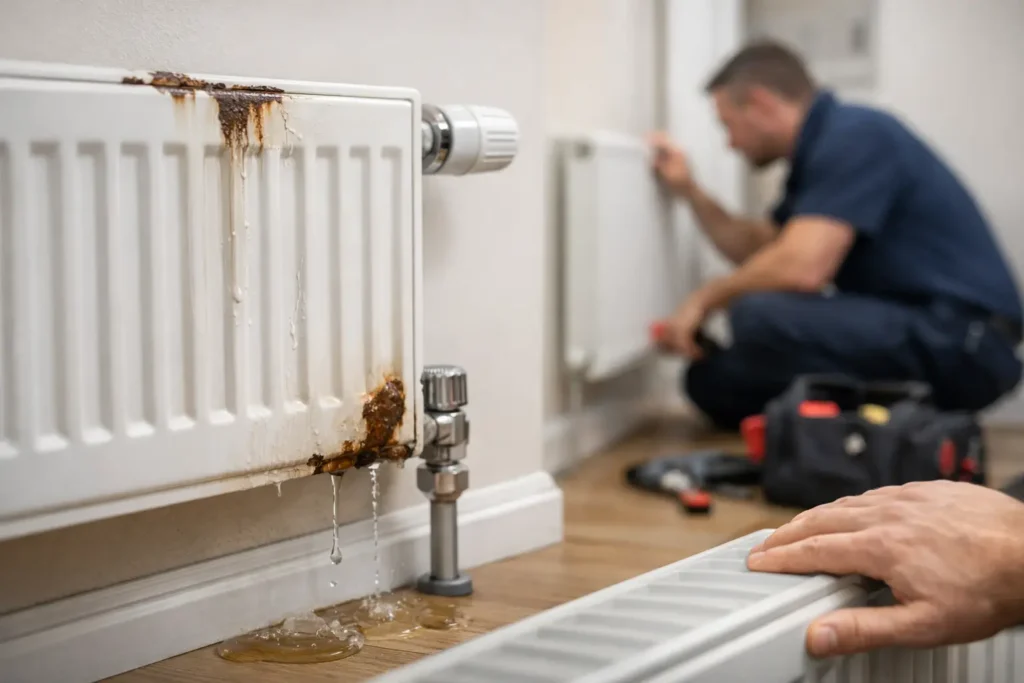
The most obvious sign is a leak from the radiator panel, especially around a rusted area or along the bottom edge. This is often caused by corrosion from within. While a temporary repair may slow the problem, it cannot restore weakened metal. Water can escape gradually at first, then worsen without warning, so it is best not to ignore even a small drip.
Frequent bleeding is another warning sign. It is normal to release trapped air occasionally, but a radiator that repeatedly fills with air may have an underlying fault. If it is old, corroded or performing poorly alongside this issue, replacing it may offer better value than repeated call-outs.
Cold patches are not always a replacement job
A cold strip along the bottom of a radiator often points to sludge and debris inside the heating system. This stops hot water circulating properly and makes the radiator work less effectively. The room may take longer to heat, while energy use rises because the system has to work harder.
In many cases, a professional power flush can remove built-up debris and restore heat output. This is particularly worthwhile if the radiator is structurally sound and the problem affects several radiators around the property. It can extend the useful life of the existing system and avoid unnecessary replacement.
However, power flushing cannot repair a radiator that is leaking, heavily corroded or internally restricted beyond recovery. A plumber will assess whether cleaning, valve repairs or replacement is the practical route. Honest advice matters here, as replacing a radiator that could be restored is wasteful, but trying to save one that is failing can lead to a more expensive leak later.
Signs a radiator has reached the end of its life
Radiators do not always fail in one dramatic moment. More often, they show a pattern of smaller problems that gradually becomes difficult to ignore. Look out for these common signs:
- Rust, bubbling paint or corrosion around the lower edges, seams and valve connections.
- Water marks, damp patches or regular drips beneath the radiator.
- Cold areas that remain after bleeding and professional cleaning.
- A radiator that takes much longer than others to warm up.
- Repeated valve faults, leaks or poor performance despite previous repairs.
- Visible damage, such as dents, loose brackets or a radiator that is no longer secure on the wall.
For landlords and letting agents, these issues should be dealt with promptly. A leaking radiator can damage a tenant’s belongings or the property fabric, while an unreliable cold room can quickly turn into a maintenance complaint. In commercial premises, poor heating can affect staff, customers and day-to-day trading.
Consider replacement when renovating or changing a room
Radiator replacement is not only about failure. Planned work is often the best time to improve an older radiator, particularly during a bathroom renovation, kitchen refit or wider property update. Access is easier before new flooring, boxing-in or decorating has been completed, and the finished result will be cleaner.
A new radiator can also be chosen to suit the room better. Large rooms, extensions and spaces with more outside walls may need a different heat output from the radiator that was originally fitted. A unit that is too small may feel warm to the touch but still leave the room chilly. One that is oversized can take up valuable wall space and may not suit the layout.
Style matters too, but performance should come first. Column, vertical and towel radiators can work well where space or appearance is a priority. The right option depends on the room size, the available wall area and how the property is used. A family bathroom, a rental flat and a restaurant dining area all have different practical demands.
Do older radiators waste more energy?
Age alone does not automatically mean a radiator is inefficient. A good-quality older radiator that heats evenly, has no corrosion and works properly with the rest of the system may not need replacing straight away. There is no benefit in changing it simply because it looks dated.
That said, an old radiator affected by sludge, internal corrosion or poor circulation will struggle to deliver heat effectively. Modern replacements can provide a better fit for the room, improved appearance and reliable output when correctly sized and installed. Fitting thermostatic radiator valves at the same time can also give occupants more control over individual room temperatures.
The important point is to diagnose the cause of the problem before making a decision. A radiator may be cold because of trapped air, a faulty valve, poor balancing or system debris. Replacing it without addressing the wider cause could mean the new radiator develops the same issue.
What to do if a radiator starts leaking
If water is coming from a radiator, place towels or a shallow container underneath to protect flooring where possible. Move furniture and electrical items away from the affected area. Do not keep tightening fittings aggressively, as this can damage valves or pipework and make the leak worse.
A leak from a valve connection may be repairable. A leak from the radiator body itself is more serious and commonly means replacement is needed. Where there is active water escape, a fast response helps limit damage to skirting boards, carpets, laminate flooring and ceilings below.
For businesses, schools, hotels and food premises, speed is especially valuable. Even a modest leak can create a slip hazard, disrupt occupied areas and damage stock or finishes. Arranging a professional inspection early gives you a clear plan, whether that means a straightforward repair, radiator replacement or further cleaning work.
Choosing the right replacement radiator
The right radiator is not simply the one that fits the existing gap. It needs enough output for the room and should be installed with sound valves, secure brackets and correctly connected pipework. A qualified plumber can help identify a suitable size while considering insulation, room use, window areas and available space.
It is also worth looking at the condition of nearby radiators. If one has failed due to age and corrosion, others installed at the same time may be approaching the same point. That does not mean every radiator must be replaced immediately, but it helps with maintenance planning and budgeting, particularly for landlords and property managers.
A tidy installation should leave the area clean, secure and ready to use. Any pipework adjustments should be planned carefully to avoid unnecessary disturbance to walls, floors and decoration.
If your radiator is leaking, rusty, cold in patches or simply no longer keeping the room comfortable, do not wait for a small issue to cause wider damage. Contact HJZ Plumbing on 01482 236483 for clear, practical advice and dependable radiator repairs or replacement across Hull and East Yorkshire. Sorting the problem now is usually far easier than dealing with the consequences of a leak later.