A shower that starts as a trickle can turn a normal morning into a frustrating wait. If you are asking, “why is shower pressure low?”, the answer may be as simple as a blocked shower head, but it can also point to a problem with your plumbing, water supply or shower valve. Finding the cause early helps prevent further disruption, particularly in busy family homes, rental properties and commercial washroom facilities.
Low pressure is not always the same as low water flow. Pressure is the force pushing water through the pipework, while flow is the amount of water reaching the shower. A restriction in one fitting can reduce flow even where the property’s overall pressure is fine. The useful first step is to establish whether the problem affects one shower, all outlets, or only the hot or cold side.
Why is shower pressure low in one shower?
When every other tap in the property works normally but one shower feels weak, the fault is usually close to the shower itself. Limescale, debris or a worn component are common culprits and are often quicker to resolve than people expect.
A blocked shower head or hose
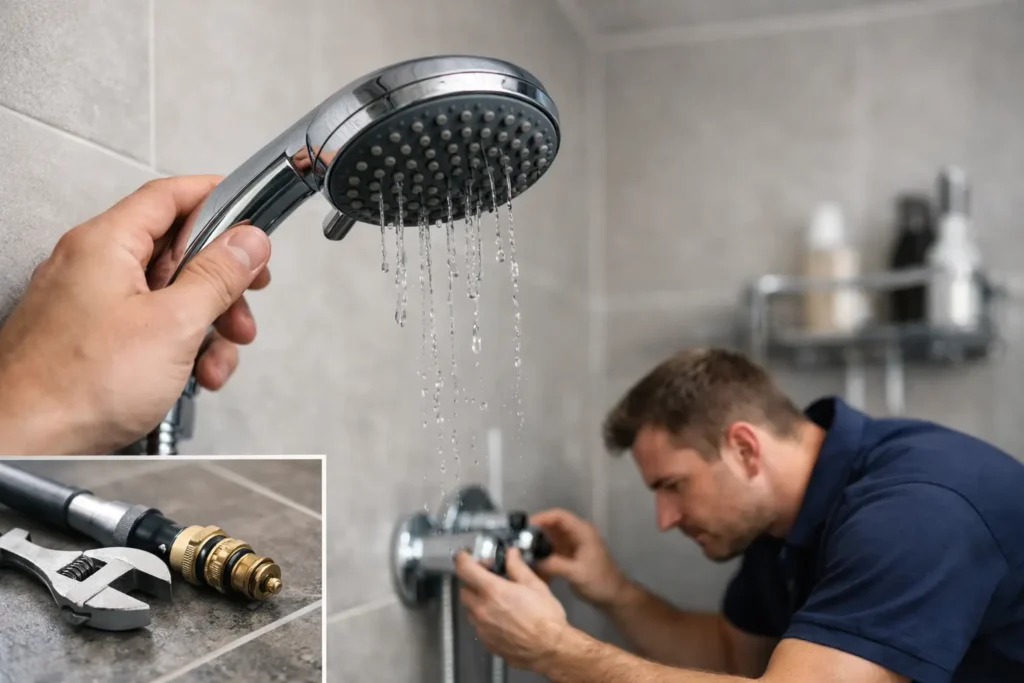
Limescale can build up in the tiny nozzles of a shower head, especially in areas with hard water. It may start as an uneven spray, with water coming from only a few holes, then gradually become a weak flow. Sediment from pipework can cause a similar problem.
Remove the shower head if it can be detached easily and check the nozzles for visible scale. A suitable descaling clean may improve the spray, but take care not to damage the finish or rubber nozzles. If the shower has a flexible hose, check that it is not kinked, crushed behind the controls or damaged internally. Replacing a heavily scaled head or old hose is often more effective than repeatedly cleaning it.
A restricted filter or cartridge
Many mixer showers have small filters, non-return valves or cartridges inside the control unit. These parts prevent debris entering the valve and help balance hot and cold water. Over time, they can become blocked with scale or particles from the water supply.
This is a job best left to a plumber unless you know the shower model and are comfortable isolating the water correctly. Taking apart a valve without the right parts or seals can lead to a leak inside the wall or behind the shower panel. A plumber can inspect the valve, clean or replace the affected component, and test that the shower controls are operating safely afterwards.
A faulty shower valve
If the temperature changes unexpectedly, the controls are stiff, or pressure drops when you turn the shower hotter, the valve may be failing. Thermostatic cartridges do wear out. In some cases, repairing the cartridge is sensible; in others, especially with older or discontinued units, replacing the shower is the more dependable option.
The right choice depends on the condition of the existing fittings, access to the pipework and whether there have been repeated faults. A proper assessment avoids spending money on a temporary repair when the shower is nearing the end of its working life.
Low shower pressure throughout the property
If the shower, kitchen tap and bathroom basin all have poor flow, the cause is more likely to be elsewhere in the system. Notice whether the problem appeared suddenly or developed over weeks. A sudden change can indicate a stopcock issue, leak or supply interruption, while a gradual change may suggest scale, ageing pipework or a developing blockage.
Check the stopcock is fully open
The internal stopcock controls the mains water entering the property. It is commonly located beneath the kitchen sink, in a utility area or close to where the supply enters the building. If it has been partly closed after previous work, water may still run but the flow can be noticeably reduced.
Do not force a seized stopcock. Old valves can leak when disturbed, particularly if they have not been operated for years. If the valve is stiff, corroded or dripping, it is better to have it replaced than risk a more serious leak.
Consider recent plumbing work or water supply issues
Have neighbours reported weak water pressure too? If so, the issue may be with the wider water supply rather than your own plumbing. Temporary works, a burst main or unusually high local demand can all affect pressure for a short period.
If the issue is limited to your property and began after plumbing work, debris may have been disturbed in the pipes or a valve may not have been reopened fully. A simple check by a qualified plumber can identify whether the restriction is inside the property or coming from the incoming supply.
Leaks can reduce available pressure
A hidden leak does not always create an obvious puddle. Water escaping beneath floors, behind boxing or within a wall can reduce the amount reaching your outlets. Other warning signs include damp patches, peeling paint, a musty smell, unexplained higher water use or the sound of water moving when no taps are running.
Do not ignore a suspected leak just because the shower still works. Water damage can spread into flooring, ceilings and neighbouring areas of a property. For landlords, letting agents and commercial premises, early repair also helps avoid disruption for tenants, staff and customers.
Why does shower pressure drop when another tap runs?
A modest drop when someone uses a tap elsewhere can be normal, particularly in older properties with limited incoming flow. A dramatic change, however, suggests that the shower and other outlets are competing for a restricted supply.
This is often noticed when a toilet is flushed, a washing machine fills or a kitchen tap is opened during a shower. The solution depends on the layout of the plumbing and the type of shower fitted. It may involve clearing a restriction, improving pipework, replacing an unsuitable shower valve or fitting a shower designed to work better with the available water supply.
Adding a pump is not automatically the right answer. Pumps can improve performance in suitable systems, but they need correct installation, adequate water supply and appropriate electrical provision. Fitting one to mask a blockage or valve fault will not solve the underlying problem and may create further maintenance issues.
Simple checks before calling a plumber
You can narrow down the cause without dismantling anything. First, see whether the basin and kitchen taps have normal flow. Next, try the shower on both cold and hot settings. Weakness on one side only can point to a valve or supply issue, while weakness on both sides often suggests the head, hose or general flow restriction.
Also check whether the shower head is spraying unevenly and whether the hose is bent. If you have recently had plumbing work completed, note when the pressure changed. These details give a plumber a clearer starting point and can speed up the repair.
Avoid removing concealed shower parts, turning old isolation valves aggressively or using harsh chemicals in the controls. A small fault is usually straightforward to fix, but a damaged valve or broken fitting can quickly turn into a leak and a larger repair.
When low shower pressure needs professional attention
Arrange a professional inspection if the shower pressure suddenly falls, the issue affects several outlets, there are signs of a leak, or the shower is fluctuating between hot and cold. The same applies if the shower valve is dripping, difficult to control or hidden behind tiled walls. Prompt attention protects the property and helps keep bathrooms safe and usable.
For hotels, cafés, offices and rental properties, a weak shower can become more than an inconvenience. It can lead to complaints, hygiene concerns and unnecessary downtime. Planned maintenance is often the best way to replace worn hoses, valves and shower fittings before they fail completely.
HJZ Plumbing provides practical shower repairs, fault-finding and replacement work for homes and occupied properties across Hull and the surrounding East Yorkshire area. You will receive clear advice on what is causing the problem, what needs repairing and whether replacement is the better long-term option.
A reliable shower should not depend on guesswork or repeated temporary fixes. If your shower has become weak, inconsistent or difficult to use, call HJZ Plumbing on 01482 236483 and get the problem checked before it develops into a leak or a more disruptive plumbing repair.