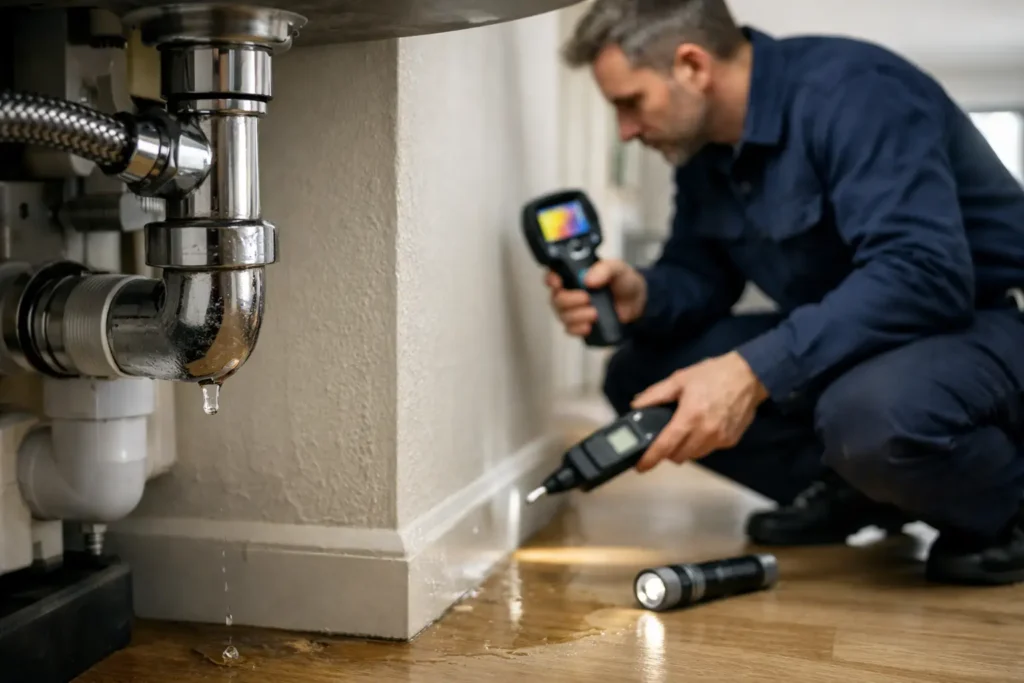
A hidden leak rarely announces itself with a burst pipe and a flooded floor. More often, it starts with a water bill that looks wrong, a damp patch that keeps returning, or a musty smell in a room that should be dry. If you are wondering how to detect invisible leak problems before they turn into major damage, the key is spotting small changes early and knowing when a professional check is the safer option.
Invisible leaks matter because they do damage quietly. In a home, they can stain ceilings, rot timber, damage flooring and encourage mould. In a rental property or business premises, they can create disruption, hygiene concerns and complaints from tenants, staff or customers. The longer a leak is left alone, the more expensive the repair and reinstatement work usually becomes.
How to detect invisible leak signs early
The first clue is often not the leak itself but the effect it has on the building. You might notice paint beginning to bubble, plaster softening, skirting boards swelling, or a patch on the wall that feels colder than the area around it. In bathrooms and kitchens, silicone may keep discolouring and flooring can start lifting slightly at the edges. These are easy things to dismiss at first, especially if they seem minor, but they often point to water travelling behind surfaces.
A persistent smell is another common warning sign. Clean rooms should not smell damp. If a cupboard under the sink smells musty even after it has been emptied and aired out, or a hallway near a bathroom has a stale damp odour, water may be sitting where it cannot dry properly.
Sound can help as well. If you hear a faint hiss behind a wall, a constant trickle when no tap is running, or a toilet that keeps topping up for no clear reason, there may be a concealed leak somewhere on the system. In commercial settings such as cafés, offices or schools, background noise can hide these clues, so staff often spot the effects before they hear the source.
Start with your water meter
One of the simplest ways to check for a hidden leak is with your water meter. Turn off all taps, appliances and anything else that uses water. That includes washing machines, dishwashers and outside taps if they are connected. Then look at the meter and make a note of the reading.
Wait for at least 30 minutes without using any water in the property. If the reading changes, water is moving through the system when it should not be. That does not tell you exactly where the leak is, but it does confirm that further investigation is needed.
This test is especially useful for landlords between tenancies, or for businesses that can check the meter after closing time. If a property is meant to be quiet overnight but the meter still moves, that is a strong sign of a hidden issue.
Check the places leaks commonly hide
When people think of hidden leaks, they often think of pipes inside walls, but plenty of invisible leaks happen in more accessible places. Start by checking beneath sinks, behind pedestal basins, around toilets, under kitchen units and near appliances connected to the water supply. Use a torch and run your hand carefully along pipe joints and valves. Even a very small leak can leave a fine bead of water, green staining on copper, or white crusty deposits where water has been evaporating.
Bathrooms are a common trouble spot because not all leaks come from pipework. Water can escape through failed sealant around a bath, shower tray or basin and then soak into floors and ceilings below. If the room underneath shows staining after someone showers, but not after the toilet is used or the basin runs, the problem may be with the shower enclosure or waste rather than the supply pipe.
Toilets are another frequent cause of waste and hidden damp. A leaking pan connector, loose inlet valve or slow internal cistern leak can go unnoticed for weeks. Sometimes the only sign is a faint trickle into the bowl or flooring that feels slightly loose around the base.
Look at patterns, not just isolated signs
A single mark on a ceiling does not always mean an active leak. It could be old damage. What matters is whether the sign is changing. Is the patch getting bigger, darker or softer? Is mould returning soon after cleaning? Is one section of flooring becoming more uneven? Tracking change over a few days can tell you a lot.
It also helps to think about when the issue appears. If damp gets worse after the shower is used, that points one way. If it is constant regardless of water use, the source may be a continuous supply leak. If it shows up only after heavy rain, the cause may not be plumbing at all. This is where experience matters, because the right fix depends on diagnosing the source properly rather than guessing.
How to detect invisible leak issues without causing damage
It is tempting to start opening up panels or cutting into plaster, but that can create extra mess and cost if the leak turns out to be elsewhere. A careful, non-destructive approach is usually better first. Check visible fittings, monitor the meter, look for damp patterns, and isolate parts of the plumbing where possible.
For example, if turning off the toilet supply stops a suspected sound or damp area from worsening, you have narrowed the search without pulling the room apart. If shutting off the cold feed to an outside tap changes the meter reading, that line becomes the likely culprit. These small tests can save time and help a plumber get to the fault faster.
That said, there is a limit to what is sensible to do yourself. If water is affecting electrics, coming through ceilings, damaging a commercial area, or causing repeated problems in a tenanted property, it is best not to delay. Hidden leaks can spread well beyond the visible stain.
When a higher bill is your only clue
Sometimes there are no obvious damp patches at all. The first warning is simply higher water usage. If your habits have not changed but the bill has gone up, it is worth taking seriously. Small leaks on supply pipes, underground runs or concealed feeds can waste a surprising amount of water without leaving immediate visible damage.
In larger properties and occupied business premises, this can be harder to spot because water usage naturally varies. Even so, unexplained increases should be checked. A leak left running for weeks can lead to both water waste and structural damage, especially if it is under floors or behind fitted units.
When to call a plumber
There is a point where monitoring and basic checks stop being helpful. If you have confirmed movement on the meter, found recurring damp with no obvious source, or noticed active signs such as dripping sounds, staining, warped flooring or mould that keeps coming back, professional attention is the right next step.
A plumber can assess likely leak points, test fittings, isolate sections of pipework and trace the source with less guesswork. That matters because hidden leaks are not all the same. A failed shower seal, a pinhole pipe leak, a loose compression joint and a cracked waste pipe can all show up as damp, but the repair approach is very different in each case.
For landlords, letting agents and commercial operators, speed matters just as much as the repair itself. A hidden leak can quickly become a tenant complaint, a slip risk, a stained ceiling in a customer area or a hygiene issue in kitchens and washrooms. Early action protects both the property and the people using it.
If you suspect a hidden plumbing problem in your home, rental property or business premises, do not wait for a small patch to become major damage. HJZ Plumbing provides practical leak investigation and repair work for properties across Hull and the surrounding area, with clear advice and a tidy, respectful approach. Call 01482 236483 or visit www.hjzplumbing.com to get it checked properly before the damage spreads. A quiet leak is still a leak, and the sooner it is found, the easier it usually is to put right.