A new pipe run is rarely the part of a renovation anyone notices first, but it can decide whether a kitchen, bathroom or commercial workspace works properly for years. Poorly planned pipework installation Hull can lead to weak flow, awkward access for future repairs, noisy pipes, recurring leaks and unnecessary damage to finished walls or floors. Getting the route, materials and connections right before surfaces are closed up saves a great deal of stress later.
For a homeowner, that might mean a shower that keeps its pressure when a tap is running downstairs. For a landlord, it means fewer tenant callouts and less chance of water damage in an occupied property. For a café, hotel, office or school, it means plumbing that supports day-to-day use without disrupting customers, staff or visitors.
When does pipework need replacing or installing?
Pipework is often installed as part of a planned project, such as a bathroom renovation, a new kitchen layout, an additional cloakroom or moving a washing machine, dishwasher or sink. It may also be needed after a leak, repeated blockage, burst pipe or discovery of old pipework that is no longer dependable.
Sometimes the signs are obvious. A visible leak, stained ceiling or wet cupboard needs attention quickly. Other warning signs can be less dramatic: reduced water flow, pipes that knock or vibrate, repeated repairs in the same area, unpleasant odours around waste pipes, or water appearing where it should not. These issues do not always mean every pipe needs replacing, but they do justify a proper inspection before a small fault becomes a larger repair.
Older properties around Hull and East Yorkshire can present particular challenges. Previous alterations may have left pipe runs concealed behind walls, under floors or within kitchen units. A practical plumber will assess what is already there, identify the safest route for new work and explain whether a repair, partial replacement or full reconfiguration is the sensible option.
What good pipework installation in Hull involves
Reliable pipework is not simply a matter of joining pipes together. The work needs to suit the property, the appliances being connected and the way the space will be used. Water supply pipes, waste pipes and drainage all have different requirements, and an installation should be planned around access, flow, falls and long-term maintenance.
Planning the pipe route before work starts
The neatest route is not always the best route. Pipes need to be protected from accidental damage, insulated where cold conditions could cause problems and positioned so important joints can be reached if maintenance is ever required. Where possible, pipework should avoid unnecessary bends and awkward connections that can reduce flow or create places for waste to build up.
In a bathroom, this may involve checking the position of the shower, basin, toilet and bath together rather than treating each item separately. In a kitchen, it means allowing for appliances, waste connections and the practical use of cupboards. In commercial premises, planning must also consider trading hours, hygiene requirements and keeping disruption to a minimum.
Choosing suitable materials and fittings
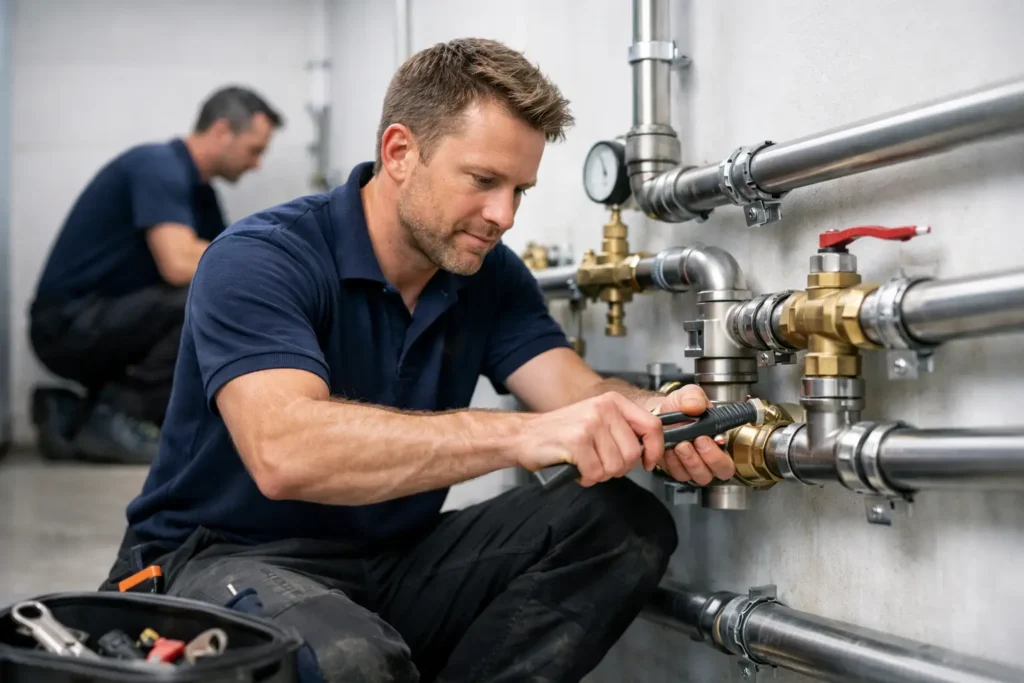
The right materials depend on the job. Modern plastic pipe systems can be efficient and practical for many internal water installations, particularly where access is limited or routes are complex. Copper remains a suitable choice in many situations and is often preferred for visible sections or certain connection points. Waste pipework must be sized and fitted correctly so water clears properly without regular blockages or slow drainage.
There is no single best material for every property. The important point is that the chosen system is compatible with the existing plumbing, correctly supported and installed with secure, dependable fittings. Cutting corners on materials or connections may look acceptable at first, but the consequences can be expensive once a leak reaches floors, ceilings, stock rooms or neighbouring flats.
Testing before the job is signed off
A pipework installation should be tested before boxing-in, tiling, flooring or decorating begins. Checking for leaks at this stage is far less disruptive than finding a problem after the room is finished. Water flow, drainage and all new connections should be assessed so any adjustment can be made while the work remains accessible.
Clear communication matters here. You should know what has been installed, where the main connections are and what to watch for in the first few days of use. A tidy plumber will also leave the work area clean and take care around existing finishes, furniture and occupied spaces.
Pipework for bathrooms, kitchens and busy properties
Bathroom pipework needs careful consideration because several fittings often share a small space. A poorly routed waste pipe can affect drainage, while an inadequate supply arrangement can leave a shower performing badly when another outlet is used. When fitting a new bathroom or replacing a shower, it makes sense to check the hidden pipework at the same time rather than covering up a known weakness.
Kitchen plumbing has its own demands. Sinks, dishwashers, washing machines and water filters all need properly connected supplies and wastes. A small drip beneath a kitchen sink can go unnoticed for weeks, damaging cupboards, flooring and stored items. Secure connections and sensible pipe positioning make future maintenance much easier.
For landlords and commercial property operators, planned pipework work is often best scheduled before a fault forces the issue. A leaking pipe in a rental property can quickly turn into a dispute over damage and access. In a restaurant, café or hotel, a failed waste connection can affect hygiene, customer experience and trading. Schools, offices and shops also need work planned around busy periods where possible, with a clear approach to protecting the property and getting facilities back into use promptly.
Repair or replacement: making the practical choice
Not every leak means a complete replacement is needed. A localised fault at a fitting, valve or short section of pipe can often be repaired effectively. Replacing more pipework may be the better value choice, however, where there are repeated leaks, corrosion, poorly installed previous work or concealed sections that are likely to fail again.
The decision should be based on the condition of the system, access to the affected area and the cost of repeated disruption. If a floor or wall has already been opened, it may be sensible to address vulnerable nearby sections at the same time. Equally, replacing pipework that is in sound condition simply because it is old may not be necessary. Honest advice should focus on what will solve the problem reliably, not on making the job larger than it needs to be.
Avoiding disruption and water damage
Before any pipework work begins, it helps to clear the immediate area and make sure the plumber can reach stop taps, cupboards, service panels or floor access points. If the work is in a tenanted or commercial property, arranging access and informing the people affected can prevent delays.
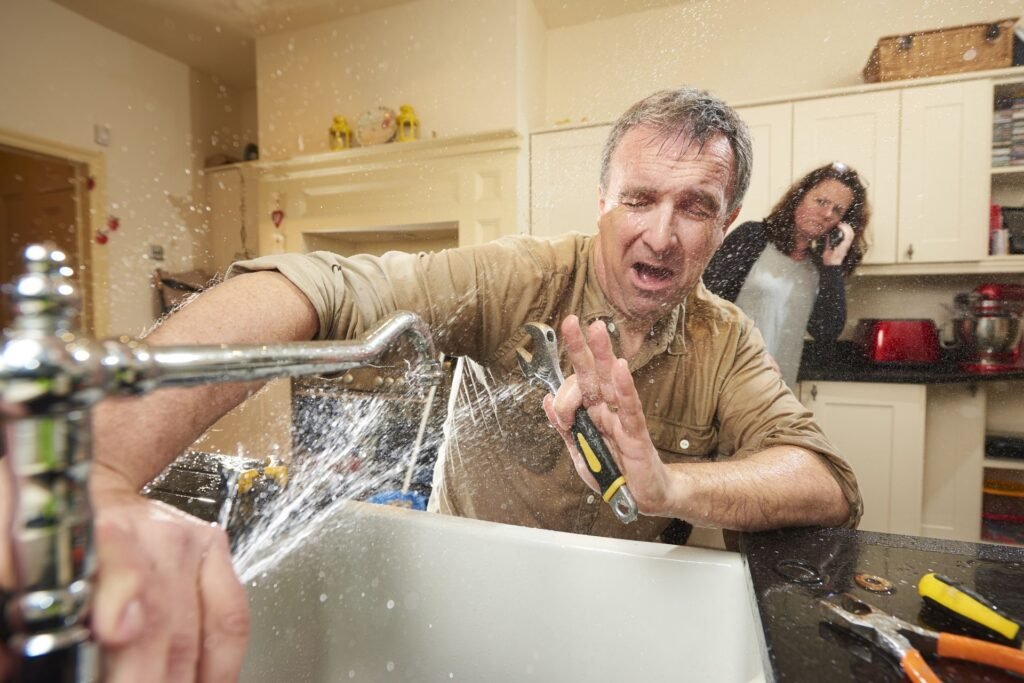
If you have an active leak, turn off the water supply if it is safe to do so and contain the water with towels or a bucket. Do not ignore damp patches, bulging ceilings or water near electrical fittings. These are situations where quick action can protect the building and reduce the cost of repairs.
Good installation work is an investment in fewer emergencies, better-performing fixtures and a property that is easier to maintain. Whether you are updating one connection or planning a complete new layout, taking the time to address pipework properly gives the rest of the project a dependable foundation.
For planned pipework, urgent leaks or practical advice on the best next step, contact HJZ Plumbing directly on 01482 236483 or through www.hjzplumbing.com.