A bath or shower replacement is rarely just about changing the look of a bathroom. It is often prompted by a leaking tray, cracked bath, unreliable shower, damaged sealant or fittings that have become difficult to live with. Making the right decision early can prevent water getting behind walls or beneath flooring, where a small fault can turn into costly damage.
For homeowners, landlords and busy commercial premises, the priority is a bathroom that works properly every day. The best choice depends on who uses the space, the condition of the existing plumbing and whether a targeted repair can safely solve the problem.
When a replacement is the sensible option
A repair is often the most cost-effective answer when the issue is isolated. A faulty shower valve, dripping tap, worn waste fitting or failed silicone seal may be fixed without replacing the bath or shower enclosure. However, repeated faults are a sign that looking only at the visible problem may not be enough.
Replacement is usually worth considering when there is a crack in the bath or shower tray, movement underfoot, persistent leaks, stained ceilings below, mould caused by water ingress or badly corroded pipework and fittings. An old shower enclosure with damaged seals can allow water to escape gradually for months. By the time it appears in the room below, the damage may already include swollen flooring, weakened plasterboard or timber deterioration.
In rental homes, a failing bath or shower can quickly become a tenant issue. In hotels, cafés, offices and other occupied premises, an out-of-order washroom affects hygiene, customer experience and daily operations. Acting before the room has to be closed off is usually far less disruptive.
Signs not to ignore
If you notice one of the following, arrange an inspection rather than simply resealing over the problem:
- Water marks, peeling paint or a damp patch on a ceiling beneath the bathroom
- A shower tray or bath that flexes, shifts or creaks when used
- Water pooling outside the enclosure despite the door or screen being closed
- Cracked tiles, loose panels or black mould returning around the same area
- A shower that is difficult to control, has poor flow or regularly leaks from its fittings
These issues do not always mean a full replacement is required, but they do need a proper assessment. The cause may be drainage, pipework, poor support beneath the tray or a problem with the enclosure itself.
Bath or shower replacement: choosing for real life
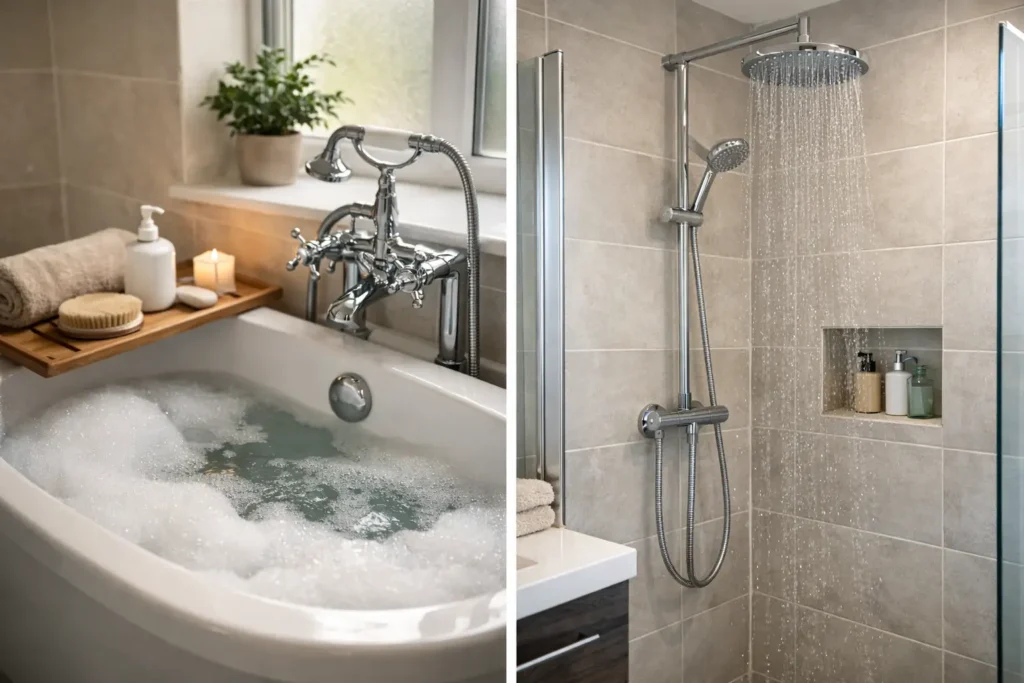
A new shower is often the practical choice where space is limited or household members want easier access. A low-profile tray or walk-in arrangement can make day-to-day washing safer and more convenient, especially for older residents or anyone with reduced mobility. It can also free up room in a compact bathroom.
A bath remains valuable for families with young children, people who enjoy a soak, and properties where future buyers may expect one. If there is only one bathroom, removing the only bath can narrow the appeal of the property. That does not mean a shower is wrong, but it is worth considering how the space will be used over the next few years rather than choosing on appearance alone.
In some homes, the answer is a shower over the bath. This keeps the bathing option while providing a practical showering area. It works well when the bath is sound and the room cannot comfortably accommodate both. The important detail is making sure the screen, shower fittings and wall finishes are installed to keep water contained.
For landlords and commercial property operators, durability and ease of cleaning often matter more than a fashionable design. Simple, good-quality fittings with accessible valves and a well-fitted enclosure can reduce callouts and keep maintenance straightforward. A design that looks impressive but leaves awkward gaps for cleaning or relies on hard-to-source parts can become frustrating later.
The plumbing behind the finish matters
A bathroom may look smart when the work is complete, but the lasting quality comes from what sits behind the tiles and panels. Before fitting a new bath or shower, it is sensible to check the condition and position of the hot and cold feeds, waste pipe, trap, isolation valves and drainage route.
A shower tray needs firm, level support. If it is not properly bedded and secured, it can flex and break seals over time. The waste must also fall correctly so water drains away without slow emptying, gurgling or unpleasant smells. Where access allows, pipework should be installed tidily and in a way that can be maintained if a fault develops.
Waterproofing is equally important. Tiles and grout are not a complete barrier against water. Shower walls, joints, tray edges and any penetrations for pipes need appropriate preparation and sealing. This is particularly important in older properties, where hidden surfaces may already have suffered from previous leaks.
If the layout is changing, expect the job to involve more than fitting new sanitaryware. Moving a shower to another wall, replacing a bath with a walk-in shower or adding a second basin can affect pipe routes, drainage and flooring. A clear plan before work starts helps avoid unnecessary changes once the bathroom is already out of use.
Plan for disruption, but keep it controlled
Most bath and shower replacement work causes some disruption, because water supplies may need to be isolated and the bathroom will be unavailable for part of the job. The length of time depends on whether it is a like-for-like change or a wider renovation involving tiling, altered pipework, flooring or damaged surfaces that need repair.
A straightforward replacement is generally less disruptive when the new unit uses the existing connections. If there has been a leak, it is better to allow time to investigate and repair the surrounding structure rather than rushing to cover it with a new tray or bath. A sound installation should not hide a problem that will return later.
For landlords, arranging access clearly with tenants and giving realistic timings helps reduce stress. For businesses, work can often be planned around quieter trading hours or phased where there are multiple facilities. The aim is not simply to finish quickly, but to leave a safe, clean and dependable bathroom with as little interruption as possible.
Getting value from your replacement
The lowest quote is not always the lowest overall cost. Poorly fitted baths, trays and enclosures can lead to repeat sealing, blocked wastes, leaks and damaged finishes. Choosing suitable materials, confirming what is included and dealing with underlying plumbing issues at the same time protects the investment.
Ask for clear advice on whether your existing bath or shower can be repaired, what condition the pipework is in, and whether any damage has been found behind the fittings. A good plumber should explain the practical options without pushing a replacement where a repair will do.
If you are considering a bath or shower replacement in Hull, Beverley or the surrounding East Yorkshire area, HJZ Plumbing can assess the existing installation, identify the cause of leaks or poor performance, and carry out tidy replacement work built to last. Do not wait for a small bathroom leak to become damage in the room below – call HJZ Plumbing on 01482 236483 for clear, practical help.