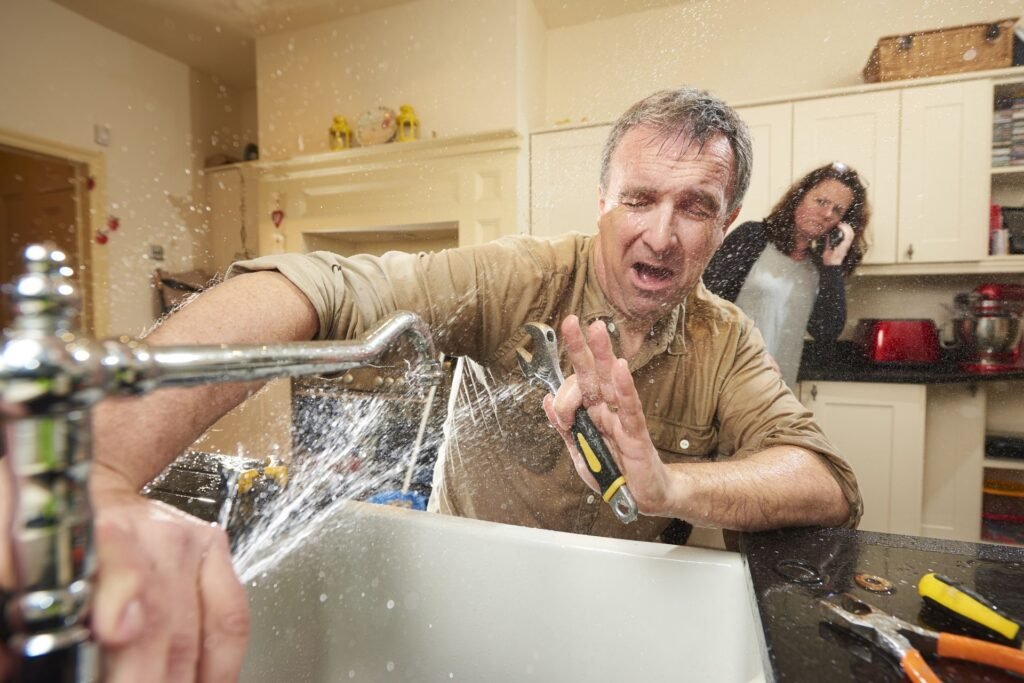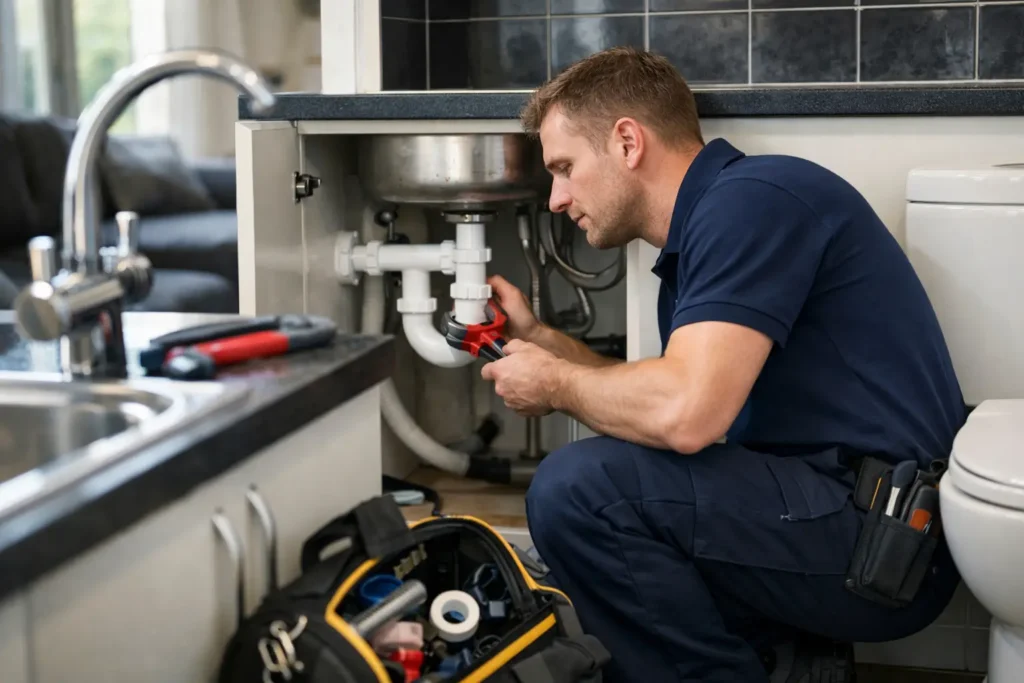
A small drip beneath a kitchen sink can turn into a swollen cupboard, damaged flooring and an unhappy tenant surprisingly quickly. This landlord plumbing maintenance guide is designed to help rental property owners spot problems early, plan sensible checks and know when a prompt professional repair is the safer option.
Plumbing maintenance is not about replacing parts that still work. It is about reducing avoidable callouts, protecting the condition of the property and keeping water, washing and toilet facilities reliable for the people living there. For landlords and letting agents, a clear routine also makes it easier to respond fairly and quickly when tenants report a fault.
Why plumbing problems escalate in rental properties
A rental home experiences daily use from people with different habits. Shower traps collect hair, kitchen sinks receive cooking fats, toilets are used more often than in an empty property, and minor warning signs may go unnoticed until they become disruptive.
Water damage is the biggest concern. A slow leak can travel behind units, under floors or through ceilings before it becomes visible. By the time a stain appears, there may already be damaged plasterboard, flooring, cabinetry or electrical fittings nearby. A blocked toilet or drain brings a different risk: poor hygiene, loss of facilities and urgent inconvenience for the tenant.
Fast action usually costs less than waiting. It also demonstrates that the property is being managed properly, which helps maintain a positive relationship with tenants.
Build plumbing checks into every property visit
The most useful landlord plumbing maintenance guide is one that fits into work you already do. Include a basic inspection at tenant changeover, during planned property visits and whenever a tenant reports a change in water pressure, drainage speed or unusual noises.
At a vacant-property inspection, run every tap for a short period and check beneath sinks, basins and toilets for moisture. Look around pipe joints, isolation valves and flexible tap connectors. A cupboard that smells damp, feels swollen or has staining on its base deserves closer attention, even if there is no active drip at that moment.
Flush each toilet and watch how it refills. A toilet that keeps running after the cistern has filled can waste a considerable amount of water. A weak, slow or incomplete flush may point to a developing blockage, a worn internal part or an issue further along the pipework.
Run showers and baths, then allow the water to drain fully. If water backs up, drains slowly or produces a persistent unpleasant smell, do not assume it will clear on its own. The issue may be hair and soap build-up in the trap, but recurring blockages can indicate a deeper drain problem.
In kitchens, check that the sink drains freely and that the waste pipe and trap are secure. Look for signs of grease build-up, especially where tenants cook frequently. Grease should never be treated as a liquid disposal method: it cools inside pipework and can create stubborn restrictions that ordinary sink cleaners will not resolve.
Give tenants clear, practical reporting advice
Tenants are often the first people to notice a plumbing problem, so make reporting simple. Encourage them to report drips, slow drainage, changes in water pressure, damp patches, unusual smells and toilet faults as soon as they see them. A report of a small leak is useful information, not an inconvenience.
It helps to explain a few basic steps they can take safely. They should avoid repeatedly flushing a toilet that is rising towards the rim, stop using a leaking fixture where possible and place a container under a minor leak only if it is safe to do so. They should not dismantle pipework, force a blockage with unsuitable objects or pour harsh chemical products into every drain. These products can damage seals and pipes, and they are rarely the answer to a serious blockage.
Make sure tenants know where the main internal stop tap is located. It is worth checking that it turns freely during inspections. In a genuine leak, knowing how to turn off the water can significantly limit damage while help is arranged.
Focus on the common repeat offenders
Some plumbing issues return because the visible symptom is repaired but the underlying cause is missed. A practical maintenance plan pays extra attention to the areas most likely to create repeat callouts.
Toilets that run, leak or block
A constantly running toilet is easy to overlook, but it can increase water use and may indicate a worn flush valve or fill valve. Water around the base of the toilet needs prompt investigation. It may be a loose connection or seal, but it can also affect flooring and, in an upstairs bathroom, the ceiling below.
Blockages need a measured response. One isolated blockage may be caused by unsuitable items being flushed. Frequent blockages, however, can point to a fault in the toilet, pipework or external drainage. Repeatedly treating the symptom leaves the landlord and tenant dealing with the same disruption again.
Leaking taps, wastes and pipes
A dripping tap is not always an emergency, but it should be repaired before it becomes a larger fault. Leaks around basin wastes and kitchen sink traps are particularly common because the joints can loosen through use, cleaning or movement in the cupboard.
Pay attention to pipes in less visible places, including behind washing machines, under baths and near radiators. If a tenant reports a musty smell or damp patch, investigate rather than waiting for a more obvious sign. Hidden leaks are rarely cheaper to repair later.
Showers and bathroom seals
A shower can appear to be working normally while water escapes around a screen, tray or deteriorating seal. Over time, that water can damage flooring, walls and the room below. Check silicone seals, grout condition, shower screens and the area around the tray as part of planned maintenance.
Poor drainage in a shower is also worth dealing with early. Clearing a trap is a straightforward job in many cases, but if the blockage returns or affects other fixtures, professional drain cleaning may be needed.
Kitchen sinks and appliance connections
Kitchen plumbing faces heavy use and often sits inside cupboards where a leak can remain hidden. Inspect connections to dishwashers and washing machines, including hoses and valves, particularly at a changeover or after a new appliance has been fitted.
If a sink repeatedly blocks, consider how the property is being used. A family home, shared house and food business all place different demands on drainage. The right solution may be routine cleaning, improved tenant guidance or an investigation of the pipework rather than another temporary fix.
Plan maintenance around the calendar
There is no need to overcomplicate the schedule. A quick visual check during routine visits, a more thorough inspection at changeover and a prompt response to reported faults will prevent many expensive problems.
Before colder weather arrives, check pipework in unheated spaces such as garages, lofts and outside cupboards. Insulation may need improving where pipes are exposed to cold conditions. If a property will be empty during winter, take sensible precautions and make sure someone can respond if a leak is discovered.
At the end of a tenancy, inspect behind appliances and furniture where access has been limited. Test every fixture before the next tenant moves in. This is also a good time to deal with worn taps, tired seals, slow drains and toilet components that are still working but clearly nearing the end of their useful life.
For larger portfolios, keep a simple record of reported issues, repairs and repeat faults. Patterns matter. If several flats in one building suffer slow drainage, or the same bathroom has leaked more than once, a wider repair may be more cost-effective than continued patching.
Know when to call a plumber straight away
Some faults are not suitable for monitoring. An active leak, overflowing toilet, blocked drain affecting essential facilities, water coming through a ceiling or loss of usable washing facilities needs a quick response. The same applies where a tenant cannot isolate a leak safely.
For non-urgent issues, early booking is still the sensible choice. A professional plumber can identify whether a fault is a simple repair, a drainage issue or a sign that pipework, fittings or bathroom components need more substantial attention. Honest advice matters here: not every problem needs a major replacement, but a repeated repair is not always good value either.
Landlords across Hull, Beverley and the surrounding East Yorkshire area can rely on HJZ Plumbing for practical maintenance, prompt repairs and help when a tenant plumbing issue cannot wait. To arrange a visit or discuss a fault, call 01482 236483 or visit www.hjzplumbing.com. Dealing with the first sign of trouble protects the property, the tenant and your peace of mind.