If you have discovered that the stopcock will not turn, it usually happens at the worst possible time – when there is a leak, a dripping pipe getting worse, or water starting to spread across a floor. Knowing what to do if a stopcock is seized can make the difference between a manageable repair and serious water damage.
A seized stopcock is a common problem in older homes, rental properties and commercial buildings where the valve has not been touched for years. It can stiffen up through scale, corrosion or simple lack of use. The key is not to panic and not to force it too hard, because a broken stopcock can leave you with a much bigger problem than the one you started with.
What a seized stopcock actually means
Your internal stopcock controls the mains water supply coming into the property. In most buildings, it is the valve you turn to shut off water in an emergency or before plumbing work. If it is seized, that means it has become too stiff to turn by hand, or it only moves slightly and then locks up.
That does not always mean the valve has completely failed. Sometimes it just needs careful handling. Other times, the valve is badly worn, corroded or partly damaged and is no longer reliable. If there is already a leak in the property, a stopcock that will not close properly needs urgent attention.
What to do if your stopcock is seized
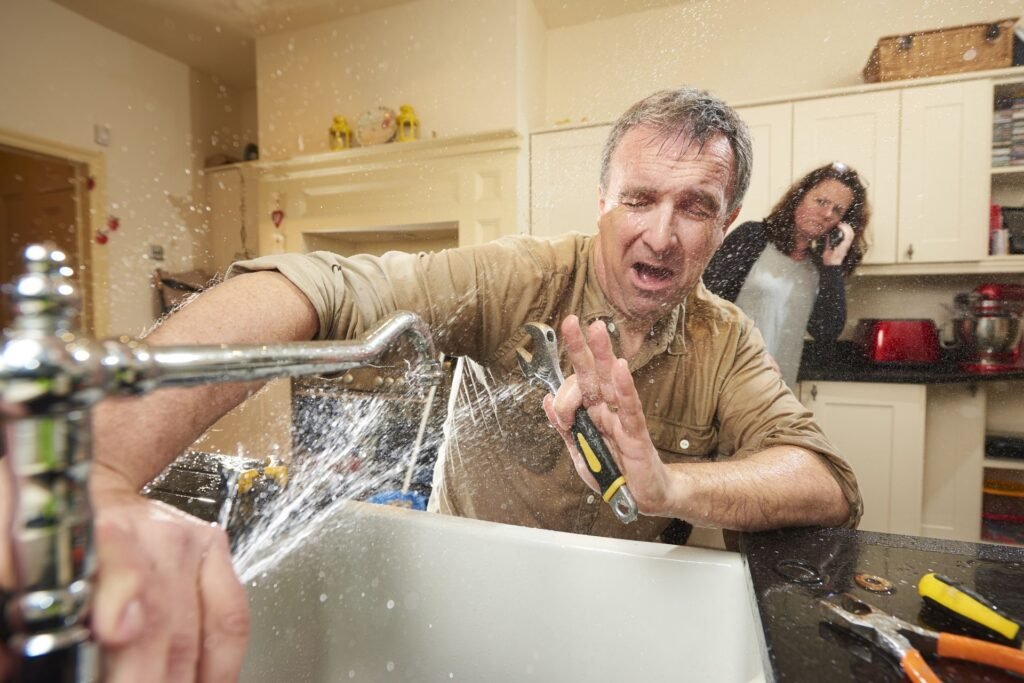
Start by checking whether you are dealing with a genuine emergency. If water is pouring through a ceiling, running from a burst pipe, or soaking kitchen units, flooring or electrics, move people away from the affected area if needed and act quickly. If it is safe to do so, turn off the water supply at the outside boundary stop tap if you know where it is and can access it.
If the leak is smaller and contained, place towels, buckets or trays to catch the water and reduce the immediate spread. This buys time and helps protect floors, cupboards and nearby contents.
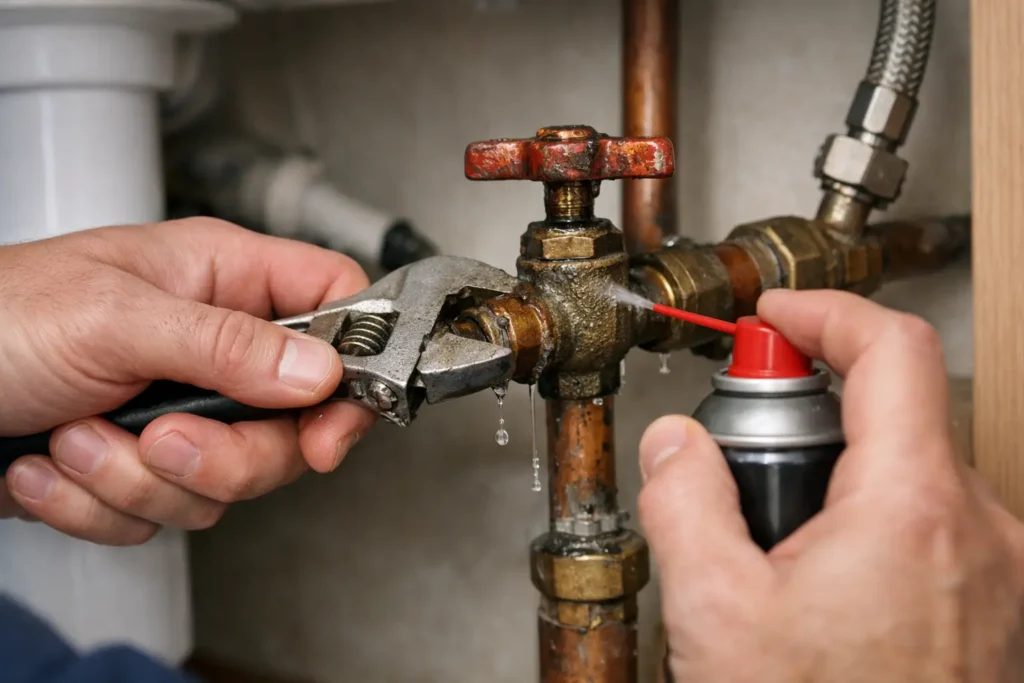
Next, go back to the internal stopcock and try it gently. Use your hand only at first. If it does not move with steady pressure, do not wrench it suddenly. A stopcock can shear internally, the spindle can snap, or a weakened fitting can start leaking around the gland or body.
If it will not budge, you can try a careful approach with a cloth for grip. Some people reach for pliers straight away, but that is where avoidable damage often starts. Extra leverage can help in some cases, but if the valve is already worn or corroded, force can crack the fitting or disturb old pipework around it.
When not to force a stuck stopcock
This is where a bit of caution saves money. If the valve is on older pipework, looks green with corrosion, has signs of previous leakage, or feels as though it may twist the pipe itself, stop there. The problem is no longer just a stiff handle. It becomes a risk to the pipe joints and the surrounding plumbing.
That matters even more in flats, tenanted properties, shops, cafés and offices where one failed fitting can affect more than one room or unit. A leaking stopcock under a sink or in a cupboard can go unnoticed for longer than people realise, especially in storage areas or service spaces.
If you do try to move it with a tool, use light pressure only and support the body of the valve if possible. The moment it feels unstable, starts dripping, or turns without actually shutting off the water, stop and call a plumber.
Why stopcocks seize in the first place
Most stopcocks seize because they are rarely used. They may sit untouched for years until there is an emergency. Over time, internal washers harden, metal parts corrode, and limescale builds up inside the valve. In some properties, especially older ones, the valve may already be past its best and only reveals that when someone finally tries to turn it.
Location also plays a part. Stopcocks under kitchen sinks, in damp cupboards, behind units or near external walls can deteriorate faster. In commercial premises, where daily use is heavy and repair access is awkward, valves often get overlooked until a fault becomes urgent.
What to do if the inside stopcock will not shut off the water
Sometimes the stopcock turns, but the water keeps flowing. That usually means the valve is faulty internally. In practical terms, it should be treated much the same as a seized stopcock because it cannot do the job you need it to do.
If you know where the external stop tap is, that may be your quickest option. In some properties this is outside near the pavement or boundary. In others, especially larger buildings or commercial units, there may be an alternative isolation point inside the building. If you are unsure, it is better to get help than waste time searching while a leak gets worse.
For landlords and letting agents, this is one of those faults that should not be left until routine maintenance. If a tenant cannot isolate the water during an emergency, damage can spread quickly through kitchens, bathrooms, flooring and neighbouring rooms. The repair itself may be straightforward, but the knock-on disruption is what pushes up the cost.
Can a seized stopcock be repaired or does it need replacing?
It depends on the condition of the valve. In some cases, a plumber can carefully free it off and confirm that it still opens and closes properly without leaking. If the valve is old, unreliable or starting to fail, replacement is usually the better option.
A replacement stopcock gives you confidence that the water can be isolated quickly in future. That matters not just during emergencies, but also when you need work carried out on taps, toilets, showers, radiators, pipework or appliances. A faulty stopcock turns every small plumbing job into a larger one.
In occupied homes and business premises, reliable isolation points are part of keeping disruption under control. It is a simple component, but when it fails, everything around it becomes harder to manage.
Preventing the same problem happening again
Once the immediate issue has been dealt with, it is worth making sure the stopcock does not get ignored again. Turning it gently on and off from time to time helps stop it stiffening up. You do not need to do this constantly, but checking it periodically is sensible, especially in older properties.
It is also useful to know exactly where the stopcock is and make sure it stays accessible. If it has disappeared behind stored items, cleaning products, stock, or fitted units, it is much less useful when there is an urgent leak.
For landlords, property managers and commercial operators, this is the sort of small maintenance check that can prevent much bigger disruption later. A seized valve might sound minor until it is the only thing standing between a small leak and a damaged ceiling, flooded stockroom or unusable toilet area.
When to call a plumber straight away
If the stopcock will not move, starts leaking when touched, only partly shuts off the water, or is attached to old pipework that looks fragile, it is time to call a professional. The same applies if there is active water escape and you cannot isolate the supply safely.
Fast action matters because water damage does not wait. Cupboards swell, flooring lifts, plaster stains, ceilings weaken and hygiene quickly becomes a concern in kitchens, bathrooms and customer-facing premises. In rental properties and commercial spaces, delays can also mean complaints, downtime and avoidable repair costs.
HJZ Plumbing helps homeowners, landlords and businesses deal with urgent plumbing problems across Hull and the surrounding area, with practical advice and tidy, reliable repair work. If your stopcock is seized, leaking or no longer shutting off the water properly, call 01482 236483 or visit www.hjzplumbing.com to get it sorted before a small problem becomes a much bigger one.
A stopcock is easy to forget about until you need it, but when that moment comes, it needs to work first time.