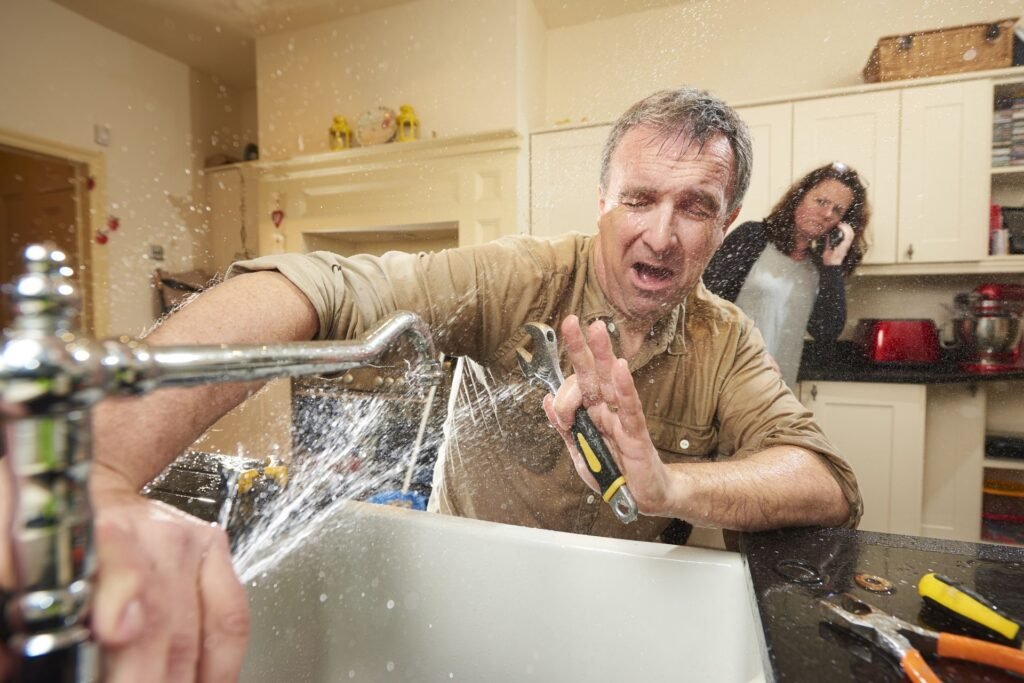
A blocked outside drain rarely stays a small inconvenience for long. Water may begin backing up across the patio, foul smells can reach the house, and a heavy spell of rain can quickly turn a slow-draining gully into a flooding problem. Knowing how to unblock outside drain issues safely can help you act early, but it is equally important to know when to stop and call a professional.
For homes, rental properties and busy commercial premises, an outside drain blockage can disrupt far more than the garden. Toilets, sinks, washing machines and kitchen waste may all struggle to drain if the blockage is in the shared foul drain. Acting promptly helps protect your property, avoids unpleasant hygiene issues and reduces the chance of water finding its way indoors.
First, check whether it is really an outside drain blockage
Start by identifying which drain is affected. Lift the grate from a gully carefully and look for obvious leaves, mud, moss, litter or standing water. A gully is usually a small drain at ground level that collects rainwater or waste water from external pipes. A larger chamber with a solid cover may be an inspection chamber, sometimes called a manhole.
If only one outdoor gully is holding water after rain, the blockage may be close to the surface. If the outside drain is overflowing when you flush the toilet, empty a sink or run the washing machine, the problem is more likely to be in the foul drainage pipe. This needs more caution because it may contain contaminated water.
Before opening any cover, keep children and pets away from the area. Wear waterproof gloves, old clothes and sturdy footwear with a good grip. Never lean into an inspection chamber or enter one. Drain gases can be hazardous, and deeper chambers are not safe places for untrained people.
How to unblock an outside drain step by step
For a shallow, visible blockage near the top of a gully, a careful DIY approach can work. The aim is to remove the obstruction rather than force it deeper into the pipe.
Remove surface debris by hand
Put on gloves and use a small hand trowel, scoop or garden tool to lift out leaves, silt, food waste and other loose material. Place it in a bucket or bin bag rather than washing it further down the drain. Many blockages start with a simple build-up around the grate, particularly after windy weather or when garden debris collects near the patio.
If the gully has a removable trap or basket, take it out gently and clean it. Make a note of how it sits before removing it so it can be refitted correctly. Do not damage seals or force parts that are stuck.
Use warm water to test the flow
Once loose debris is removed, pour a bucket of warm water slowly into the drain. Use warm water, not boiling water, as sudden heat can damage some older pipework or fittings. If the water clears steadily, repeat the test once or twice to make sure the flow has improved.
A slow trickle suggests there may still be a partial blockage further down the pipe. If the water rises quickly, stop adding water. Continuing to fill an overflowing drain can spread contaminated water across paths, entrances or outdoor seating areas.
Try drain rods only if you can do so safely
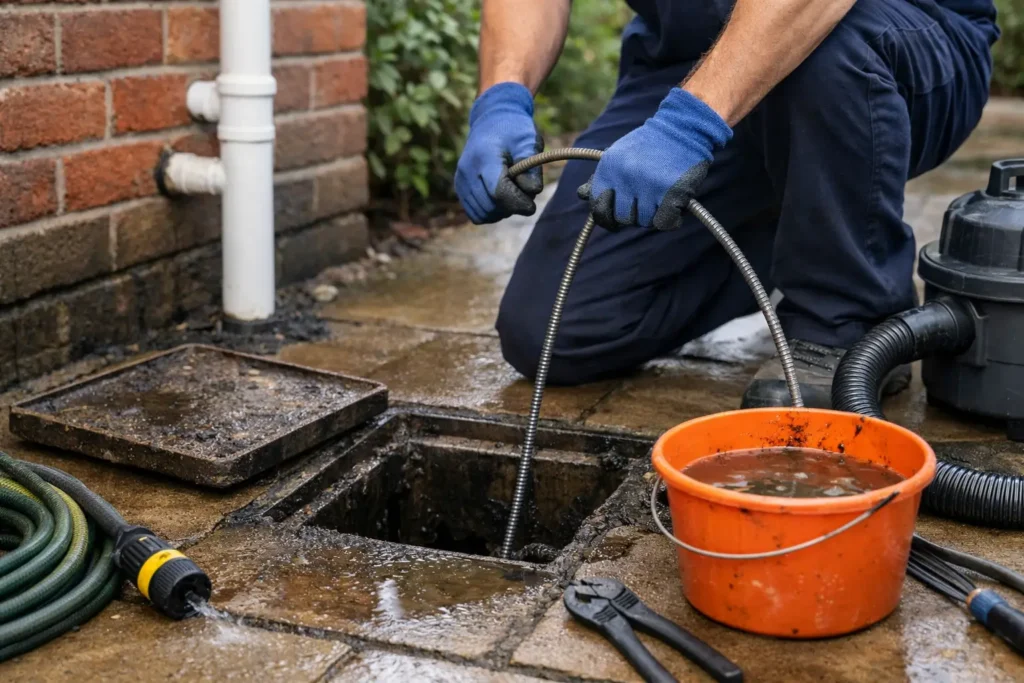
Drain rods can help with a blockage that is beyond reach, but they need to be used with care. Fit the rods securely and turn them clockwise as you feed them into the drain. Turning anti-clockwise can unscrew a rod underground, leaving it stuck in the pipe and creating a more expensive problem.
Use steady pressure rather than force. If you meet firm resistance, withdraw the rods, clear any material caught on the end and reassess. The blockage could be compacted fat, tree roots, damaged pipework or an object that will not shift with rods alone. Forcing the issue can crack a pipe or push waste into another part of the drainage system.
Flush and check nearby fixtures
When the water appears to be running freely, flush the drain with a few buckets of clean water. Then check indoor sinks, toilets and appliances that may connect to the same line. A successful clearance should improve drainage without causing water to rise in another gully or inspection chamber.
Replace the grate securely once the area is clean. Do not leave an open drain unattended, even for a short time.
What not to put down an outside drain
Outside drains are often blocked by items that should never have entered the drainage system. In kitchens, fat, oil and grease can cool inside the pipe and form a hard coating that traps food debris. In bathrooms and utility areas, wipes, sanitary products, cotton buds, hair and excess paper can cause stubborn obstructions.
Avoid relying on harsh chemical drain cleaners for a serious outdoor blockage. They may not reach the obstruction, can splash back when the drain is full and may damage older pipes or create a hazard for anyone who later works on the drain. Mixing different cleaning products is particularly dangerous.
A pressure washer is not usually the answer either. Without the right jetting equipment and experience, it can send contaminated water back towards you or disturb joints in ageing drains. Professional drain jetting is controlled, purpose-built and carried out after the drainage layout has been assessed.
When a blocked outside drain needs professional help
Some blockages are not suitable for a home fix. If you have removed visible debris and the drain still will not clear, there may be a deeper obstruction or a fault in the pipe itself. Repeated blockages are especially worth investigating rather than simply clearing each time.
Call for help if you notice sewage or toilet paper backing up, foul water overflowing near a doorway, water rising in an inspection chamber, or drains blocking again within days or weeks. You should also seek professional support if the cover is heavy or damaged, drain rods become stuck, or you suspect roots, a collapsed pipe or a shared drainage issue.
For landlords, letting agents and commercial property managers, quick action matters. A blocked drain can affect tenants, staff, customers and food hygiene standards, particularly in cafés, restaurants, hotels and takeaways. It is usually less disruptive and less costly to deal with a slow drain early than wait for a full overflow during a busy period.
If you rent your home, report the issue to your landlord or managing agent as soon as possible, particularly if it affects toilets, washing facilities or shared drains. Take clear photographs of any overflow or standing water before cleaning the area, where safe to do so.
Preventing the next blockage
A small amount of routine attention can prevent many outdoor drainage problems. Clear leaves from grates after storms, keep soil and garden waste away from gullies, and avoid washing patio debris into the drain. In autumn, this simple check is particularly useful around properties with mature trees.
Inside, let cooking oil and fat cool in a container before putting it in the bin. Use sink strainers where food debris is common, and only flush toilet paper and human waste. These habits are just as relevant in a household as they are in a workplace kitchen or customer toilet.
Where a drain has blocked more than once, arranging a professional clean and inspection is sensible. The cause may be a build-up that needs proper jetting, but it could also be root ingress, poor pipe falls or damaged underground drainage. Clearing the symptom without finding the cause can mean the same problem returns at the worst possible time.
A clear outside drain protects more than your paving – it helps keep your property clean, safe and usable when the weather turns. If your drain is overflowing, repeatedly blocking or simply will not clear, contact HJZ Plumbing on 01482 236483 or through www.hjzplumbing.com for prompt, practical help across Hull and East Yorkshire.