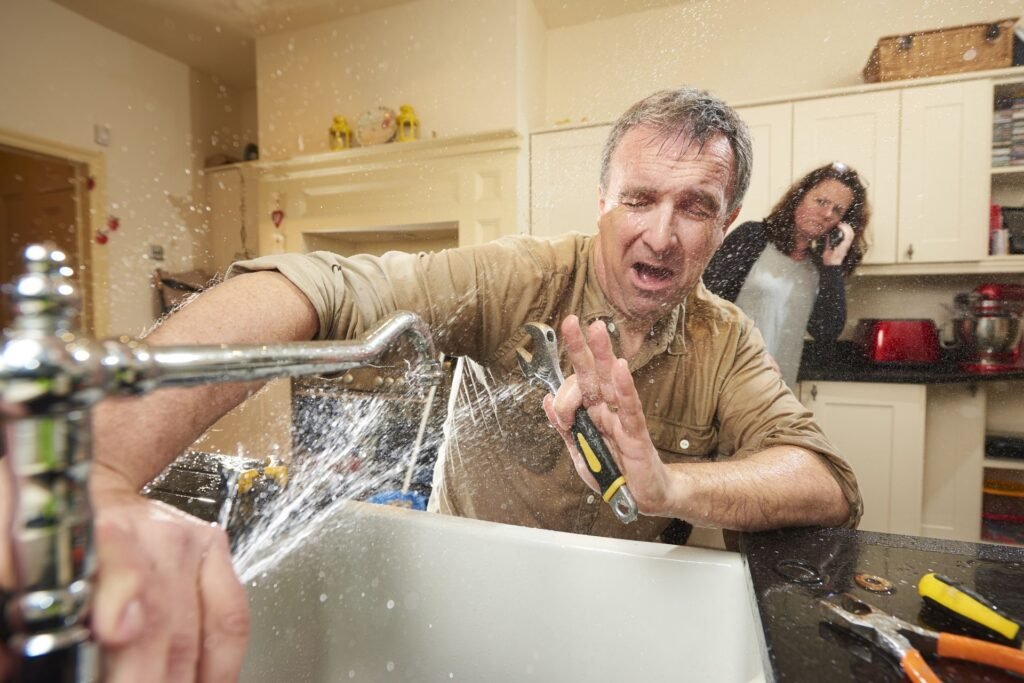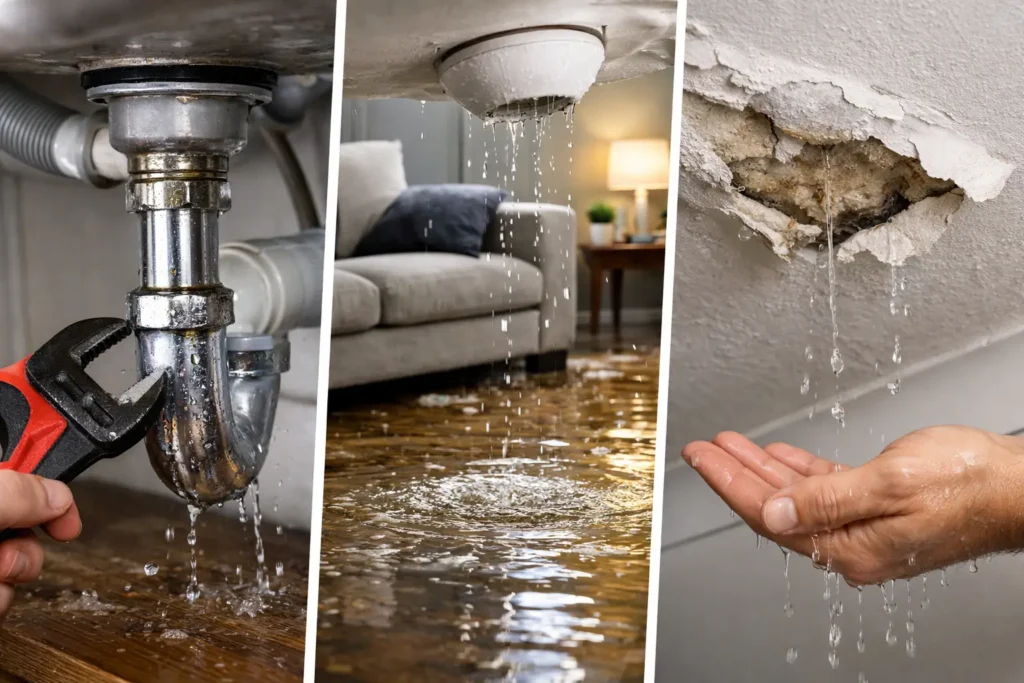
A ceiling stain rarely starts as a big drama. More often, it begins with a small drip behind a panel, a toilet that keeps running, or a pipe joint that has been weeping for weeks without anyone noticing. The top causes of water damage are usually ordinary plumbing faults left too long, and that is exactly why they become expensive.
For homeowners, landlords, letting agents and businesses, water damage is not just about wet floors. It can affect decorations, flooring, electrics, stock, ceilings, hygiene standards and day-to-day use of the property. In rental homes and occupied commercial premises, it can also create complaints, disruption and a lot of pressure to sort things quickly. The good news is that most plumbing-related water damage gives warning signs before it turns into a major repair.
The top causes of water damage most people overlook
One of the biggest misconceptions is that water damage only comes from burst pipes. In reality, sudden failures do happen, especially in very cold weather, but many of the top causes of water damage are slower and easier to miss.
A dripping flexi hose under a kitchen sink, a worn seal around a shower tray, a faulty fill valve in a toilet cistern, or a waste pipe with a poor connection can all leak small amounts of water over time. Because these faults are often hidden in cupboards, behind bath panels or inside boxed-in pipework, they may not be spotted until swelling skirting boards, peeling paint or damaged ceilings appear.
That is why early action matters. A simple repair carried out quickly is usually far less disruptive than replacing flooring, drying out walls and dealing with mould or damaged finishes later on.
Leaking pipes and failed joints
Leaks from pipework are one of the most common causes of internal water damage. Sometimes the issue is obvious, such as a split pipe or a fitting that suddenly gives way. More often, it is a slow leak from a compression joint, a corroded section of pipe, or a connection that has worked loose over time.
Older properties can be more vulnerable, but newer plumbing is not immune. Movement in pipework, poor previous repairs, high water pressure and general wear can all cause joints to fail. In busy buildings such as cafés, schools, offices and rental properties, a small leak may go unnoticed for longer simply because no one is checking the hidden areas regularly.
Typical warning signs include damp patches, musty smells, discoloured ceilings, warped laminate and a drop in water pressure. If you notice any of these, it is worth getting the plumbing checked before the damage spreads further.
Faulty toilets and overflowing cisterns
Toilets are a frequent source of water problems, especially in homes with only one bathroom and in commercial premises where facilities get heavy use. A toilet that constantly runs can waste a surprising amount of water, but it can also signal a failing internal mechanism that may lead to overflow issues.
Leaks can occur at the pan connector, the isolation valve, the inlet pipe, the base seal or inside the cistern itself. In upstairs bathrooms, even a modest toilet leak can show up downstairs as a stained ceiling or damp wall. In tenanted properties, the problem can be made worse if occupants think it is minor and delay reporting it.
This is one of those areas where it depends on the fault. A straightforward valve replacement may be enough, but if the toilet has been leaking into flooring for some time, the repair may also involve dealing with damaged boards, seals or finishes around the fixture.
Shower leaks and failed seals
Showers are among the top causes of water damage because they are used every day and leaks are not always obvious at first. Water does not need a large gap to escape. If silicone seals fail around a tray, enclosure or bath edge, water can work its way into walls and floors bit by bit.
A cracked tray, loose waste fitting or leaking concealed shower pipe can be even more troublesome. These faults often show as staining on the ceiling below, loose tiles, damaged grout, soft flooring or a persistent damp smell in the bathroom.
The trade-off here is that some shower leaks are cheap to put right when caught early, while others become far more invasive if left alone. Replacing sealant is one thing. Opening up walls or lifting flooring to trace a concealed leak is another. Either way, ignoring the first signs usually costs more.
Blocked drains and waste pipe backups
Not all water damage starts with pressurised pipework. Waste water can be just as destructive when it cannot drain away properly. Blocked sinks, basins, showers and toilets can overflow into kitchens, bathrooms and service areas, especially if people keep using them when drainage is already slow.
Grease, food waste, wipes, hair, soap residue and scale build-up are common culprits. In restaurants, cafés and takeaways, kitchen waste systems need particular attention because heavy daily use increases the chance of recurring blockages. In homes and rental properties, repeated slow drainage is often dismissed until a sink backs up or a toilet overflows.
A blockage does not always mean the pipe is fully closed off. Partial restrictions can place extra strain on joints and fittings, causing leaks elsewhere in the system. That is why recurring drainage issues should not be treated as a minor annoyance.
Appliance and kitchen plumbing faults
Washing machines, dishwashers, fridge feeds and kitchen taps are all common sources of hidden leaks. Appliance hoses can split, waste connections can loosen, and isolation valves can start to drip. Because these are often tucked behind units or beneath worktops, leaks may continue for some time before anyone sees them.
The risk is not just water on the floor. Prolonged moisture can damage cabinets, chipboard carcasses, wall finishes and floor coverings. In commercial kitchens, even a relatively small leak can create hygiene concerns and interrupt service if the area becomes unsafe to use.
There is also a practical point here. People often replace the visible appliance and assume the plumbing connections are fine. In reality, old hoses, worn valves and poor waste arrangements should be checked at the same time.
Frozen pipes and sudden bursts
During cold snaps, frozen pipework remains one of the most serious causes of rapid water damage. When water freezes inside a pipe, it expands and can split the pipe or weaken a fitting. The actual flooding often happens when temperatures rise and the ice thaws.
Lofts, outbuildings, empty properties, exposed pipe runs and little-used areas are most at risk. Landlords and property managers often see this in vacant periods, while businesses may discover the problem when reopening after closure or reduced use.
Prevention helps, but again, it depends on the building. Insulation, keeping some background heat, and identifying vulnerable pipe runs can reduce the risk. Once a pipe has burst, speed matters. Turning off the water supply and calling a plumber quickly can limit the damage significantly.
Why small warning signs matter
Water damage rarely stays contained. A leak that starts in one room can travel along joists, into ceilings, behind tiles, beneath vinyl or under fitted units. By the time the damage is visible, the water may have been spreading for some time.
Some signs are easy to dismiss – a slight smell of damp, flaking paint, an unexplained rise in the water bill, mould near a shower, or a floor that feels slightly springy. These are worth taking seriously, particularly in occupied properties where hidden leaks can affect tenants, customers, staff and day-to-day routines.
If you manage multiple properties, quick reporting procedures matter just as much as the repair itself. The sooner an issue is identified, the more chance there is of keeping the repair focused on the plumbing rather than the wider damage.
When to call a plumber
If water is escaping, staining is spreading, drainage is backing up, or a toilet, tap, shower or pipe is leaking repeatedly, it is time to get it looked at. Waiting to see if it settles down is rarely the cheaper option.
A good plumbing visit is not just about stopping the immediate leak. It should also identify the actual cause, check whether there is a wider issue in the system, and give clear advice on the next sensible step. Sometimes that means a straightforward repair. Sometimes it means replacing a worn fitting before it fails again. Honest advice matters because over-repairing is not helpful, but underestimating a leak is just as risky.
For homes and businesses across Hull and the surrounding area, HJZ Plumbing helps deal with leaks, faulty toilets, blocked drains, damaged pipework and the everyday plumbing faults that often lead to costly water damage. If you have spotted a leak, damp patch, overflow or plumbing issue that needs sorting, contact HJZ Plumbing on 01482 236483 or through www.hjzplumbing.com. Acting early can save a great deal of disruption later.