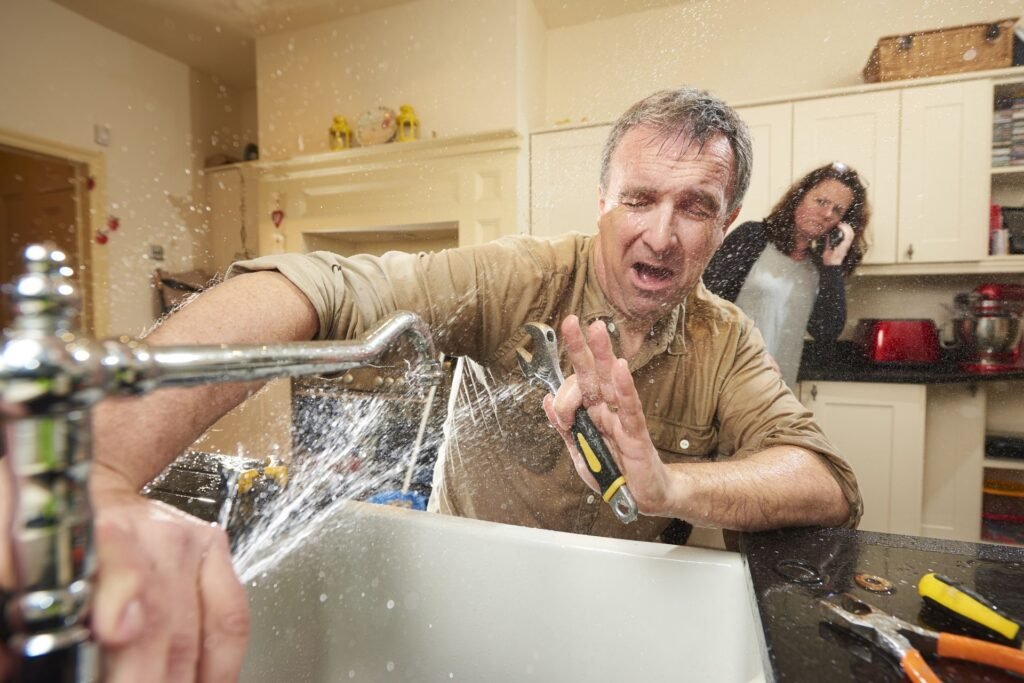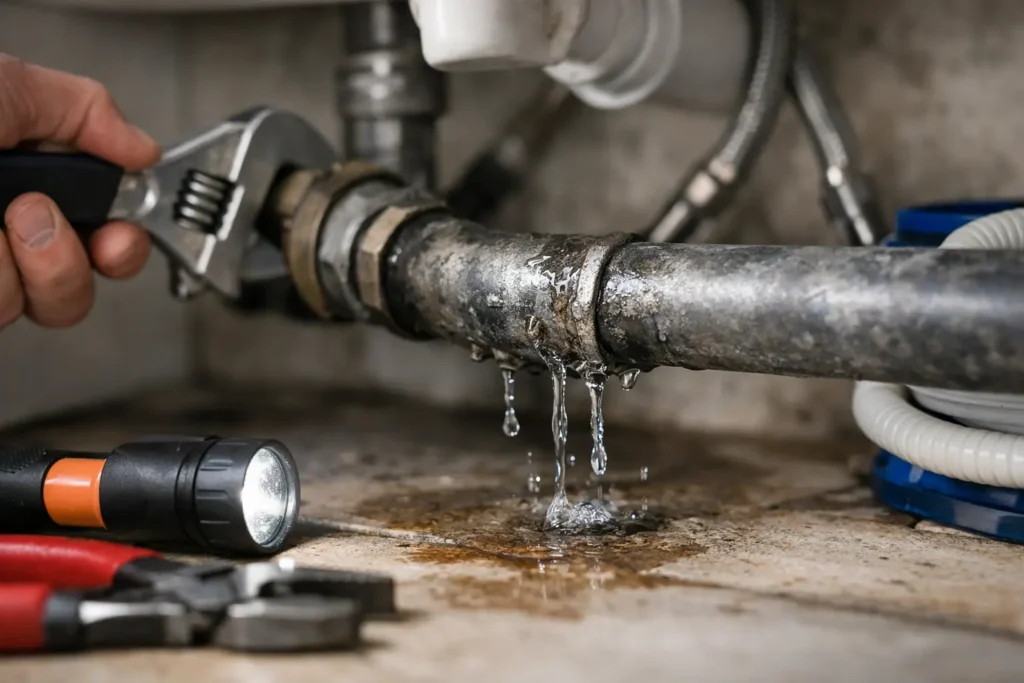
A leak from a lead pipe is not something to leave and see how it goes. Even a small drip can turn into stained walls, damaged floors, mould, and a much bigger repair bill. If you are wondering what to do if you have lead pipe leaks, the priority is to limit water damage straight away, avoid disturbing the pipe more than necessary, and get proper advice on whether it needs a repair or full replacement.
Lead pipework still turns up in older homes and older commercial buildings, particularly on supply lines or sections that have never been updated. The challenge is not just the leak itself. With lead, there is also the wider question of water quality, the age of the pipework, and whether a quick fix is truly worth it.
What to do if you have lead pipe leaks straight away
Start by shutting off the water supply if the leak is active enough to cause ongoing damage. If the leak is on an internal pipe and you can safely reach the isolation valve, use that first. If not, turn off the main stop tap. This helps contain the problem before water spreads under flooring, into ceilings, behind kitchen units, or across commercial premises where it can disrupt trading or create a slip risk.
Next, catch any escaping water with towels, buckets, or containers and move nearby items out of harm’s way. If water is close to electrics, do not take risks. Keep clear of sockets, appliances, and fused spurs in affected areas until the situation has been made safe.
Then avoid the temptation to squeeze, tape, clamp, or knock the pipe about if you are not sure what condition it is in. Old lead pipe can be soft, brittle in places, and vulnerable where joints have weakened over time. A well-meant DIY repair can easily make the leak worse or open up another weak point a few inches away.
Why lead pipe leaks need a bit more caution
Not every leaking pipe is treated the same way. Copper, plastic, and steel all have their own repair methods, but lead needs more care because the material is older, softer, and often part of a system that may already be near the end of its serviceable life.
If the leaking section supplies drinking water, there is also a health consideration. Disturbed, damaged, or deteriorating lead pipework is not something to ignore. A plumber may be able to carry out a safe temporary repair in some cases, but often the better long-term decision is to replace the affected section, or more, depending on its age and condition.
That is why the answer to what to do if you have lead pipe leaks is rarely just patch the hole and forget about it. The leak is often a sign that the pipework needs a closer look overall.
Should you still use the water?
It depends on where the leak is, how severe it is, and what the pipe serves. If the pipe is heavily leaking, turn the supply off and leave it off until a plumber has assessed it. If it is a minor leak on an older lead water supply, it is sensible to be cautious about using that supply for drinking or cooking until you have had professional advice.
For landlords, letting agents, cafés, schools, and other occupied premises, this matters even more. A leak is not just an inconvenience. It can affect hygiene, create hazards for tenants, staff, customers, or visitors, and lead to complaints or interruption of normal use.
If you are managing a rental property or business premises, acting quickly helps protect both the property and the people using it.
Signs the pipe may need replacing, not repairing
A proper repair is sometimes possible, but there are plenty of situations where replacement is the more sensible route. If the pipe has leaked before, has visible distortion, feels soft in multiple places, or shows signs of age along a longer run, a single repair may only buy a short amount of time.
The location matters too. A leaking lead pipe under a floor, in a wall, behind fitted units, or in a ceiling void is usually more disruptive and more expensive if it fails again. In that situation, many property owners prefer to deal with it properly once, rather than pay for repeated access, repeated repairs, and repeated making good.
Where the pipe is part of an older incoming supply or a mix of outdated materials, replacement can also make future plumbing work simpler and more reliable.
Temporary measures and what not to do
There are emergency products sold as quick leak fixes, but they are not a proper answer for ageing lead pipework. A temporary wrap or clamp might slow a drip in some situations, but if used badly it can deform the pipe further or mask a problem that continues getting worse underneath.
Do not heat the pipe, do not try to cut into it yourself, and do not hammer fittings into place. That can turn a manageable leak into a burst pipe or create unnecessary health concerns when dealing with old lead materials.
The safest short-term measure is usually simple containment and isolation – stop the water if needed, protect the area, and arrange a professional inspection as soon as possible.
How a plumber will assess lead pipe leaks
A good plumbing assessment is not just about finding the hole. It is about understanding why it has happened and whether the surrounding pipework can still be trusted. That means checking the leak point, the age and route of the pipe, the condition of joints, access issues, and whether the pipe is serving mains water or another part of the system.
In some cases, a localised repair may be reasonable, especially if the affected section is short and accessible. In others, replacement is the safer and more cost-effective option. The right answer depends on the condition of the wider run, not just the visible drip.
For occupied homes and businesses, a practical plumber will also think about disruption. Sometimes the priority is to make the system safe and restore service quickly, then return for planned replacement work if that keeps the property functioning with minimal upheaval.
What replacement work might involve
If lead pipe replacement is advised, the scale of the job can vary quite a bit. It may be a short section under a sink or in a utility area, or it may involve a longer run through floors, walls, or external sections of supply pipework.
That is why honest advice matters. Some properties need only the failed section dealt with, while others will benefit from replacing all remaining lead pipework in the affected area. There is no one-size-fits-all answer. The best option depends on access, budget, the age of the system, and how likely it is that another section will fail next.
For commercial sites such as restaurants, cafés, shops, offices, and schools, the timing of the work may be just as important as the repair itself. Planning the job around opening hours or site use can reduce disruption and help keep the property safe and usable.
What homeowners, landlords, and businesses should keep in mind
For homeowners, the main concern is usually protecting the property from water damage and making sure the water supply is safe and reliable. For landlords and letting agents, there is the added pressure of tenant communication, ongoing damage risk, and arranging repairs promptly to keep the property in good order.
For businesses and public-facing premises, speed matters even more. A plumbing fault can quickly become a hygiene issue, a safety concern, or a reason for lost trade. Even a small leak can damage ceilings, stock, decorations, flooring, or equipment if it is left unattended.
The common thread is simple. The earlier the issue is dealt with, the more options you usually have, and the less likely it is to become a much larger job.
When to call for urgent help
Call a plumber urgently if the leak is active, the pipe is bulging or split, water is coming through ceilings or walls, the stop tap will not isolate the issue, or the leak is affecting a kitchen, bathroom, business premises, or any occupied area. Fast action is especially important where tenants, customers, children, or staff could be put at risk by water damage or unsafe conditions.
If you need clear advice on what to do if you have lead pipe leaks, it is always better to get the problem checked sooner rather than wait for a small fault to become a burst pipe.
If you are in Hull, Beverley, or the surrounding area and need reliable help with a leaking pipe, contact HJZ Plumbing on 01482 236483 or through www.hjzplumbing.com. A prompt, practical repair now can prevent a great deal of damage later, and that is always the better call.