A radiator that is hot at the bottom but cold at the top usually is not failing – it is often just holding trapped air. That can leave rooms slow to warm up, push your heating to work harder than it should, and cause frustration when you are paying for heat you are not really getting. If you are wondering how to bleed radiator properly, the good news is that it is usually a simple job if you take your time and do it safely.
This is one of those maintenance tasks that can make a noticeable difference straight away. It is also a good example of why small plumbing issues are worth dealing with early. Ignore them for too long and what starts as a chilly room can turn into an ongoing heating performance problem across the property.
What bleeding a radiator actually does
When air gets trapped inside a radiator, hot water cannot circulate through it as evenly as it should. The trapped air collects at the top, which is why the top section often stays cool while the lower part feels warm.
Bleeding the radiator means opening the small bleed valve just enough to let that trapped air escape. Once the air is released and water reaches the top properly, the radiator can heat more evenly. In many homes, that is all it takes to restore performance.
It is worth saying that bleeding helps with air in the system, not every radiator fault. If the radiator is cold at the bottom and warm at the top, sludge or internal build-up is often more likely. If only one radiator is not heating at all, the valve could be stuck or there could be a balancing issue. The pattern matters.
Signs your radiator needs bleeding
The most obvious sign is a radiator that stays cold at the top. You might also hear gurgling or bubbling noises when the heating is on. In some properties, one room never seems to get properly warm even though the rest of the system is running.
Landlords and property managers often notice this after a tenant reports one room being hard to heat. In a business setting such as a shop, office or café, poor radiator performance can quickly become a comfort issue for staff and customers. It is a small maintenance task, but it can have a bigger effect on the day than people expect.
What you need before you start
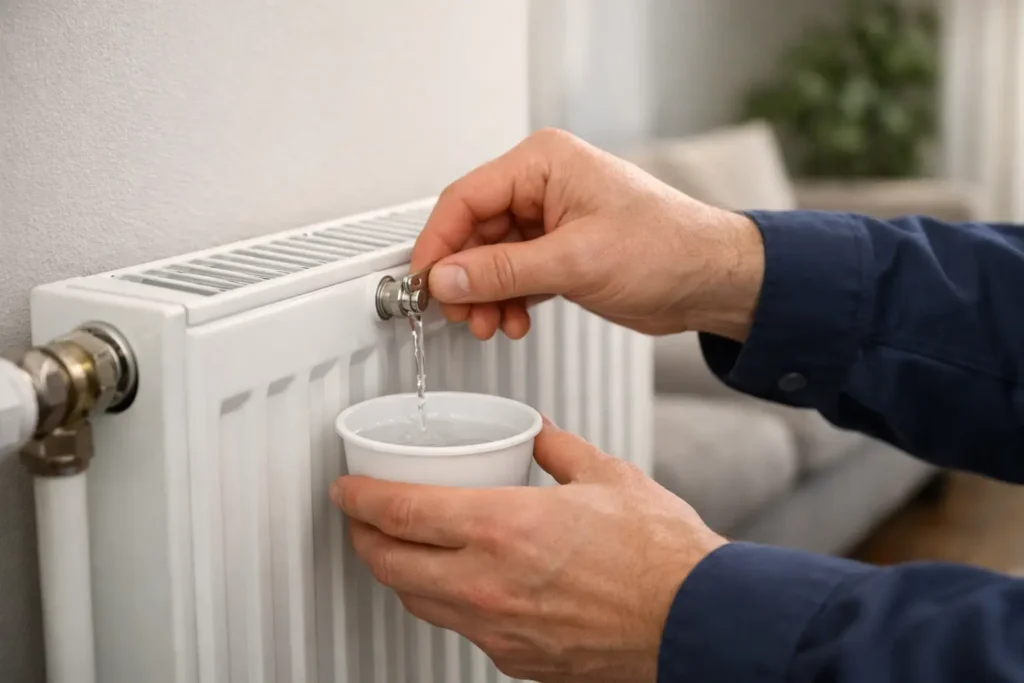
You do not need much. A radiator bleed key is the main item. Some radiators may use a flat-head screwdriver instead, but most traditional bleed valves need a proper key. You should also have a cloth or small towel and a bowl, cup or container to catch any drips.
Old radiators can sometimes release dirty water, so it is sensible to protect flooring and nearby skirting boards. If the radiator is close to painted walls or carpet, a bit of preparation can save a mess.
How to bleed radiator properly step by step
Before you begin, switch the heating off and let the radiators cool down. This matters because you want the system settled, and you do not want hot water spraying out under pressure.
Start by identifying which radiator needs attention. If several have cold spots at the top, work through them one at a time. It often makes sense to begin downstairs and then move upwards, especially in a larger house, but the key point is to be methodical.
Place your cloth and bowl beneath the bleed valve. The valve is usually found at the top corner of the radiator, often on the side opposite the control valve.
Insert the bleed key and turn it slowly anticlockwise – usually no more than a quarter turn is needed. You should hear a hissing sound as trapped air escapes. Keep the valve open just enough for the air to come out.
Once the hissing stops and a steady trickle of water appears, close the valve by turning it clockwise. Do not overtighten it. It only needs to be snug enough to stop leaks.
Wipe the valve and surrounding area, then check whether the radiator now heats more evenly when the system is turned back on. If you have bled more than one radiator, check them all again after the heating has been running for a while.
Check the system pressure afterwards
This is the part many people miss. After bleeding radiators, the pressure on your heating system can drop. If it falls too low, the system may not work properly.
Look at the pressure gauge and make sure it sits in the normal operating range for your system. If it has dropped, you may need to top it back up following the manufacturer instructions. If you are not confident doing that, or the pressure keeps dropping again, it is better to get a plumber to check it. Repeated pressure loss can point to a leak or another fault that should not be ignored.
Common mistakes when bleeding a radiator
The biggest mistake is opening the valve too far. A bleed valve only needs a small turn. Open it too much and you risk water coming out faster than expected, which can stain walls, damage flooring, or leave you trying to control a messy leak.
Another common issue is bleeding a radiator while the heating is still on. That can make the job less predictable and less safe. Waiting until the system cools is always the better approach.
Some people also keep bleeding a radiator even after water is flowing clearly. Once the air is out, close the valve. There is no benefit in leaving it open longer.
Finally, do not assume every heating issue is trapped air. If you bleed the radiator and the same problem returns quickly, or the radiator stays unevenly cold, there is likely another cause.
When bleeding a radiator is not enough
Knowing how to bleed radiator properly is useful, but there are times when it is only part of the answer. If a radiator needs bleeding again and again, air may be entering the system somewhere. If several radiators are cold at the bottom, there may be sludge restricting circulation. If a valve is leaking or seized, forcing it can make matters worse.
This is especially worth paying attention to in rented properties and commercial premises. Heating issues left unresolved can lead to complaints, call-backs, disruption, and avoidable repair costs. A simple visit to diagnose the actual cause can save a lot of repeat hassle.
There is also the age of the radiator to consider. Older units can be more prone to sticking valves, pinhole leaks and internal corrosion. In those cases, bleeding may give only a short improvement.
How to bleed radiator properly without causing damage
Most problems happen when the job is rushed. Use the correct key, turn the valve gently, and be ready for a small amount of water. If the valve feels stuck, do not put excessive force on it. Old bleed screws can shear, and then a simple task turns into a repair.
Keep an eye on the valve afterwards as well. If it continues to weep water, it may not have closed properly or the fitting may be worn. Even a slow drip can mark paintwork and flooring over time.
For households with tenants, children, customers or staff around, it is also sensible to do the job at a quiet time. You want enough space to work carefully and enough time to check the result properly.
When to call a plumber
If water leaks from the radiator body, the valve will not close, the pressure keeps dropping, or the radiator still does not heat after bleeding, it is time to get it looked at properly. The same applies if you are dealing with several underperforming radiators across the property, recurring cold spots, or signs of sludge in the system.
A practical repair early on is usually cheaper and less disruptive than waiting until the problem affects more of the system. For landlords, that means fewer tenant complaints. For businesses, it helps avoid discomfort for staff and visitors. For homeowners, it means getting the heating working as it should without the stress of trial and error.
If you need help with a radiator problem, a leaking valve, poor heating performance or wider plumbing repairs, contact HJZ Plumbing on 01482 236483 or visit www.hjzplumbing.com. Clear advice and a proper fix can save you time, mess and repeat problems later on.