A radiator that is warm at the bottom but cold across the top is usually not a sign that it needs replacing. It often means trapped air is stopping hot water from circulating properly. Radiator bleeding is a straightforward maintenance job that can restore more even heat, make rooms more comfortable and help you spot small heating issues before they cause bigger disruption.
For homeowners, landlords and busy commercial premises, the key is knowing when a radiator simply needs bleeding and when the problem points to a fault that needs professional attention. Releasing air will not fix every cold radiator, and forcing the issue can create a leak if a valve is damaged or worn.
What radiator bleeding does
Your radiators work by allowing hot water to circulate through their internal channels. Over time, small pockets of air can collect inside. Because air rises, it usually sits at the top of the radiator and prevents hot water from reaching that area.
The common result is a radiator that feels noticeably cooler at the top than the bottom. You may also hear gurgling, bubbling or trickling noises when the heating is running. In a home, that can leave bedrooms and living spaces slow to warm up. In a rental property, office, café or shop, it can quickly become a comfort issue for tenants, staff and customers.
Bleeding the radiator lets the trapped air escape through the bleed valve. Once water begins to emerge in a steady trickle, the air should be out and the radiator can heat more evenly again.
Signs your radiators need bleeding
Cold patches at the top are the clearest sign, but there are a few other clues worth paying attention to. A radiator may take much longer to warm than it used to, make unusual water-like noises, or stay lukewarm while other radiators are hot.
It helps to compare radiators around the property. If just one is cold at the top, trapped air is a likely cause. If several radiators are underperforming, or the heat is poor throughout the building, the issue may be more involved. Sludge, a sticking valve, poor circulation or a leak can all affect performance in different ways.
A radiator that is cold at the bottom rather than the top should not automatically be bled. This pattern can point to debris or sludge settling inside the radiator, which needs a different solution. Repeated bleeding without checking the cause may only delay the right repair.
How to bleed a radiator safely
Before starting, turn the heating off and allow the radiators to cool. This matters. Opening a bleed valve while the system is hot can release very hot water and make a simple job unnecessarily risky.
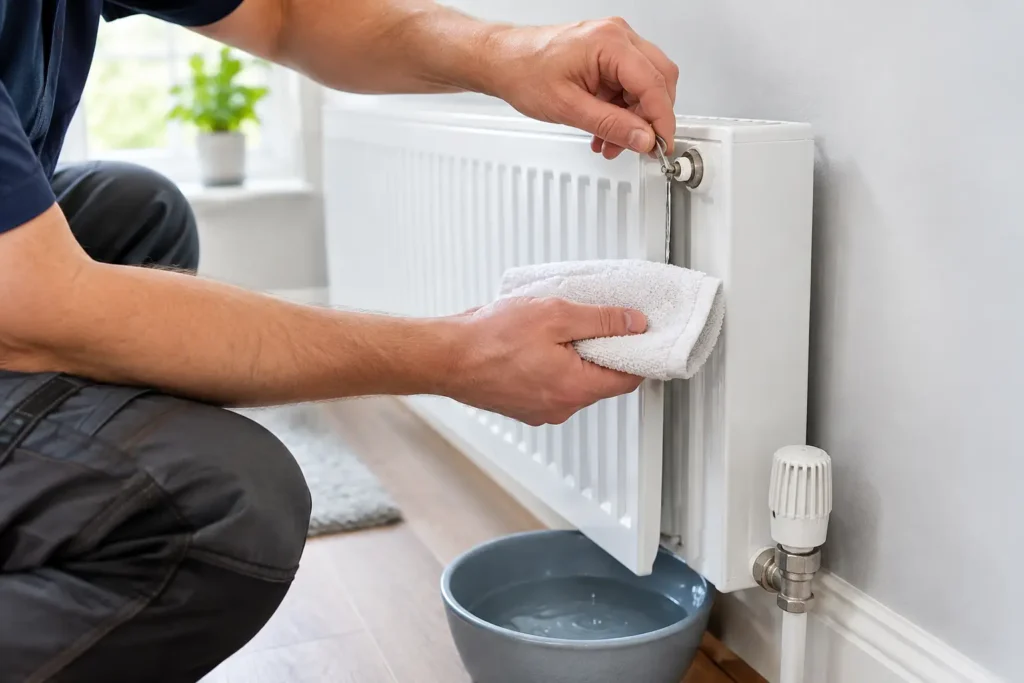
You will usually need a radiator bleed key, although some newer radiators use a flat-head screwdriver. Keep an old towel and a small container beneath the bleed valve to catch any drips. The valve is normally located near the top corner of the radiator.
Turn the valve slowly anti-clockwise by a small amount. You should hear a gentle hiss as the trapped air escapes. Do not open it fully. Once the hissing stops and water starts to come out in a consistent flow, turn the valve clockwise to close it. Wipe away any water and check that the valve is not dripping.
After bleeding one radiator, move around the property and repeat the process only where it is needed. Many people start downstairs and work upwards, particularly in a larger house, but the most important point is to work carefully and check each radiator rather than rushing through the job.
When you turn the heating back on, give the radiators time to warm through fully. Check that the top and bottom are heating more evenly and inspect each bleed valve again for signs of moisture.
Avoid over-tightening the bleed valve
A bleed valve only needs to be snug enough to stop water escaping. Over-tightening can damage the valve or its seal, creating a drip that was not there before. If the valve will not close properly, is corroded, or starts leaking from the fitting, stop trying to force it and arrange a repair.
A small towel may be enough for a few drops, but do not leave a continuing leak to chance. Even a slow drip can stain walls, damage flooring and, over time, affect the radiator or surrounding pipework.
When bleeding is not the answer
Radiator bleeding solves trapped air. It does not solve every heating problem. If a radiator remains cold after bleeding, check whether the valves at the bottom are open and whether the valve pin appears stuck. Do not use excessive force on old valves, as this can cause damage or a leak.
You should also arrange an inspection if you need to bleed the same radiator repeatedly. Air does not usually return in large amounts without a reason. Frequent air build-up can indicate an underlying issue in the system, and it is better to investigate early than keep treating the symptom.
Watch for brown, black or dirty water when bleeding. A little discolouration can occur in older systems, but heavily discoloured water, cold bottoms on radiators or widespread uneven heat can suggest internal build-up. In those cases, a professional assessment can establish whether cleaning, radiator repair or another practical solution is appropriate.
For landlords and property managers, recurring cold radiators should be dealt with promptly. Tenants should not have to rely on portable heaters because one room will not warm properly, and a report of a leaking radiator valve needs quick attention to protect the property.
Radiator bleeding in occupied businesses
In a hotel, restaurant, school, office or retail unit, timing matters as much as the repair itself. Bleeding a radiator is a small task, but water drips, access restrictions and occupied rooms still need to be managed properly. A leaking valve beside stock, carpets, electrical equipment or customer seating can become more disruptive than the original cold spot.
For premises with several radiators, it is sensible to check them before colder weather arrives and deal with uneven heating during quieter periods. This gives staff and visitors a more comfortable environment and reduces the chance of last-minute callouts when the building is busy.
Simple checks that help keep radiators working well
Radiators need space to release heat into the room. Large furniture pushed tightly in front of them, heavy covers or long curtains can make a room feel cold even when the radiator itself is working correctly. Keeping the area around the radiator reasonably clear makes a noticeable difference.
It is also worth acting on changes early. A new gurgling sound, a cold patch, a stiff valve or a small stain beneath a radiator is easier and usually less costly to deal with before it develops into lost heat or water damage. This is particularly valuable in empty rental properties, where a slow leak may go unnoticed for days.
If you are unsure whether a radiator needs bleeding, or you have a cold radiator, leaking valve or repeated heating issue, HJZ Plumbing can provide clear, practical advice and tidy repair work across Hull and the surrounding East Yorkshire area. A warmer room should not require guesswork – call 01482 236483 or contact us through www.hjzplumbing.com to get the problem checked before it causes further disruption.