A busy commercial kitchen can send a surprising amount of fat, oil and grease into the drainage system in a single service. Knowing how to maintain commercial grease traps properly helps prevent blocked drains, unpleasant odours, hygiene concerns and the disruption of having to close a kitchen while an emergency plumbing problem is dealt with.
For restaurants, cafés, takeaways, hotels, schools and other food-serving premises, grease-trap maintenance is not an optional extra. It is a practical part of protecting your drainage system, your staff and your ability to keep trading.
What a commercial grease trap does
A grease trap, sometimes called a grease interceptor, is fitted into the wastewater pipework from kitchen sinks, dishwashers and food-preparation areas. As wastewater flows through it, fats, oils and grease – often shortened to FOG – rise and separate from the water. Food debris settles lower down, while the cleaner water continues towards the drain.
This process reduces the amount of grease entering the main drainage pipes. Without it, grease can cool, harden and build up inside pipework. The result may be slow-draining sinks at first, followed by repeated blockages, bad smells, flooding or wastewater backing up into the kitchen.
A grease trap is not designed to make poor disposal habits harmless. It works best when kitchen staff keep food waste, oils and cleaning materials out of the sink wherever possible.
How to maintain commercial grease traps without disruption
The right maintenance interval depends on the size of the unit, the number of covers served, the type of food prepared and how much washing-up takes place. A small café may need a different schedule from a high-volume restaurant or hotel kitchen.
As a general rule, do not wait until a trap is full, the kitchen smells unpleasant or water starts draining slowly. Grease should be removed before it has a chance to pass through the trap or restrict the flow of wastewater. Many commercial kitchens arrange regular servicing weekly, fortnightly or monthly, but the correct frequency should be based on what is actually building up in the unit.
Checking the trap at consistent intervals is the simplest way to establish a sensible routine. If the grease layer is approaching a quarter of the liquid depth, it is time to arrange cleaning. Leaving it longer increases the risk of grease escaping downstream and undermines the purpose of the installation.
Inspect the trap before problems show themselves
A visual inspection should look for a heavy grease layer, settled food waste, damaged seals, loose lids and signs that water is not flowing freely through the unit. Pay attention to odours too. A strong smell around the trap or sink area can indicate decomposing food solids, a full unit or a drainage issue beyond the trap.
Staff should also watch for warning signs during normal kitchen work. Gurgling sinks, water taking longer to clear, repeated need for plunging, and wastewater appearing around floor drains all deserve prompt attention. These are not issues to manage around during a busy shift. They are early warnings that can become a costly blockage.
Remove grease and waste safely
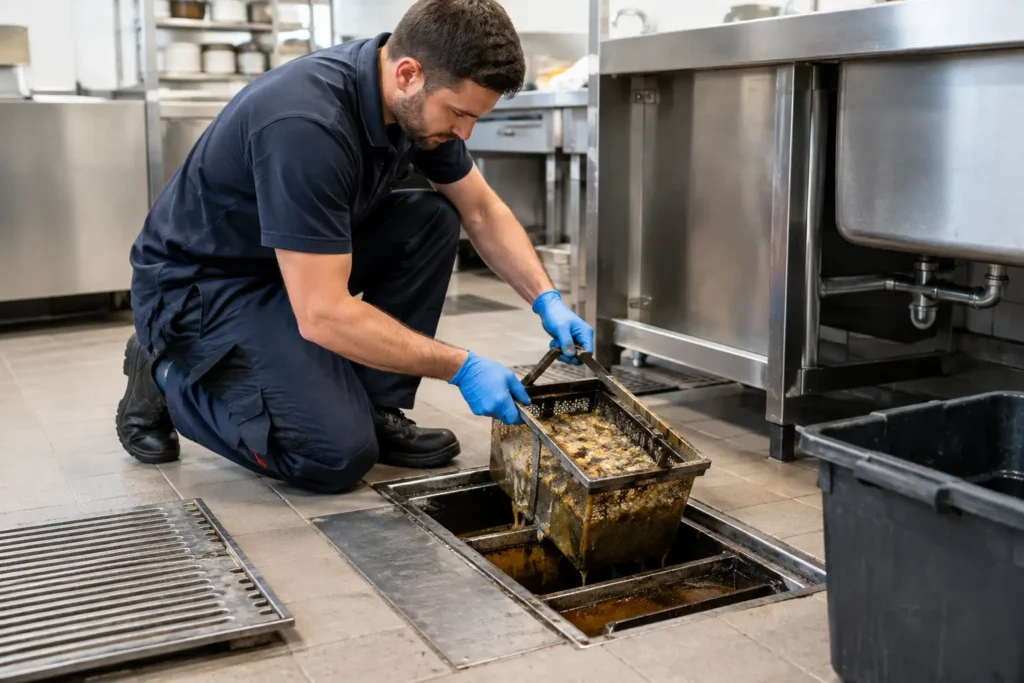
Commercial grease traps need the collected grease and settled solids removed, contained and disposed of correctly. The trap should then be cleaned carefully, with internal components checked before the lid is resealed.
The exact cleaning method depends on the type and location of the unit. Smaller under-sink traps may be serviced manually, while larger external interceptors often require specialist equipment and planned emptying. If access is awkward, the waste volume is substantial or there is any uncertainty about disposal requirements, use a qualified contractor rather than asking kitchen staff to take on work they are not equipped for.
Avoid tipping removed grease into another drain, toilet or outside gully. That simply transfers the problem elsewhere. Keep records of maintenance and waste collection, particularly where this is required by your landlord, insurer, environmental procedures or local authority.
Clean components, not just the visible grease
Removing the top layer alone is rarely enough. Food particles can gather at the bottom of the trap and restrict flow, while grease can cling to baffles, screens and internal surfaces. During a proper clean, these areas should be cleared without damaging the components that allow the trap to separate grease from water.
Do not use boiling water in an attempt to flush grease away. It may melt grease temporarily, but the material can cool and set further along the pipe run, where it is harder to reach. Strong drain chemicals can also damage pipework, seals and the trap itself, while failing to remove the underlying build-up.
If drains are already slow or backing up, cleaning the grease trap may be only part of the solution. Grease can have travelled beyond the unit and collected in the kitchen waste pipe or the main drain. In that situation, the pipework may need professional cleaning as well.
Good kitchen habits reduce grease-trap problems
The best maintenance plan combines scheduled servicing with everyday discipline. Train staff not to pour cooking oil, fat from roasting trays, sauces or greasy wash water directly into the sink. Allow fats to cool where appropriate, collect them in suitable containers and dispose of them through the correct waste route.
Scrape plates, trays and pans into food-waste bins before washing them. Sink strainers help catch food particles, but they must be emptied regularly rather than left to overflow. Wiping greasy pans with disposable paper before washing can also reduce the amount of FOG entering the system.
Be careful with products marketed as grease-eating treatments. Some may help in specific circumstances, but they are not a substitute for emptying and cleaning a trap. They can also create false confidence, allowing grease to move further through the drainage system instead of being physically removed.
Set a maintenance schedule that reflects your kitchen
A written schedule makes grease-trap care easier to manage across changing shifts and staff. It should identify who checks the unit, how often it is inspected, when a full clean is due and who is authorised to arrange professional support.
Keep a simple log of inspection dates, cleaning dates, observations and any drainage symptoms. Over time, this provides useful evidence of how quickly your grease trap fills. It also helps a plumber identify whether recurring blockages are related to kitchen practices, an undersized trap, damaged pipework or a separate drainage fault.
Maintenance often needs to be increased around busy periods. A takeaway may produce more greasy wastewater during weekends, while a hotel or restaurant can see demand rise sharply during functions, school holidays or the festive season. It is better to book an extra clean before a known busy period than deal with a blocked kitchen drain halfway through service.
When to call a commercial plumber
Call for professional help if wastewater is backing up, sinks are repeatedly blocking, odours persist after the trap has been cleaned, or grease is appearing in drains beyond the kitchen. These signs can point to a deeper restriction in the pipework or a problem with the trap installation itself.
A plumber can assess the trap, clear affected kitchen waste pipes and advise whether the existing unit is suitable for the volume of wastewater your premises produces. This matters when a business has expanded its menu, added equipment, increased seating or changed how the kitchen operates. A trap that was adequate for a small operation may not cope with a much busier one.
For businesses in Hull, Beverley and the surrounding East Yorkshire area, HJZ Plumbing can provide practical support with blocked drains, kitchen pipework and commercial plumbing issues before they cause further disruption. If your grease trap is full, your sinks are draining slowly or your kitchen drainage needs attention, contact HJZ Plumbing directly on 01482 236483 for clear advice and a prompt, tidy response.