Cold patches along the bottom of a radiator, rooms that take far too long to warm up and dirty water released during bleeding are all common signs of sludge in a heating system. Knowing how to power flush radiators helps you understand what is involved, why it can make a real difference, and when it is sensible to bring in a professional rather than risk a leak or further disruption.
A power flush is not simply a case of draining a radiator and refilling it. It is a controlled clean of the pipework and radiators, using specialist equipment to circulate water and cleaning chemicals at a high flow rate. The aim is to dislodge and remove the black sludge, rust particles and debris that restrict circulation over time.
What a power flush does for your radiators
Most radiator sludge is formed when metal components inside the system gradually corrode. The resulting magnetite is a fine black material that settles in radiators, particularly at low points, and can build up in narrow sections of pipework. It stops hot water moving freely, so the heating may be running but individual radiators still feel lukewarm or cold.
A proper power flush can improve heat distribution, reduce cold spots and help radiators warm up more evenly. It may also reduce noise from the system, such as gurgling, knocking or persistent water flow sounds. For landlords and commercial property managers, dealing with poor radiator performance promptly can avoid tenant complaints, uncomfortable rooms and unnecessary disruption in occupied premises.
It is not a cure for every heating issue. A radiator that is cold only at the top may simply need bleeding. A seized valve, a leaking radiator, damaged pipework or an incorrectly balanced system needs a different repair. The condition of the system matters too: very old or fragile pipework should be assessed carefully before any forceful cleaning work begins.
Signs your system may need flushing
One cold radiator does not automatically mean the whole system needs a power flush. However, a wider pattern of poor performance often points to a build-up of debris. Look out for several radiators heating unevenly, brown or black water when a radiator is bled, recurring cold spots, noisy circulation, or rooms that remain cold despite the heating being on for a reasonable time.
You may also notice that radiators need frequent attention after being bled, or that a newly fitted radiator performs well while older ones remain disappointing. In rental homes, hotels, cafés and offices, these symptoms are worth investigating early. Waiting until a room becomes unusable can turn a straightforward maintenance visit into an urgent callout.
How to power flush radiators safely
Power flushing is usually best carried out by an experienced heating and plumbing professional because it involves chemicals, pressurised water, temporary connections and careful monitoring. The exact set-up varies by system, but the working process follows a clear sequence.
1. Inspect the system first
Before connecting any equipment, the plumber checks the radiators, valves, visible pipework and system water. This helps identify existing leaks, stuck valves and radiators that may need individual attention. If there are signs of corrosion or weak joints, the risks and options should be explained before work starts.
This inspection also prevents the wrong solution being applied. Air, poor balancing and faulty valves can all cause cold radiators, yet none will be fixed by flushing alone.
2. Protect the property and isolate the work area
A tidy power flush starts with preparation. Floors and nearby surfaces should be protected, especially in carpeted rooms, rental properties and customer-facing business spaces. The heating is allowed to cool where necessary, and the relevant valves and connections are isolated before equipment is attached.
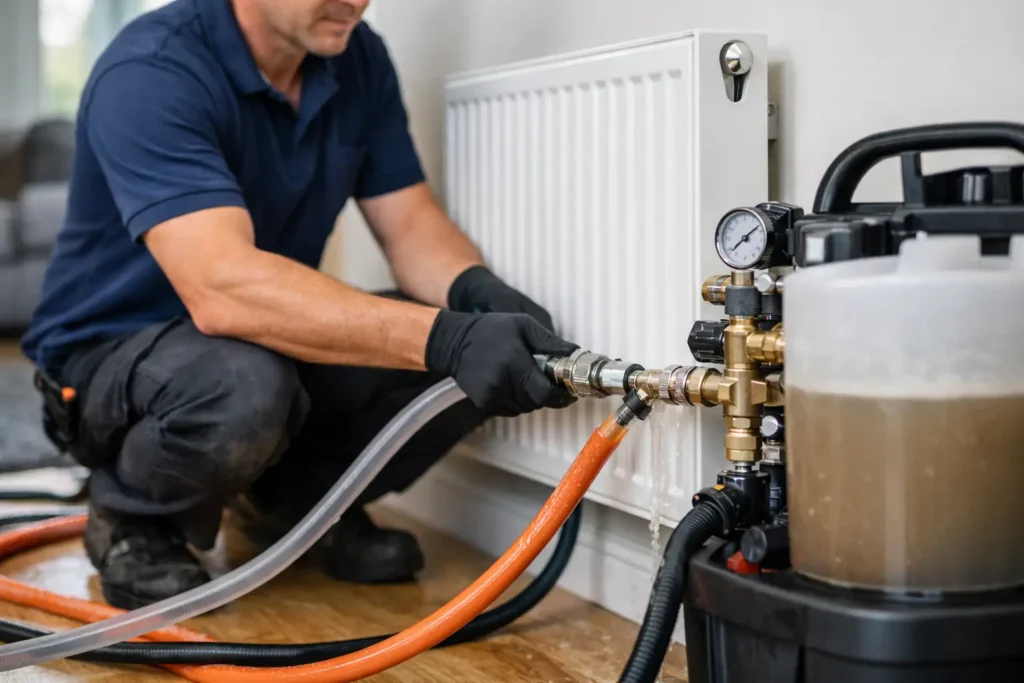
A professional power-flushing machine is generally connected at a suitable point in the system, often through radiator connections or pipework access points. This allows the cleaning fluid to circulate through the system without turning the job into a messy, room-by-room drain-down.
3. Add the right cleaning solution
A suitable cleaner is introduced to loosen sludge and corrosion deposits. The product and concentration need to suit the system and the level of contamination. Using an unsuitable chemical, adding too much, or leaving it in for too long can cause problems rather than solve them.
The machine circulates the water at a high flow rate, but the pressure is controlled. High flow is useful for shifting debris; excessive pressure is not. That distinction is one reason a domestic hose, a basic drain-down or a DIY pump is not an equivalent substitute for a proper power flush.
4. Flush each radiator and section of pipework
The flow is directed around the system and, where needed, individual radiators are treated one at a time. A technician may reverse the flow, agitate stubborn radiators and monitor the colour of discharged water. Dark water is expected at the start on a sludged system, but it should gradually run clearer as debris is removed.
Particularly troublesome radiators may need extra attention. In some cases, a radiator is removed and flushed separately if debris is heavily compacted. This has to be done carefully to avoid damaging walls, flooring, valves or older fittings.
5. Rinse thoroughly and refill correctly
Cleaning chemicals and loosened sludge must be fully rinsed from the system. The water is flushed through until it is clear, then the system is refilled and checked for leaks. Radiators are bled to remove trapped air, valves are returned to their correct positions and the system is tested for even heating.
The final stage is often overlooked, but it matters. A suitable inhibitor should be added after the clean to slow future corrosion. Without it, the same conditions that created the sludge can return far sooner than they should.
Can you flush radiators yourself?
A single radiator can sometimes be removed and rinsed outside, but it is a messy job with a real risk of spills, damaged valves and dirty water staining carpets or flooring. It also does not clean the rest of the pipework. Draining the whole system and refilling it may remove some dirty water, but it rarely shifts compacted sludge as effectively as a professional power flush.
For confident property owners, the useful first steps are simpler: check whether valves are open, bleed radiators carefully if they are cold at the top, and note which rooms have cold spots. Do not force seized valves or attempt to remove a radiator if there is any uncertainty about the fittings. Water damage from a failed valve or loose connection can be far more expensive than arranging a proper visit.
When a power flush may not be the answer
If only one radiator is cold, the problem may be a stuck thermostatic valve, trapped air or a balancing issue. If there is visible water around pipe joints or beneath a radiator, the priority is finding and repairing the leak. Repeated pressure loss, unusual system behaviour or extensive corrosion should always be diagnosed before cleaning work is agreed.
An honest assessment is especially valuable in older properties across Hull and East Yorkshire, where heating pipework may have been altered over several decades. A good plumber will explain whether a power flush is likely to give a worthwhile result, whether individual radiator repairs are more suitable, or whether parts need replacing.
Keeping radiators working well afterwards
Once radiators are heating evenly again, a little routine attention helps protect the result. Bleed radiators only when needed, deal with drips promptly and do not ignore new cold patches or noisy pipework. If you manage a rental property or commercial premises, encourage occupants to report heating problems early rather than waiting until the weather turns colder.
A warm radiator should heat consistently from top to bottom and across its full width. If yours are slow, noisy or cold in places, acting early can prevent a minor circulation problem from becoming a larger repair. For clear advice and tidy, practical help, contact HJZ Plumbing directly on 01482 236483 or through www.hjzplumbing.com.