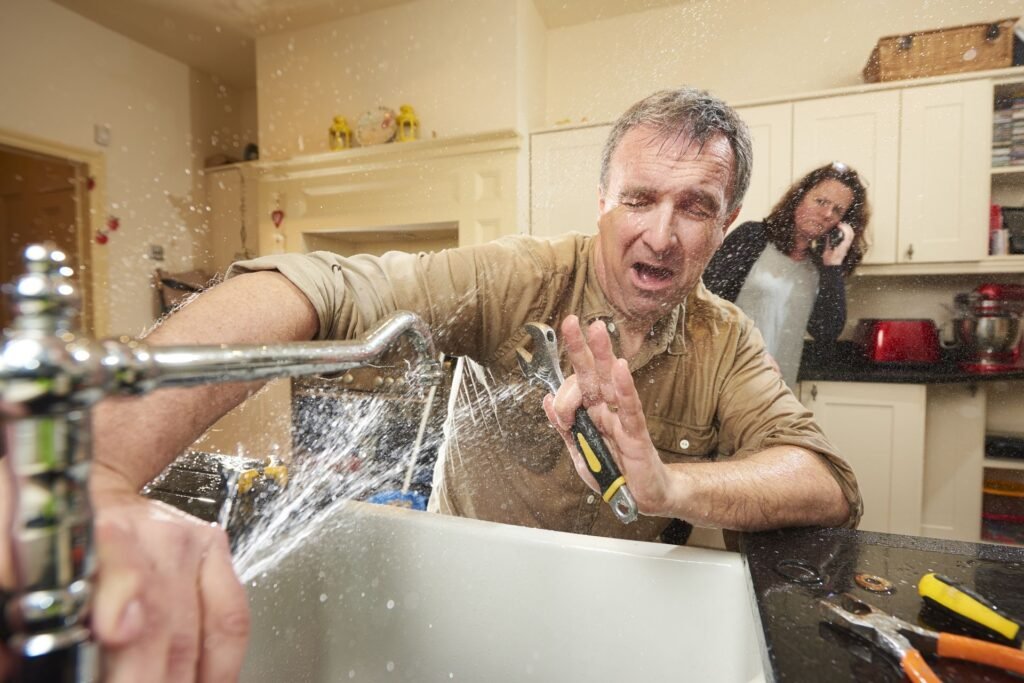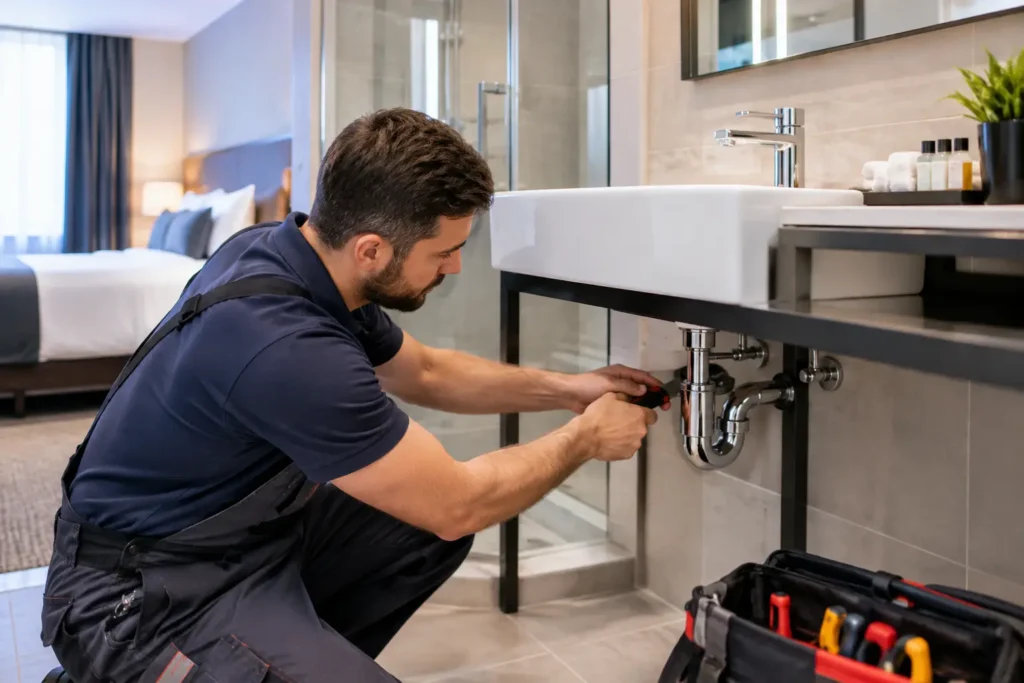
A guest can forgive a rainy afternoon. They are far less likely to forgive a toilet that will not flush, a shower that runs cold, or a leak spreading across the ceiling below their room. Hotel plumbing maintenance is not simply a back-of-house task. It protects guest comfort, staff routines, hygiene standards, room availability and your reputation.
For hotels, even a small fault can create a chain of disruption. A dripping tap may seem minor until it stains a basin unit. A slow-draining shower can become an unpleasant overflow during a busy check-in period. A hidden leak can take rooms out of service and leave guests asking for refunds or alternative accommodation. Planned maintenance helps identify these problems before they become costly emergencies.
Why hotel plumbing maintenance needs a planned approach
Hotels place constant demand on their plumbing. Bathrooms, showers, toilets, kitchens, laundry areas, staff facilities and public washrooms may all be in use from early morning until late at night. Unlike a private home, there is little opportunity to take a bathroom out of action for several days without affecting bookings and operations.
The right maintenance plan is not about replacing every fitting at the first sign of wear. It is about checking high-use areas regularly, spotting warning signs early and arranging practical repairs at a time that causes the least disruption. Some work can be planned around quieter periods or between guest stays. Other issues, particularly leaks, drainage failures and overflowing toilets, need immediate attention.
A dependable local plumber should also give clear advice on what needs doing now, what can be monitored and where a more permanent repair will save repeat callouts later. That matters when you are balancing guest expectations with running costs.
The plumbing faults guests notice first
Guests may never see the pipework behind a wall, but they notice the results quickly. Bathrooms are often where complaints begin, particularly when a fault affects cleanliness, water pressure or the ability to use the room as expected.
Toilets that run, leak or block
A constantly running toilet wastes water and can be noisy enough to disturb a guest at night. A weak flush, loose seat, leak around the base or repeated blockage is more serious because it creates a hygiene concern. Public toilets and those near breakfast areas, bars or reception need particular attention, as one out-of-order cubicle can quickly lead to queues and complaints.
Repeated blockages should not simply be treated as isolated incidents. They may point to a partial obstruction, poor drainage flow, inappropriate items being flushed or an issue further along the pipework. Drain cleaning and investigation can prevent the same problem returning during your busiest period.
Showers, taps and basin drainage
Slow shower drains, leaking shower trays and faulty shower valves are common in hotel bathrooms. Water escaping around a tray or enclosure may not be obvious straight away, but it can damage flooring, ceilings and rooms below. Signs such as cracked sealant, loose tiles, damp patches or a musty smell deserve prompt investigation.
Dripping taps are also worth fixing early. Apart from wasted water, they can keep guests awake and make an otherwise well-presented room feel poorly maintained. Low pressure, inconsistent temperature or a shower head that sprays in several directions are equally likely to affect reviews, even where the repair itself is straightforward.
Leaks hidden behind finishes
The most expensive leaks are often the ones nobody sees at first. A small pipe leak beneath a bath, behind a boxed-in toilet or under a kitchen sink can soak into timber, plasterboard and insulation. By the time staining appears, repairs may involve more than pipework.
Housekeeping teams are often the first to spot early signs. A damp smell, discoloured ceiling, bubbling paint, warped flooring or unexplained increase in water use should be reported and checked rather than covered up. Fast leak repairs can protect rooms, furnishings and the hotel’s ability to keep trading.
What a useful maintenance routine looks like
The frequency of hotel plumbing maintenance depends on the size of the building, occupancy levels, age of the plumbing and the number of kitchens, bathrooms and public facilities. A small guest house will not need the same schedule as a large hotel with a restaurant and function space. However, regular checks are far more effective than waiting for faults to interrupt service.
Room attendants and maintenance staff can carry out simple visual checks as part of normal routines. They should report running toilets, dripping taps, poor drainage, loose fittings, damaged seals, unusual noises and signs of moisture. A clear reporting process is essential. If an issue is noted but not passed on, a small repair can become an out-of-service room.
A qualified plumber can then undertake planned inspections and repairs, focusing on areas with the highest usage or a history of problems. This may include checking exposed pipework and valves, repairing leaks, clearing slow drains, replacing worn taps or toilet components, resealing showers and addressing radiator faults in occupied areas where comfort matters.
Keep a straightforward record of faults, repairs and recurring problems. If the same bathroom blocks every few weeks or a particular shower keeps leaking, that record helps identify whether a lasting repair or replacement is the better option. Repeated small callouts can cost more than dealing with the underlying issue properly.
Protecting kitchens, laundry areas and public facilities
Guest bedrooms are only part of the picture. A blocked sink in a commercial kitchen, a leak under a dishwasher connection or poor drainage near food preparation can affect hygiene, staffing and service. These areas often need a faster response because disruption can have immediate consequences for the hotel’s restaurant or breakfast operation.
Kitchen plumbing should be checked for leaking waste pipes, loose connections, slow drains and poor flow. Staff should know not to pour fats, oils or food waste into sinks, as these can build up in pipes and cause difficult blockages. Where drain problems are recurring, professional cleaning is usually more sensible than repeatedly relying on temporary fixes.
Public washrooms need a similarly practical approach. Check them frequently during busy periods, ensure leaks and blockages are dealt with quickly, and arrange repairs before a fitting fails completely. A clean, working washroom is a basic expectation for guests, visitors and event customers.
Responding properly when a fault happens
Even with a good maintenance routine, emergencies can occur. The priority is to limit water damage, protect people and keep disruption under control. Staff should know where the relevant isolation valves are and when it is safe to turn off the local water supply. In a serious leak, shutting off water quickly can make a major difference.
Move guests away from the affected area where necessary, place clear signage around slips or hazards, and avoid using electrical equipment near standing water. Do not keep using a blocked toilet or overflowing drain in the hope it will clear itself. This can turn a contained problem into contamination or damage across several rooms.
When calling for assistance, provide clear details: the location, what is happening, when it started, whether water has been isolated and whether rooms or facilities are affected. This helps the plumber arrive prepared and focus on restoring safe use as quickly as possible.
Choosing repairs that reduce future disruption
The cheapest repair is not always the best value. A worn internal toilet component may be an easy replacement, while an ageing shower enclosure with ongoing leaks may need more considered work. The decision depends on the condition of the installation, the likelihood of repeat failure and how much disruption future repairs could cause.
For hotels, durability and ease of maintenance should carry real weight. Accessible isolation valves, quality fittings and properly installed waste pipes make future repairs quicker and less disruptive. Where bathrooms are being refurbished, involving a plumber early can help avoid layouts that make leaks harder to find or valves impossible to reach.
Good plumbing work should leave the area clean, safe and ready to return to use. That is especially important in guest-facing spaces, where untidy repairs can undermine confidence even after the fault has been fixed.
If your hotel has a leak, blocked drain, faulty toilet, shower problem or recurring plumbing issue, do not wait for another guest complaint. Contact HJZ Plumbing on 01482 236483 or through www.hjzplumbing.com for practical, dependable support across Hull and East Yorkshire.