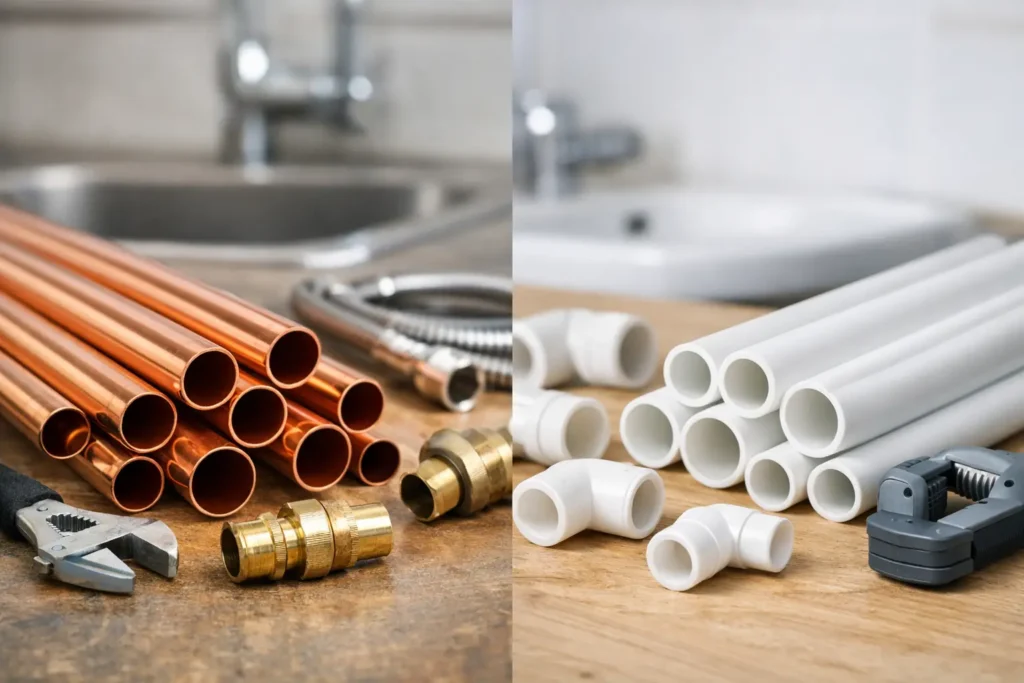
A burst pipe behind a kitchen unit or a slow leak under a bathroom floor is not the time to discover that the wrong pipework has been used for the job. When comparing copper pipes vs plastic, the right choice depends on where the pipes are going, how accessible they will be, the condition of the property and the work you need done. Both materials have a proper place in modern plumbing, but they perform differently over time.
For homeowners, landlords and business owners, the priority is usually simple: pipework that is dependable, tidy, suited to the building and unlikely to cause repeat disruption. A practical assessment before installation can prevent avoidable leaks, water damage and expensive remedial work later on.
Copper pipes vs plastic: the main difference
Copper is a traditional plumbing material that remains widely used because it is strong, long-lasting and proven in homes and commercial premises. It comes in rigid lengths, is joined using fittings, and is particularly useful where pipes are visible, exposed or likely to face knocks.
Plastic plumbing pipe, often referred to as push-fit or flexible pipework, is lighter and easier to route through floors, ceilings and awkward voids. It is commonly used for water supply pipes in refurbishment work and new installations. Its flexibility can mean fewer joints, which is useful when pipework needs to pass through tight spaces.
Neither is automatically better in every situation. Copper may be the sensible choice for a neat exposed run in a utility room, while plastic can make far more sense beneath floorboards where access is limited and a rigid pipe would require several joins.
Why copper is still a trusted option
Copper has earned its reputation. It is resistant to impact, does not become brittle in normal use and gives a clean, professional finish where pipework will remain on show. In a commercial kitchen, plant room, shop back area or bathroom where pipes are exposed, copper is often preferred for its appearance and durability.
It also handles heat very well. That makes it suitable for hot water pipework and locations where pipes may run close to heat sources, provided they are installed correctly. Unlike plastic, copper has a low level of expansion and contraction as water temperature changes. This can reduce movement and help prevent the clicking noises sometimes heard from pipework behind walls or below floors.
Copper is not without drawbacks. It takes longer to install, requires more specialist work at joints and can cost more in both materials and labour. It is also rigid, so changing direction around existing services can involve additional fittings. In older properties around Hull and East Yorkshire, where walls, floors and service routes are rarely straightforward, that extra work can affect the overall cost.
Water quality and the condition of the existing installation matter too. In some older systems, corrosion or pinhole leaks may develop over many years. Replacing a small failed section is often possible, but repeated leaks in ageing copper pipework may point to a wider issue that needs a proper inspection rather than another quick patch.
Where plastic pipework works well
Plastic pipework is popular because it can be installed quickly and with less disruption. A flexible length can often be fed through a ceiling void or under floorboards with fewer joints than copper. Fewer hidden joints can be an advantage, particularly in rental properties and occupied businesses where opening up floors or walls needs to be kept to a minimum.
It is also less affected by freezing than copper. No pipe is completely safe if water is allowed to freeze inside it, but plastic has some flexibility that can make it less likely to split immediately. That does not remove the need for insulation in lofts, outbuildings, vacant units or cold commercial areas. Frozen pipes still need prompt attention before a thaw reveals a leak.
Another benefit is noise reduction. Plastic generally transmits less sound than copper, which can be helpful in flats, hotels, offices and family homes where water noise through pipework is a nuisance.
However, plastic must be installed with the correct fittings, inserts, clips and support. It expands more than copper when hot water flows through it, so it needs enough room to move without rubbing, bowing or putting strain on joints. Exposed plastic may not suit every setting, and it should be protected from direct sunlight, accidental damage and unsuitable heat exposure.
Cost is more than the price of the pipe
Plastic is usually cheaper to buy and quicker to fit, which can make it attractive for larger alterations such as a new bathroom, kitchen plumbing changes or a re-pipe of concealed supply lines. Less installation time can reduce disruption for tenants, customers or staff as well as the initial bill.
Copper generally costs more upfront, especially where several bends and fittings are needed. Yet the long service life and smart finish can make it worthwhile in visible areas or harder-working environments. Choosing solely on material price can be a false economy if the result is poorly routed pipework, inaccessible fittings or an installation that does not suit how the property is used.
For landlords and property managers, it is worth considering future maintenance as well. A well-planned installation with isolation valves in sensible places makes later repairs faster and reduces the need to shut off water to an entire property for a minor fault.
The installation matters as much as the material
A good pipe material can still fail if it is installed badly. Loose clips, poor joints, unsupported plastic runs or pipework pushed tightly against timber can all lead to noise, leaks or wear over time. Equally, joining new pipework into old corroded sections without checking the wider condition of the system can leave the underlying problem unresolved.
Before deciding, a plumber should consider access, water pressure, the route of the pipework, whether pipes will be visible, and whether the property is occupied during the work. In a restaurant or café, hygiene, trading hours and avoiding water disruption may shape the approach. In a family home, protecting finished floors and keeping the work area tidy may be just as important as the choice between copper and plastic.
Where a leak has already happened, the immediate aim is to stop the water and limit damage. After that, the best repair is not always a like-for-like replacement. A short plastic section may be practical in a difficult void, while copper may be better where a pipe is vulnerable to knocks or needs to remain visible.
Which pipe should you choose?
Copper is often the better option where strength, appearance, heat resistance and a long-established finish are the priority. It is particularly suited to exposed pipework, areas at risk of accidental impact and installations where movement needs to be kept low.
Plastic is often the better option for concealed runs, awkward routes and projects where reducing installation time and disruption matters. It can be an excellent, reliable choice when it is the right grade of pipe, correctly supported and fitted by someone who understands the system.
Many successful plumbing installations use both. Copper may be used near visible outlets and vulnerable sections, with plastic pipework used through floors, walls and ceilings. This is not cutting corners. It is often the most practical way to balance durability, appearance, cost and access for future repairs.
Do not ignore early signs of pipework trouble
A damp patch, stained ceiling, falling water pressure, unexplained water use or a recurring drip should be dealt with early. Small leaks can damage plaster, flooring, kitchen units and electrical fittings long before they become obvious. For landlords and commercial premises, they can also create tenant complaints, hygiene concerns and unwanted downtime.
If you are planning new pipework, dealing with repeated leaks or unsure whether copper or plastic is right for your property, get clear advice before the work begins. Contact HJZ Plumbing directly on 01482 236483 for a practical assessment and tidy, dependable plumbing support.