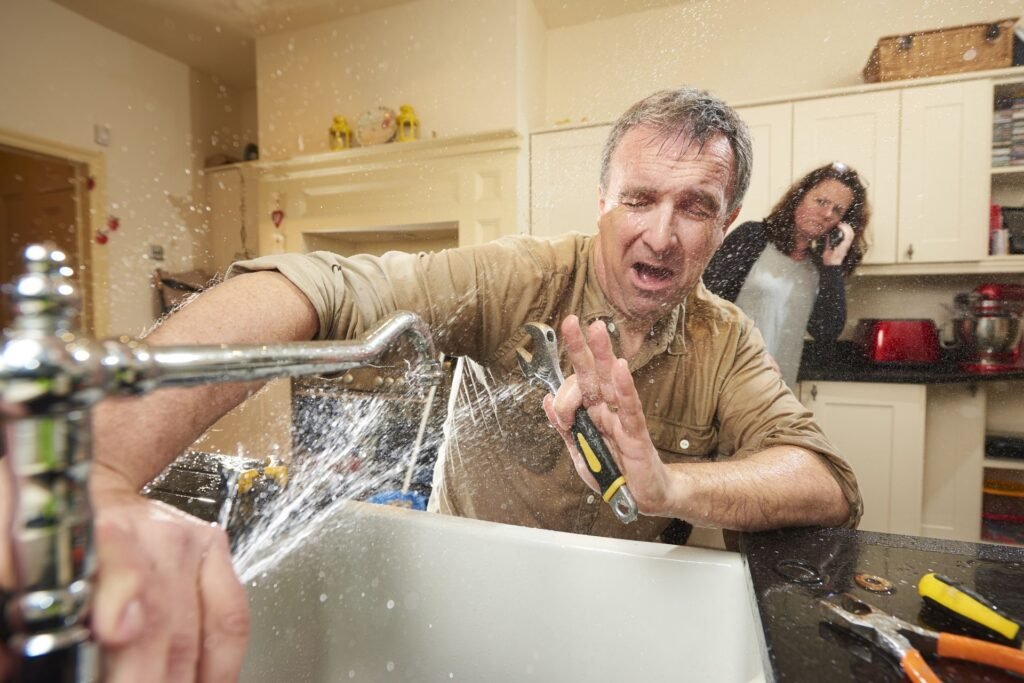
A leaking pipe rarely stays a small problem for long. What starts as a drip under the sink or a damp patch on a ceiling can quickly turn into damaged units, stained walls, swollen flooring, and a bigger repair bill. If you need to know how to stop a leaking pipe, the first priority is always the same – slow or stop the water safely, protect the property, and then get the fault repaired properly.
In homes, rental properties, shops, cafés, schools, and offices, speed matters. Even a minor leak can disrupt day-to-day life, affect hygiene, and cause hidden water damage behind walls or under floors. The good news is that there are a few practical steps you can take straight away before a plumber arrives.
How to stop a leaking pipe in the first few minutes
The best response depends on where the leak is and how bad it is, but there are a few actions that make sense in almost every case. First, turn off the water supply. If the leak is on a pipe feeding a basin, toilet, or appliance, you may be able to isolate that section locally. If not, shut off the main stop tap to the property.
Once the water is off, open nearby taps to drain off any remaining water in the system. This reduces pressure in the pipe and helps slow any continued dripping. If the leak is near electrics, lighting, sockets, or consumer units, do not touch anything wet. Keep clear of the area and get professional help straight away.
Next, catch any escaping water with towels, buckets, or containers. Move furniture, stock, equipment, or anything else that could be damaged. In occupied homes and business premises, this step often makes a real difference. Quick action can prevent a simple plumbing fault becoming a decorating, flooring, or insurance problem as well.
Temporary ways to stop a leaking pipe
If you are waiting for a plumber, a temporary repair may help control the leak for a short time. It is worth stressing that temporary fixes are exactly that – temporary. They can buy you time, but they are not a substitute for a proper repair.
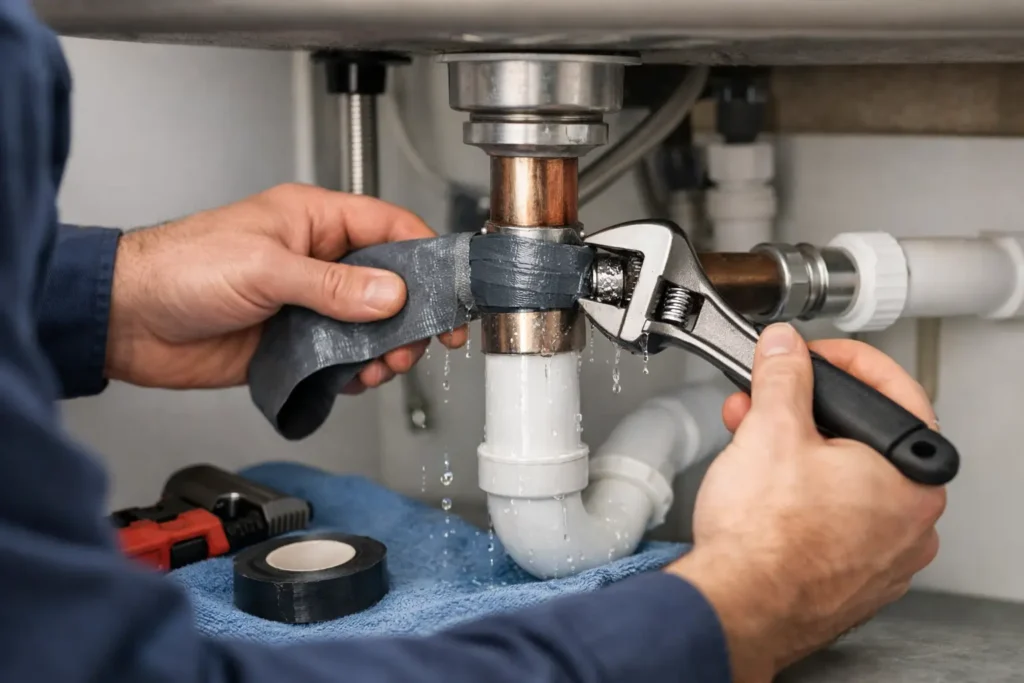
Pipe repair tape
Waterproof repair tape can sometimes help with a small pinhole leak or a hairline crack, especially on accessible pipework. The pipe needs to be as dry as possible before wrapping, and the tape must be applied tightly. This is usually more effective on a minor seep than on a split pipe under pressure.
Pipe repair clamp
A repair clamp can work better where there is a localised crack or hole on a straight section of pipe. It applies pressure over a rubber pad to contain the leak. This can be a useful short-term option, particularly where the pipe is metal and easy to reach, but the pipe still needs a proper assessment and repair afterwards.
Epoxy putty
Plumbing epoxy putty is another emergency option for small leaks. It is moulded over the damaged area and hardens to create a seal. As with tape, the surface needs to be prepared properly for it to hold. It is not suitable for every situation and should not be relied on where the pipe has badly corroded or split.
These products can be useful in the right circumstances, but there is always a trade-off. The more serious the leak, the less dependable a temporary fix becomes. If water is flowing steadily, if the pipe has burst, or if the leak is hidden behind finishes, the safest step is isolation and an urgent professional repair.
When not to attempt a DIY fix
Knowing when to stop is just as important as knowing what to do. If the leak is coming from a ceiling, inside a wall, under flooring, or near electrical fittings, it is sensible to treat it as urgent. The visible water is often only part of the issue. There may be a larger problem behind the surface, and trying to cut into walls or floors without experience can make matters worse.
The same goes for older pipework. In some properties, especially where fittings are worn, corroded, or poorly altered over time, disturbing one section can trigger another leak nearby. Landlords and commercial operators need to be especially careful here. A rushed temporary patch might seem convenient, but repeated callouts, tenant complaints, downtime, or water damage usually cost more in the end.
If you cannot identify the source of the leak, if the stop tap will not turn, or if the leak continues after isolation, it is time to call a plumber.
Common causes of leaking pipes
Understanding why a pipe is leaking can help you judge how urgent it is and whether a simple repair is likely to solve it. One common cause is wear and tear on joints and compression fittings. A washer can fail, a nut can loosen slightly, or movement in the pipe can open a small gap over time.
Corrosion is another issue, particularly on older metal pipework. A pipe may look sound from the outside but have weakened internally. In winter, frozen water can expand and split pipes, sometimes without being noticed until the thaw. Poor installation, accidental knocks, high water pressure, and blocked waste pipework can all contribute as well.
In kitchens and bathrooms, leaks under sinks and behind toilets are often left too long because they are out of sight. In commercial premises, staff may notice water but not realise the source is plumbing until damage has already spread. That is one reason early inspection matters.
How to limit damage while waiting for repair
Once the water supply is under control, focus on reducing the impact on the property. Dry the area as much as you can with towels or cloths, and keep the space ventilated. If water has reached cupboards, skirting boards, laminate, or stored items, remove what you can and allow airflow around the area.
For landlords, letting agents, and business owners, it also helps to document what happened. A few clear photos of the leak and any damage can be useful for maintenance records, tenants, or insurers. If the leak affects customer areas, washrooms, kitchens, or staff facilities, isolating the area quickly is often the safest option until repairs are complete.
Do keep an eye out for signs that the leak has been going on longer than expected. Peeling paint, mould, musty smells, staining, warped flooring, or soft plaster can all point to an ongoing issue rather than a sudden one.
How a plumber will usually fix a leaking pipe
A proper repair starts with finding the exact source of the leak, not just the point where the water shows itself. In some cases, the solution is straightforward. A faulty fitting may need tightening or replacing, or a short damaged section of pipe may need to be cut out and renewed.
In other situations, the visible leak is a symptom of a wider problem. If there is corrosion along a run of pipe, repeated stress on fittings, or poor previous workmanship, patching one point may not be enough. A good plumber will explain what has failed, what can be repaired immediately, and whether any further work is advisable to prevent a repeat problem.
That practical approach matters. The aim is not just to stop the drip for today, but to avoid the same fault causing more disruption next week.
How to stop a leaking pipe from happening again
Prevention is usually cheaper than emergency repair. Check visible pipework from time to time, especially under sinks, around toilets, behind washing machines, and in cupboards that are rarely opened. Look for dampness, green staining on copper, rust, swelling to cabinets, or small deposits around joints.
If pipework is exposed to cold lofts, outbuildings, or unheated areas, insulation is worth considering. During colder spells, keeping some background heat in the property can help reduce the risk of frozen pipes. It also makes sense to deal with small drips early. A minor leak is much easier to repair than water damage to units, ceilings, stock, or décor.
For commercial properties and rented homes, regular plumbing maintenance can be especially worthwhile. Catching a loose fitting or slow leak during routine checks is far less disruptive than dealing with a sudden failure during trading hours or in the middle of a tenancy.
If you are dealing with a leak and need clear advice or a fast repair, HJZ Plumbing can help. We work across Hull, Beverley, and surrounding areas, providing practical plumbing repairs for homes, landlords, and occupied business premises. If you need urgent assistance, call 01482 236483 or contact us through www.hjzplumbing.com. Acting early can save a great deal of damage, disruption, and cost.