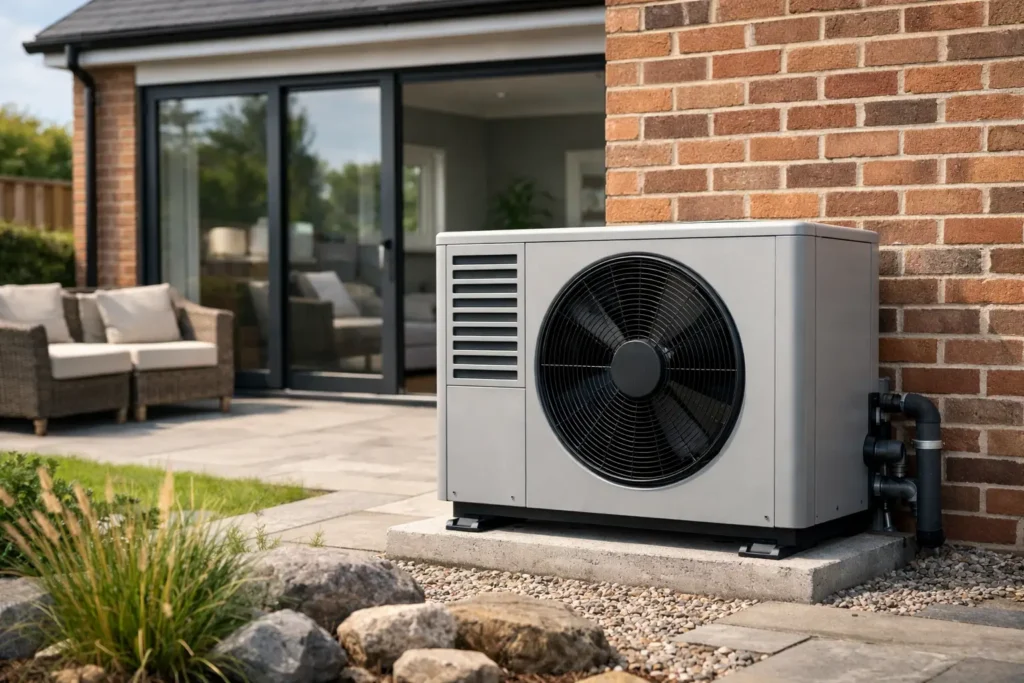
If you are looking at low-carbon heating, an air source heat pump review should answer one question before anything else – will it work well in your property, or leave you paying for a system that never feels quite warm enough? That matters far more than headline savings or sales claims.
For many homeowners and property managers, air source heat pumps can be a good long-term option. They are efficient, cleaner than older heating systems, and can work very well in the right building. But they are not a magic fix for every house, flat, shop or rental property. The best results usually come where the property is reasonably well insulated, the system is properly sized, and the rest of the heating setup has been thought through carefully.
Air source heat pump review: what are you really buying?
An air source heat pump takes heat from the outside air and uses it to warm water for your heating system and, in many cases, your hot water too. Even when the air outside feels cold, there is still usable heat energy there. The unit extracts that energy and upgrades it to a temperature your system can use.
That sounds simple enough, but the real value is in efficiency. Instead of generating heat directly in the usual way, a heat pump moves heat. In practical terms, that means you can often get more heat energy out than electricity going in. That is where the potential savings come from.
Still, efficiency on paper and comfort in real life are not always the same thing. A heat pump has to be designed around the property. If it is fitted into a draughty building with poor insulation and undersized radiators, the result can be disappointing. Rooms may take longer to warm up, and users often end up turning settings higher to compensate.
The main advantages in a practical setting
The strongest point in any air source heat pump review is efficiency. In the right home, they can deliver steady background heat with lower running costs than some older electric heating systems. They also reduce carbon emissions, which matters to owners looking ahead at future energy standards and environmental targets.
Another benefit is consistency. Heat pumps tend to work best when maintaining an even indoor temperature rather than blasting out short bursts of intense heat. For households that prefer stable comfort throughout the day, that can feel gentler and more controlled.
There is also a maintenance angle to think about. A well-installed system can be reliable, but like any heating setup it still needs proper servicing and attention. The difference is that problems often come from design choices at the start rather than day-to-day operation. A rushed install or poor specification can create years of frustration.
For landlords and commercial premises, there may be longer-term appeal in modernising a property’s heating system now rather than waiting until regulations or tenant expectations force the issue. That said, the financial case needs careful checking. The right answer for a detached home may be very different from the right answer for a small retail unit or a shared building.
Where heat pumps can fall short
This is where an honest air source heat pump review needs to be clear. Heat pumps are not ideal for every property.
The first issue is upfront cost. Purchase and installation are significant compared with many conventional heating upgrades. That can make them hard to justify if the building itself also needs new radiators, improved pipework, hot water cylinder changes, or insulation upgrades.
The second issue is heat output style. A heat pump generally works at a lower flow temperature than traditional high-temperature systems. That means your home is often warmed more gradually. If you are used to very hot radiators and quick temperature jumps, the change can take some getting used to.
Noise is another consideration. Most outdoor units are not excessively loud, but they are not silent either. In a tight outdoor space, or close to a neighbour’s boundary, placement matters.
Then there is space. Not every property has a straightforward location for the outdoor unit, and some internal layouts make cylinder or pipework alterations awkward. Older terraces, small urban plots, and heavily altered buildings can be more challenging than brochures suggest.
Is it worth it for older UK homes?
Often yes, but only if the property is assessed properly first. Many older homes across Hull and East Yorkshire have a mix of insulation standards, extension work, replacement windows, and patchwork plumbing changes from different eras. That sort of property can still suit a heat pump, but only after a realistic survey.
A solid installer should look beyond the heating unit itself. They should be asking about insulation, radiator sizes, room heat loss, hot water demand, occupancy patterns and how the property is actually used. If that groundwork is skipped, the system may underperform from day one.
This is where homeowners sometimes get caught out. They hear that heat pumps work in Scandinavia or in modern new-builds and assume that means they will suit every British property equally well. They can work very effectively here, but success depends on design, not hope.
Running costs: cheaper or not?
The honest answer is that it depends. Running costs are shaped by electricity prices, the property’s heat loss, the quality of installation, and how the system is used.
If a heat pump is replacing expensive direct electric heating, the savings can be strong. If it is replacing a system that already runs relatively cheaply, the difference may be less dramatic. If it is installed badly in a cold, poorly insulated building, running costs can be disappointing.
Usage habits matter as well. Heat pumps usually reward steady operation rather than constant on-off changes. People who understand that tend to get better comfort and efficiency. People who expect instant heat on demand can feel underwhelmed, even where the system is technically performing as designed.
For landlords, schools, cafés, offices and similar occupied properties, predictability is often just as important as headline savings. A system that keeps rooms comfortable without regular complaints can be more valuable than one that looks good on a brochure but creates practical issues for tenants, staff or customers.
What to check before saying yes
Before going ahead, focus on the building first and the equipment second. Ask whether the property holds heat well, whether the emitters are suitable, and whether the installer has done proper room-by-room calculations. A quick quote with no detailed assessment should ring alarm bells.
You should also ask how hot water will be stored and delivered, how long the system takes to recover, and what changes are likely inside the property. Some owners are comfortable with a wider upgrade programme. Others want minimal disruption. That can affect whether a heat pump is the right move now or something to plan for later.
Look carefully at aftercare too. Any heating system is only as reassuring as the support behind it. If there is a fault, noise issue, circulation problem or control setting concern, you need to know who will respond and how quickly.
Who is likely to be happiest with one?
The best candidates are usually owners planning for the long term, particularly where the property already has decent insulation and enough space for the right internal and external components. They tend to suit people who want steady, efficient heating rather than sharp bursts of heat.
They can also make sense for landlords improving the standard of a property over time, provided the numbers stack up and the design suits the building. For commercial sites, the case depends heavily on occupancy, opening hours, hot water demand and the practical layout of the premises.
Where they are least likely to satisfy is in properties with high heat loss, limited installation space, unrealistic expectations, or a rushed design process. In those cases, the technology gets blamed when the real problem is that it was never matched to the building properly.
Final thoughts from a practical point of view
The fairest air source heat pump review is this: it can be an excellent heating solution, but only when the property, design and user expectations all line up. If you want one clear answer, it is not that heat pumps are good or bad. It is that they are property-specific.
That is why practical advice matters. Good heating decisions are rarely about buying the latest system just because it is popular. They are about choosing what will work reliably, efficiently and comfortably in the real building you own or manage.
If you need straightforward advice on plumbing, heating circulation, radiators, pipework alterations or wider property improvements that support better system performance, contact HJZ Plumbing on 01482 236483 or visit www.hjzplumbing.com. Getting clear advice early can save a lot of cost, disruption and second-guessing later.