A toilet that keeps running can waste a surprising amount of water, create an irritating noise and push up your water bill. Knowing how to stop toilet running starts with identifying where the water is going. In many cases, the fault is inside the cistern and can be traced to a worn flush seal, a sticking fill valve or an incorrect water level.
The good news is that you can often make a safe first check without taking the toilet apart. If water is leaking onto the floor, through a ceiling, or from a cracked cistern, turn off the water supply and arrange a plumber straight away. Those faults can cause property damage far more quickly than a simple running toilet.
How to stop toilet running: find the source first
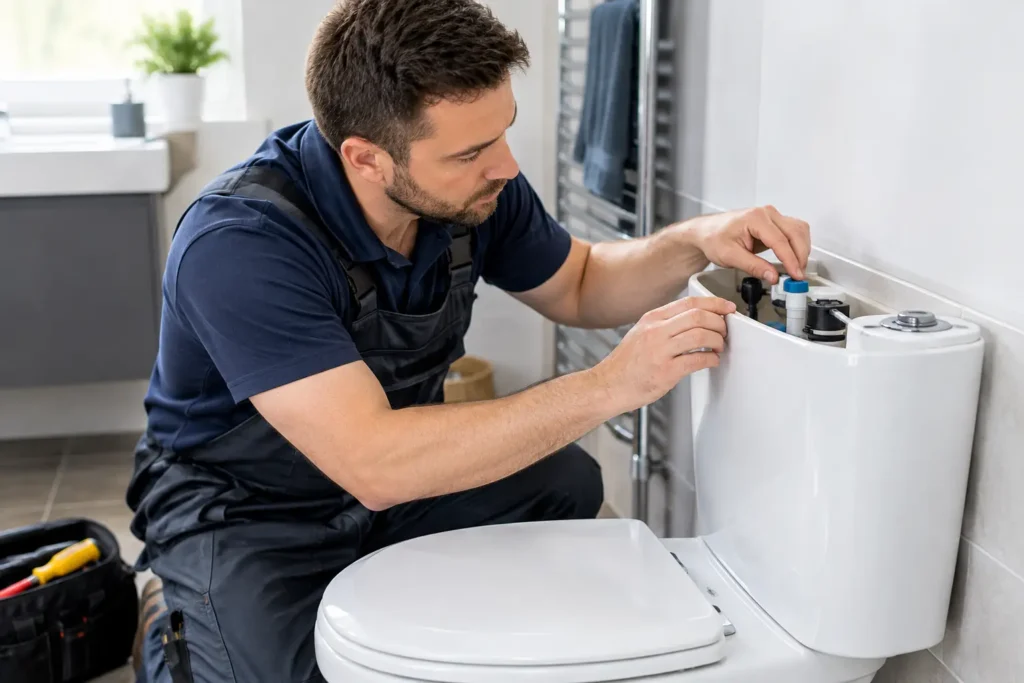
Remove the cistern lid carefully and place it on a towel or stable surface. Many modern lids are connected to the flush button, so do not pull or twist anything forcefully. With the lid off, flush the toilet once and watch what happens as the cistern refills.
Look at the water level after it has stopped filling. If water continues to enter the cistern and runs into the overflow, the fill valve or float is usually the problem. If the cistern reaches its normal level but water still trickles into the pan, the flush valve seal is more likely to be at fault.
On older toilets, excess water may run through an external overflow pipe. On newer toilets, the overflow is commonly built into the central flush mechanism, meaning the extra water may run quietly into the toilet pan instead. This is why it is worth looking inside the cistern rather than relying on the sound alone.
If you need to stop the water while you investigate, locate the small isolation valve on the pipe leading to the cistern. Turning it clockwise with a flat screwdriver normally shuts off the supply. Do not force a seized valve. If it will not turn, use the main stopcock only if you know where it is and can operate it safely.
Check the flush valve and rubber seal
A failed flush valve seal is one of the most common reasons for a toilet that runs continuously. The seal is the rubber part at the bottom of the flush mechanism that holds water in the cistern until you press the button or lever. Over time, it can harden, become misshapen or collect scale and grit.
With the water supply turned off, flush the toilet to empty the cistern as much as possible. Depending on the design, the central flush valve may twist out or lift out. Inspect the rubber seal and the seating surface beneath it. A small piece of debris can prevent a proper seal, allowing water to pass slowly into the pan all day.
Wipe away loose dirt with a clean cloth. If there is light limescale, a careful clean may help, but avoid harsh chemicals that can damage rubber components. If the seal looks flattened, cracked or brittle, replacing it is usually more reliable than trying to revive it. The correct seal depends on the make and model of the flush valve, so taking a clear photo before buying a part can prevent wasted time.
After refitting the mechanism, turn the water back on and wait for the cistern to fill. Do not assume the repair has worked immediately. Leave it for ten minutes, then check whether the water in the bowl is still moving or whether the cistern continues to refill by itself.
Check the fill valve and float
If water keeps entering the cistern after it is full, the fill valve may not be shutting off properly. This mechanism is connected to the incoming water supply and is controlled by a float. On some toilets, the float is a plastic arm with a ball at the end. On others, it is a compact float built around the fill valve itself.
First, make sure nothing is catching on the float. A flush button cable, a twisted hose or a poorly fitted lid can sometimes stop it from rising freely. If the float moves normally but the water level is too high, there may be an adjustment screw or clip on the fill valve. Small adjustments can lower the shut-off point so the water sits below the overflow level.
The exact adjustment varies between manufacturers, and over-adjusting can leave too little water for an effective flush. Make gradual changes, test the flush and check the final water level. If the fill valve continues to hiss, dribble or overfill after adjustment, it is likely worn and should be replaced.
A replacement fill valve is usually a straightforward repair for an experienced plumber, but access can be awkward in boxed-in, concealed or wall-hung toilet systems. In these cases, forcing fittings or overtightening plastic parts can turn a minor fault into a leak.
Rule out a sticking button, cable or siphon
Sometimes the toilet continues running because the flush mechanism is being held slightly open. Press the flush button several times and let it return gently. If it sticks, sits crookedly or feels unusually loose, the button assembly or cable may need adjusting.
Dual-flush toilets are particularly prone to this problem when the button rods are set too long. They can press against the flush valve even when nobody is using the toilet. A button should have a little free movement rather than holding the mechanism under constant pressure.
Older lever-operated toilets may use a siphon instead of a modern flush valve. A split diaphragm inside the siphon can cause poor flushing or repeated running. This repair often requires removing the cistern from the pan, so it is normally best handled by a plumber, particularly where the fixings are old or the toilet is in regular use.
Avoid temporary fixes that create bigger problems
It can be tempting to tie up a float, wedge a component in place or keep the isolation valve partly closed. These are short-term measures at best. They can leave you with an unreliable flush, put strain on fittings or cause a sudden failure when the toilet is needed most.
Be cautious with in-cistern cleaning tablets too. Some products can affect rubber seals and plastic moving parts over time. Regular cleaning of the bowl is sensible, but the working parts inside the cistern need to move freely and seal correctly.
For landlords, letting agents and businesses, a running toilet should not be left until a routine visit. In a busy café, office, school, hotel or rental property, it wastes water continuously and can quickly lead to complaints, hygiene concerns or a toilet being taken out of use. Early repair is usually quicker and less disruptive than waiting for the mechanism to fail completely.
When to call a plumber for a running toilet
Call for professional help if you cannot isolate the supply, the cistern is concealed, or replacing a seal has not solved the problem. A plumber should also inspect any toilet with cracked porcelain, corroded fixings, leaks around the base, a faulty isolation valve or signs that water has reached flooring or ceilings below.
A running toilet may have more than one worn component. Replacing only the seal, for example, will not solve the issue if the fill valve is also overfilling the cistern. A proper repair identifies the cause, fits compatible parts and checks that the toilet flushes, fills and shuts off as it should.
If your toilet is running in Hull, Beverley or the surrounding East Yorkshire area, HJZ Plumbing can diagnose the fault, carry out a tidy repair and help prevent further water waste or damage. For clear advice and a dependable repair, call HJZ Plumbing directly on 01482 236483.