An air source heat pump can only perform as well as the plumbing connected to it. Poorly sized pipework, restricted flow or an overlooked condensate route can leave a home feeling cold, increase running costs and create avoidable leaks or water damage. This guide to ASHP plumbing requirements explained sets out the practical points property owners should understand before installation or when investigating a system that is not performing as expected.
Why ASHP plumbing is different
An air source heat pump works at lower water temperatures than many older heating systems. Rather than relying on very hot water to make a small radiator feel warm quickly, it generally circulates a larger volume of moderately warm water for longer. That makes correct flow rates, clean pipework and properly sized heat emitters central to comfort.
This is why simply connecting a heat pump to existing plumbing without a survey can cause problems. A system may appear to run, but rooms can warm slowly, some radiators may stay cool, and the unit may work harder than it should. In a rental property or commercial premises, that can quickly become a tenant complaint or a disruption to normal trading.
The exact arrangement depends on the property, its heat loss, the type and age of its pipework, and whether it uses radiators, underfloor heating, or a mixture of both. There is no one-size-fits-all pipe layout.
ASHP plumbing requirements explained: the main considerations
Pipework must carry enough water
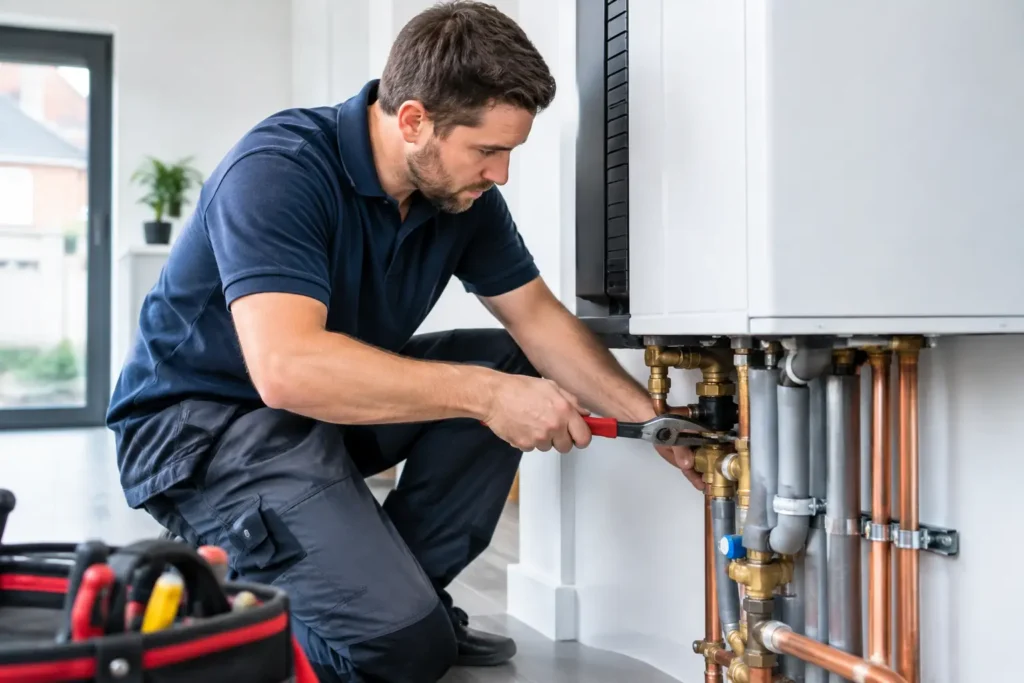
The heat pump needs adequate water flow between the outdoor unit and the heating system. Pipe diameter is calculated around the required heat output, pipe run length, bends and resistance within the system. Undersized pipes can restrict circulation and create excessive pressure loss. Oversizing is not automatically better either, as it adds unnecessary cost and can make installation more disruptive.
Long pipe runs between the outdoor unit and the property deserve particular attention. The pipes need suitable insulation wherever they pass outside or through unheated spaces. Without it, valuable heat is lost before it reaches the radiators or underfloor circuits. External insulation also needs weather protection, as damaged insulation can absorb water and become ineffective.
Pipework should be properly supported, protected from accidental damage and routed with future access in mind. Concealing every valve and joint behind finished walls may look tidy on day one, but it makes maintenance and repairs far harder later.
Clean water protects the system
Existing heating systems often contain sludge, rust particles and debris. When water circulates through radiators and steel pipework over many years, this contamination can build up. It restricts radiators, affects valves and can damage sensitive components.
Before connecting an ASHP to an older system, the installer should assess water quality and the condition of the pipework. A thorough clean may be needed, followed by appropriate treatment inhibitor. Many installations also benefit from a correctly fitted magnetic filter that captures circulating debris before it can cause trouble.
This is not a cosmetic extra. If a radiator is cold at the bottom, water is discoloured, or there have been repeated circulation problems, dealing with those faults first can prevent a much more expensive issue after the heat pump is fitted.
Radiators and underfloor heating need to match the design
Because an ASHP usually supplies lower-temperature water, radiators that were adequate previously may not provide enough heat on colder days. Some may need to be replaced with larger models, while others may only require balancing or better controls. The decision should follow room-by-room heat-loss calculations, not a quick visual judgement.
Underfloor heating is often well suited to heat pumps because it has a large surface area and operates efficiently at lower temperatures. However, the manifold, pumps, mixing arrangements and controls must still be checked. A badly balanced underfloor system can leave one area comfortable and another chilly.
For older homes around Hull and East Yorkshire, draughts, insulation levels and window performance can influence the final design as much as the plumbing itself. Improving heat loss may reduce the size of equipment and radiators required.
Expansion, pressure and safety arrangements matter
Heating water expands as it warms. A sealed system needs correctly sized expansion provision, pressure monitoring and safety components to manage that change safely. These parts are often out of sight, but they should not be treated as an afterthought.
The system must also have accessible isolation valves, drain points and a safe route for any discharge from pressure-relief equipment. Discharge must not be directed where hot water could harm people, damage finishes or create a slipping risk. A competent installer will consider this at the design stage rather than trying to solve it after the work is complete.
If pressure keeps dropping, there is water around valves or pipe joints, or the system repeatedly needs topping up, arrange an inspection promptly. A small leak can lead to corrosion, damaged flooring and poor performance if left untreated.
Condensate needs a reliable route away
In cold weather, an outdoor heat pump produces condensate as part of normal operation and defrosting. This water needs to drain safely without freezing around the unit, flooding a path or running towards the building.
The ideal solution depends on site conditions. It may involve a suitable soakaway, drainage channel or another properly designed discharge route. The ground beneath and around the unit must be able to cope with the water. Simply allowing it to drip onto a walkway can create a serious ice hazard in winter.
This detail is especially relevant for properties with tight side passages, paved gardens or entrances used by customers and staff. The outdoor unit location should account for access, drainage and noise, not just available wall space.
Controls and zoning should be straightforward
Controls should help the system maintain a stable indoor temperature, not encourage constant switching on and off. Weather compensation, which adjusts water temperature in response to outdoor conditions, is commonly used with ASHP systems. It needs correct set-up and an explanation the occupier can understand.
Larger properties may need heating zones, particularly where there are different uses or temperatures across the building. A hotel, office or property with an extension may have very different heating demands from one area to another. Zoning can improve comfort, but too many complicated controls can make faults and user errors more likely. The best arrangement is one that suits the building and can be operated confidently.
Regulations, workmanship and documentation
An ASHP installation should comply with current building regulations and the relevant water, electrical and heating standards. Depending on the scope of work and location, notifications, approvals or scheme requirements may apply. These are matters for the qualified installer to manage, but homeowners and landlords should ask what documentation they will receive at handover.
A proper handover should include clear operating information, details of servicing or maintenance requirements, warranties, and records of any system treatment or commissioning checks. Keep these with property paperwork. They are useful when selling, managing a tenancy or diagnosing a later fault.
For landlords and commercial property managers, it is worth planning the work around occupiers. Water may need to be isolated temporarily, radiators may be changed, and system cleaning can affect normal use of rooms. Clear communication and tidy reinstatement make a major difference where tenants, guests, pupils or customers are on site.
Warning signs that need attention
After installation, the system should heat the property evenly and operate without regular pressure loss, leaks or unexplained noise. Call for help if radiators remain cold despite the system running, pipework is weeping, pressure drops repeatedly, a filter blocks often, or condensate is pooling near the outdoor unit.
Do not keep bleeding radiators or topping up pressure without finding the cause. Repeatedly adding fresh water can introduce oxygen and speed up internal corrosion. Early investigation is usually cheaper and far less disruptive than waiting for a leak to damage ceilings, flooring or a tenant’s belongings.
A heat pump is a long-term investment, and the plumbing behind it is what allows it to work properly day after day. For practical advice on pipework concerns, leaks, radiator performance, system cleaning or associated plumbing work, contact HJZ Plumbing on 01482 236483 or through www.hjzplumbing.com.