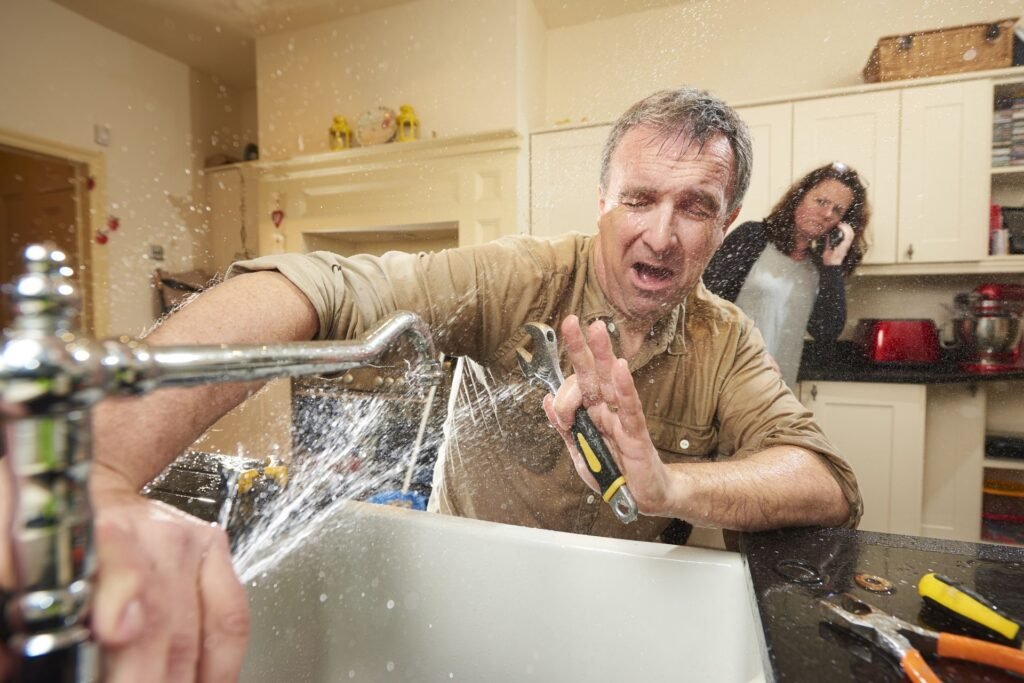
A blocked toilet before guests arrive, wastewater backing up in a café kitchen, or a slow-draining shower in a rental property all raise the same urgent question: plumber vs drainage specialist – who should you call? The answer depends on where the fault sits, what is causing it, and how quickly the problem could lead to water damage, hygiene concerns or disruption.
For most day-to-day household and commercial plumbing problems, a local plumber is the right first call. A drainage specialist can be essential for more complex or persistent external drainage issues. Knowing the difference helps you get the right person to the property sooner, without paying for unnecessary work or allowing a small fault to become a much larger one.
Plumber vs drainage specialist: the main difference
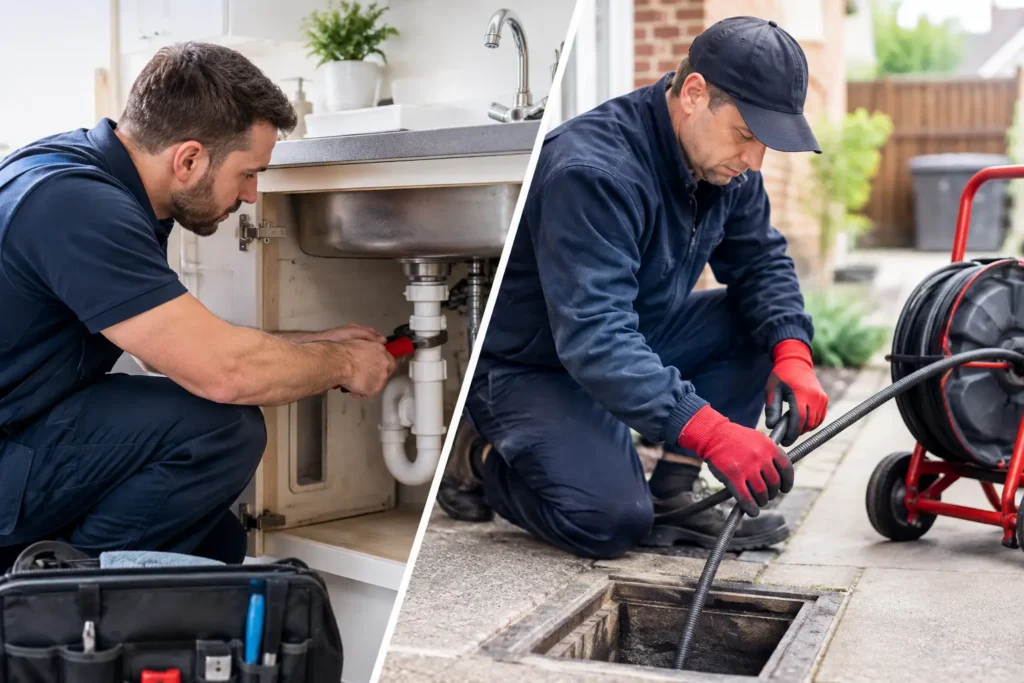
A plumber works on the pipework, fittings and appliances that bring water into a property and carry waste water away from sinks, baths, showers, toilets and appliances. Their work commonly includes repairing leaks, replacing taps, fixing toilets, fitting showers, clearing local blockages and resolving problems with internal waste pipes.
A drainage specialist focuses more heavily on drains beyond the immediate plumbing fixture, particularly underground pipe runs, external gullies, inspection chambers, soil stacks and main connections. They may use specialist equipment such as drain cameras, high-pressure jetting equipment and root-cutting tools to investigate and clear serious or recurring blockages.
There is some overlap. A plumber can often clear a blocked sink, toilet, bath or shower and identify whether the issue is local to the fitting or pipework. Equally, a drainage contractor may find that an apparent drain problem is actually caused by poor internal plumbing. What matters is a proper assessment rather than guessing from the symptoms.
When a plumber is usually the right call
Call a plumber when the problem appears to be inside the property or close to a particular fixture. If one toilet will not flush properly, a basin is leaking underneath, a shower tray is draining slowly, or a kitchen sink is blocked after food waste has entered the trap, the fault is often within the plumbing system.
A plumber is also the practical choice when a blockage comes with another plumbing issue. For example, a toilet may be backing up because of a faulty flush mechanism, a damaged pan connector or a restriction in the waste pipe. A leaking pipe beneath a kitchen sink can cause damp cupboard bases and unpleasant smells, even when the drain itself is clear. These issues need repairing, not simply clearing.
For landlords, letting agents and property managers, this distinction is particularly useful. A tenant reporting a blocked sink may be dealing with grease, hair or debris caught in a trap. That is often a straightforward plumbing repair. Leaving it too long can lead to leaks, overflowing water and damage to units, flooring and neighbouring rooms.
Typical jobs for a plumber
A plumber is generally the best fit for leaking or burst pipes, dripping taps, faulty toilets, broken showers, poor radiator performance, damaged waste pipes, appliance connections, bathroom and kitchen plumbing, and local blockages affecting one fixture.
They can also help where the cause is not immediately obvious. If a shower drains slowly and there is a damp patch on the ceiling below, the priority is not only clearing the blockage. The pipework, seals and connections need checking before water damage spreads.
When you may need a drainage specialist
A drainage specialist is often needed when several fixtures are affected at once or the issue clearly involves external drains. If flushing the toilet makes water rise in the bath, or using the washing machine causes a ground-floor sink to back up, this can point to a blockage further along the shared waste pipe or drain run.
Outside, warning signs include overflowing gullies, foul smells around inspection chambers, wastewater appearing near a manhole cover, or repeated blockages that return shortly after being cleared. In these cases, the problem may be caused by built-up waste, collapsed pipework, tree roots, structural defects or a blockage in the main drain.
Commercial premises can face additional pressure. A restaurant, takeaway or café may experience recurring drainage issues from fats, oils and food debris. A hotel, school or office may have high-use toilets that expose an underlying drainage fault quickly. Where hygiene, customer comfort or trading are affected, fast diagnosis matters as much as the clearance itself.
A drainage specialist is particularly valuable when the drain needs surveying with a camera. This can show whether a pipe has cracked, shifted, collapsed or been invaded by roots. It prevents repeated callouts for the same blockage when the real solution is repair or replacement of a damaged section.
The symptoms can point you in the right direction
One blocked fixture usually suggests a local plumbing problem. A single basin, shower or toilet that drains slowly may have a blocked trap, a restriction in its waste pipe or an issue with the fixture itself. Start with a plumber, especially if there is also a leak, loose fitting or fault with the toilet or shower.
Several blocked fixtures, particularly on the ground floor, suggest a larger drainage issue. Listen for gurgling sounds from plugholes, watch for water levels changing in nearby toilets, and check whether external gullies are overflowing. These symptoms may mean waste water cannot travel through the main drain as it should.
The timing can help too. A blockage that occurs after a specific event, such as a child dropping an object into a toilet or a sink filling after cooking, may be relatively local. A recurring problem that develops slowly over weeks or returns after basic clearing needs a more thorough investigation.
Do not keep flushing, running taps or using appliances to test a suspected blockage. If water has nowhere to go, it can overflow into the property. Turn off the water supply if there is an active leak, keep people away from contaminated water, and arrange professional help promptly.
Why the cheapest first response is not always the best option
It is tempting to buy strong chemical drain cleaner or repeatedly use a plunger. For a minor blockage, careful basic measures may help. But harsh chemicals can damage seals and pipework, while forceful attempts to clear a blockage can push debris further along or cause dirty water to spill back into the room.
More importantly, clearing the visible symptom does not always fix the fault. A toilet that repeatedly blocks may have a poorly fitted connection. A kitchen sink that clogs every few months may have an unsuitable pipe fall or damaged waste section. An external drain that keeps blocking could have a structural defect that needs identifying.
A dependable contractor should explain what they have found, what work is needed now and what can be monitored. That gives homeowners and property managers a sensible choice rather than an unclear bill or a temporary fix presented as a permanent one.
What to tell the contractor when you call
A clear description helps the right person arrive prepared. Explain which fixtures are affected, whether water is overflowing, when the issue began, and whether it has happened before. Mention foul smells, gurgling noises, visible leaks, external flooding or recent building work if relevant.
For commercial premises, explain whether toilets, kitchens or customer areas are out of use. For landlords and letting agents, it helps to confirm whether the property is occupied and whether the tenant can safely isolate water if there is a leak. This allows the response to be prioritised properly and reduces disruption on arrival.
Photos can be useful where safe to take, but never delay an urgent callout to gather evidence. If wastewater is entering a home, business or communal area, treat it as an immediate hygiene and property-protection issue.
Get the right help before the damage spreads
The choice between a plumber and drainage specialist is not always clear from the first symptom. A good local plumber can assess common internal plumbing and blockage problems, make practical repairs, and advise honestly if a specialist drainage investigation is the better next step. That is often the quickest route to a lasting solution.
If you have a leak, blocked toilet, slow drain, faulty shower or plumbing issue affecting your home, rental property or business in Hull and the surrounding area, contact HJZ Plumbing directly on 01482 236483 or through www.hjzplumbing.com.