A radiator that stays cold while the rest of the room feels draughty is more than an annoyance, particularly in a family home, rented property or busy workplace. If you need radiator repair Hessle homeowners, landlords and local businesses can rely on, acting early can prevent a small heating fault becoming a leak, damaged flooring or a much colder property when you need warmth most.
Radiators rarely stop performing without giving a warning. Cold patches, persistent dripping, rattling pipes and rooms that take far too long to warm up all point to a problem worth investigating. The right repair depends on what is causing it, so a practical inspection is far better than simply turning up the controls and hoping for the best.
Common signs you need radiator repair in Hessle
A radiator that is cold at the top but warmer at the bottom often has trapped air inside it. This can sometimes be resolved by bleeding the radiator carefully. If it keeps happening, however, there may be a wider issue within the system that needs attention.
Cold areas along the bottom of a radiator are different. They can indicate a build-up of sludge and debris, which restricts the flow of water and reduces how effectively the radiator heats the room. This is especially frustrating in larger homes, older properties and commercial premises where several radiators are struggling at once.
A radiator that is cold all over may have a stuck valve, a seized thermostatic radiator valve, poor circulation or an issue with the pipework feeding it. If one room is too hot while another remains cold, the system may also need balancing so heat is shared more evenly around the property.
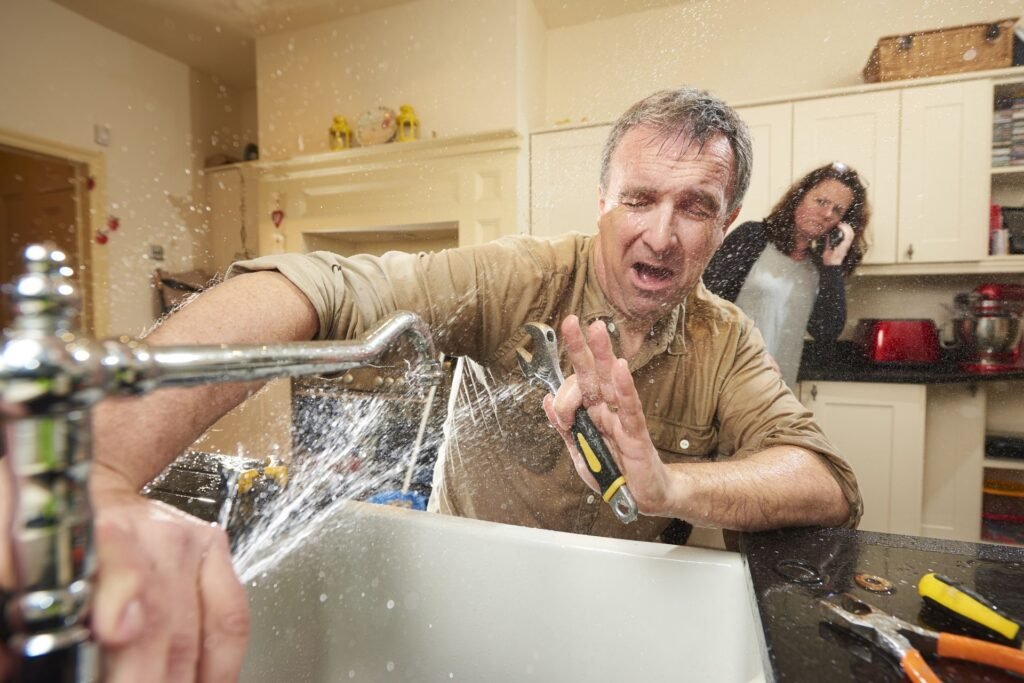
Leaks should always be dealt with promptly. Water around a valve, pipe joint or radiator panel can stain carpets, damage laminate flooring and cause problems for tenants, staff or customers. A slow drip may look minor, but it can worsen suddenly and leave you dealing with avoidable water damage.
What causes poor radiator performance?
The cause is not always obvious from the outside. Air, sludge, worn valves and leaking joints are common faults, but they need different solutions. Replacing a valve will not clear internal debris, and bleeding a radiator will not stop a leak from a corroded connection.
Older radiator valves can stick in one position, particularly after long periods of little use. A thermostatic valve may appear to be turned up but fail to open properly, leaving the radiator cool. In other cases, the valve works but the lockshield valve has been adjusted incorrectly, affecting the flow through that radiator.
Internal corrosion can also lead to discoloured water, recurring cold spots and pinhole leaks. Where several radiators have poor heat output, a professional clean such as power flushing may be the most sensible long-term option. This removes built-up debris from the system and can improve circulation, but it is not automatically needed for every cold radiator. A targeted repair may be quicker and more cost-effective when the fault is limited to one valve or one radiator.
Safe checks before calling for help
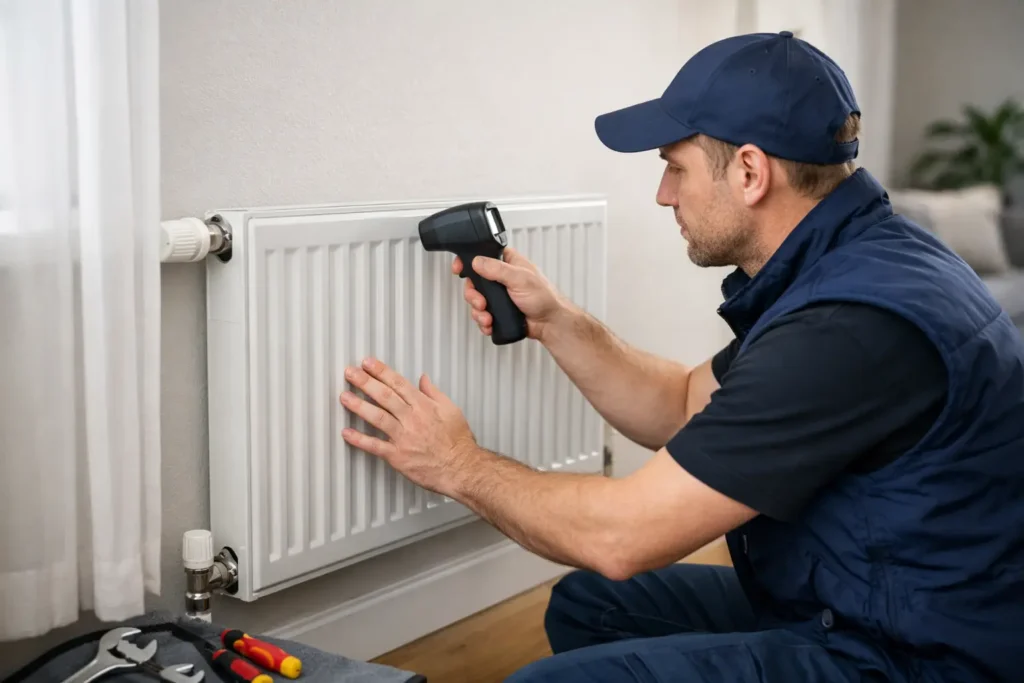
There are a few simple observations that can help identify the problem, without risking damage or making the fault worse. Check whether the radiator is cold at the top, bottom or all over. Look for visible drips around the valves and beneath the radiator, and note whether other radiators in the property have similar problems.
If the radiator has a thermostatic control, make sure it is turned to a higher setting and has not been knocked or covered by furniture or curtains. It is also useful to check whether the pipe entering the radiator feels warm. Avoid forcing stiff valves or repeatedly bleeding a radiator if you are unsure why pressure or performance is changing. Water can be hot, and an overtightened bleed screw or damaged valve can create a bigger repair.
For landlords and letting agents, clear information from a tenant makes a faster diagnosis possible. Ask when the issue started, whether there is any visible water, and whether the problem affects one room or the whole property. If water is escaping, protect nearby belongings where safe to do so and arrange a repair without delay.
When a radiator leak needs urgent attention
A small leak can usually be contained temporarily with a towel or shallow container while help is arranged, but a worsening leak needs a quicker response. This is particularly true if water is spreading across flooring, running through a ceiling, or appearing near electrical sockets or appliances. Do not attempt repairs around electrical hazards.
In a hotel, café, restaurant, school or office, a leaking radiator can quickly become a safety and hygiene issue. Wet floors create slip risks, while a cold customer area, classroom or workspace can disrupt normal use of the building. Fast, tidy repairs help minimise interruption and keep the property presentable.
The best fix may involve resealing a connection, replacing a worn valve, repairing pipework or replacing a radiator that has corroded beyond reliable repair. An honest assessment matters here. Repairing a sound radiator is often sensible, while repeatedly patching an old unit with multiple leaks can cost more and cause further disruption over time.
Choosing between radiator repair and replacement
Replacement is not always the answer. A radiator with a faulty valve, trapped air or restricted flow may work well again after the correct repair. Keeping an otherwise sound radiator can reduce cost and avoid unnecessary work.
Replacement becomes more worthwhile where the radiator is badly corroded, repeatedly leaking, heavily damaged or too small for the room. A larger or better-positioned radiator can make a noticeable difference in a cold extension, a north-facing room or a busy commercial area with regular door traffic. The size and output should suit the room, rather than simply fitting the largest radiator possible into the available space.
For property managers, planned replacement can be easier to organise between tenancies or outside trading hours. For homeowners, a repair may be the more immediate route to restoring comfort. The practical choice depends on the condition of the radiator, the age of the installation and whether the issue is isolated or recurring throughout the property.
A tidy, practical approach to radiator faults
Good radiator work starts with identifying the actual cause. That means checking the radiator, valves, connections and heat distribution rather than treating every cold radiator in the same way. Once the issue is clear, you should know what work is recommended, why it is needed and whether there are sensible alternatives.
HJZ Plumbing provides practical radiator repairs, valve replacements, leak repairs, radiator replacement and power flushing support for homes and occupied commercial properties in Hessle and the surrounding area. The focus is on restoring reliable warmth while treating your property with care and keeping disruption to a minimum.
Do not leave a cold radiator or small leak to develop into a more expensive problem. Contact HJZ Plumbing on 01482 236483 or through the HJZ Plumbing website for clear advice and a dependable local repair. A prompt repair can keep a room comfortable, protect your interior and save you from dealing with a much bigger fault later.