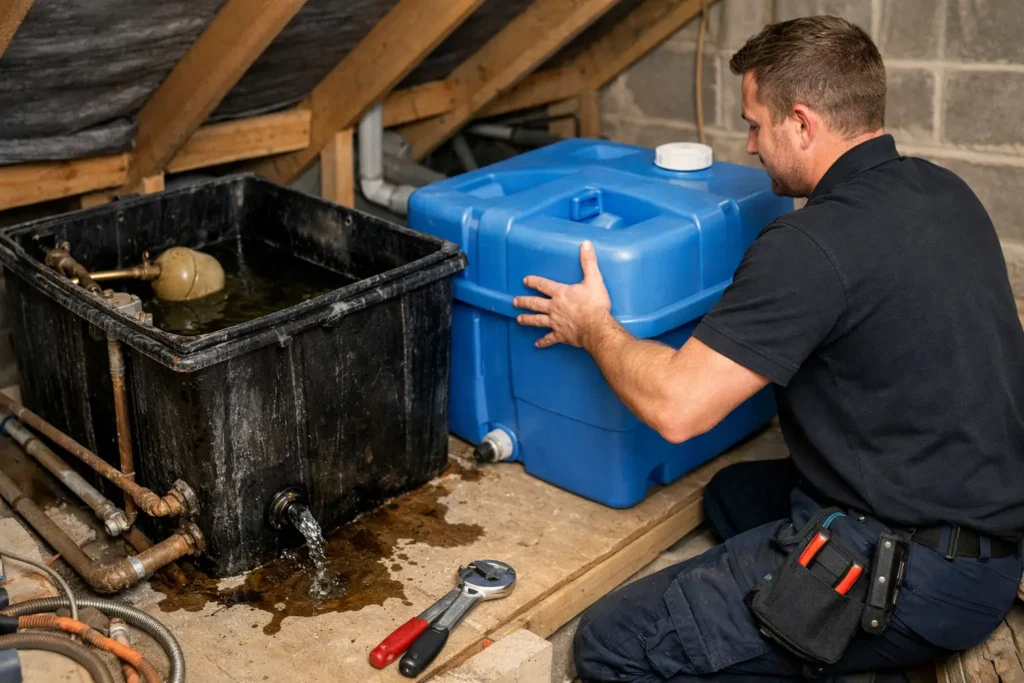
A cold water tank tucked away in a loft is easy to forget about – until staining appears on a ceiling, water pressure changes, or a small drip becomes a costly leak. Cold water tank replacement is not always urgent, but acting before an ageing or damaged tank fails can protect your home, rental property or business from disruption, water damage and hygiene concerns.
For properties across Hull and East Yorkshire, the right answer is not simply fitting the biggest tank available. The replacement must suit the existing pipework, water demand, available space and the way the property is used. A careful assessment helps avoid repeat problems and gives you a safe, practical installation that will last.
Signs a Cold Water Tank Replacement May Be Needed
Older cold water storage tanks can remain serviceable for years when they are properly supported, insulated and maintained. However, certain faults are a warning that repair may only delay a more serious problem.
Look out for visible cracks, bulging sides, rust around an old metal tank, or dampness beneath the tank and on the ceiling below. A damaged lid, debris in the water or a tank that is open to dust and pests should also be dealt with promptly. Even a slow leak in a roof space can soak insulation, damage plasterboard and create the conditions for mould before it is noticed downstairs.
Replacement is often the sensible option where the tank is badly corroded, poorly supported, repeatedly leaking or no longer suitable for the property. An old tank may be too small for a growing household, a converted property or a commercial site with greater washroom demand. Equally, a tank that is unnecessarily large can waste valuable loft space and add avoidable weight to the structure.
Water quality matters too. Sediment can build up over time, particularly in neglected tanks. If occupants notice discolouration, particles or an unusual taste or smell from supplies fed by the tank, the system needs professional inspection. Landlords and business owners should not leave this to chance, especially where tenants, staff or customers rely on the facilities every day.
When it is an emergency
A split tank, active leak or ceiling that is sagging or staining needs immediate attention. If it is safe to do so, turn off the water supply feeding the tank and move valuables away from the affected area. Do not climb through a wet loft or attempt to patch a tank that is under strain. Water is heavy, and a failed tank can cause significant damage very quickly.
For occupied rental homes, cafés, shops, offices and other working premises, a prompt response can make the difference between a contained plumbing fault and a closure, tenant complaint or damaged stock.
Choosing the Right Cold Water Tank Replacement
Cold water tanks are commonly found in lofts and are often made from plastic, although older properties may have galvanised steel tanks. A modern replacement should be durable, correctly sized, securely supported and fitted with a close-fitting lid. It should also be insulated where required to reduce the risk of freezing in cold weather, while allowing safe access for future checks.
The tank itself is only part of the job. The condition and arrangement of the float valve, overflow pipe, feed and outlet pipes, isolation valves and supporting platform all need checking. Replacing a tank without dealing with a weak base, a faulty valve or inadequate overflow arrangements can leave the same risk in place.
Capacity depends on how the property uses water. A small household may need something very different from a shared rental house, hotel, restaurant or school. The number of bathrooms, basins, kitchen facilities and people using the building all affect the required storage. A plumber should assess the system rather than make assumptions based on the size of the old tank.
There can also be practical access limits. Some loft hatches are too small for a new tank to pass through in one piece. In these cases, a suitable sectional tank may be considered, or access arrangements may need to be planned carefully. This is one reason a site visit and clear quotation are valuable before work begins.
Repair or replacement?
A minor issue, such as a faulty float valve or a small problem with pipework, may be repaired without replacing the tank. If the tank is sound, clean and correctly installed, this can be the most cost-effective route.
However, repairs make less sense when the tank material has deteriorated, the structure has weakened, or the tank has leaked more than once. The cost and disruption of repeated callouts can soon exceed the value of planned replacement. Honest advice should focus on the condition of the system and the likely lifespan of the repair, not on selling work that is not needed.
What Happens During Replacement Work
A professional cold water tank replacement begins with isolating and draining the existing tank safely. The surrounding area is protected, and the old unit is removed with care. This is particularly important in loft spaces, where limited access, insulation and fragile ceilings can make a straightforward-looking job more involved.
The base is then checked or renewed so the new tank has full, level support. A tank must never be placed on an inadequate platform. Once in position, the plumber connects the pipework, fits the relevant valves and overflow arrangements, and checks that the tank fills and shuts off correctly.
The system should be tested for leaks before the work is signed off. Any planned interruption to water supplies should be explained in advance, which is especially useful for landlords arranging access, or businesses trying to minimise disruption to staff and customers. Tidy workmanship matters here: a loft should not be left with loose insulation, waste materials or damaged boarding after the work is complete.
In some properties, replacing the tank is a good opportunity to correct related issues. These may include poor insulation, an insecure lid, unsupported pipework or an overflow pipe that does not discharge visibly. Addressing these points at the same time can prevent avoidable callouts later.
Preventing Problems With Your New Tank
Once a new tank is installed, simple checks can help it stay in good condition. Periodically look for signs of damp around the tank and pipes, make sure the lid remains secure, and check that insulation has not been disturbed. After severe cold weather, inspect the loft for leaks or freezing damage.
Landlords and property managers should include loft tanks in routine property inspections, particularly between tenancies. Commercial premises should consider their water use, hygiene requirements and the disruption a failure could cause. A small issue found early is usually easier and cheaper to resolve than water damage spreading through ceilings, walls and electrical areas.
If your tank is old, leaking, poorly supported or no longer right for the property, do not wait for it to fail. HJZ Plumbing can assess the situation, explain the practical options clearly and carry out tidy replacement work with minimal disruption. Call HJZ Plumbing on 01482 236483 or contact us through www.hjzplumbing.com.