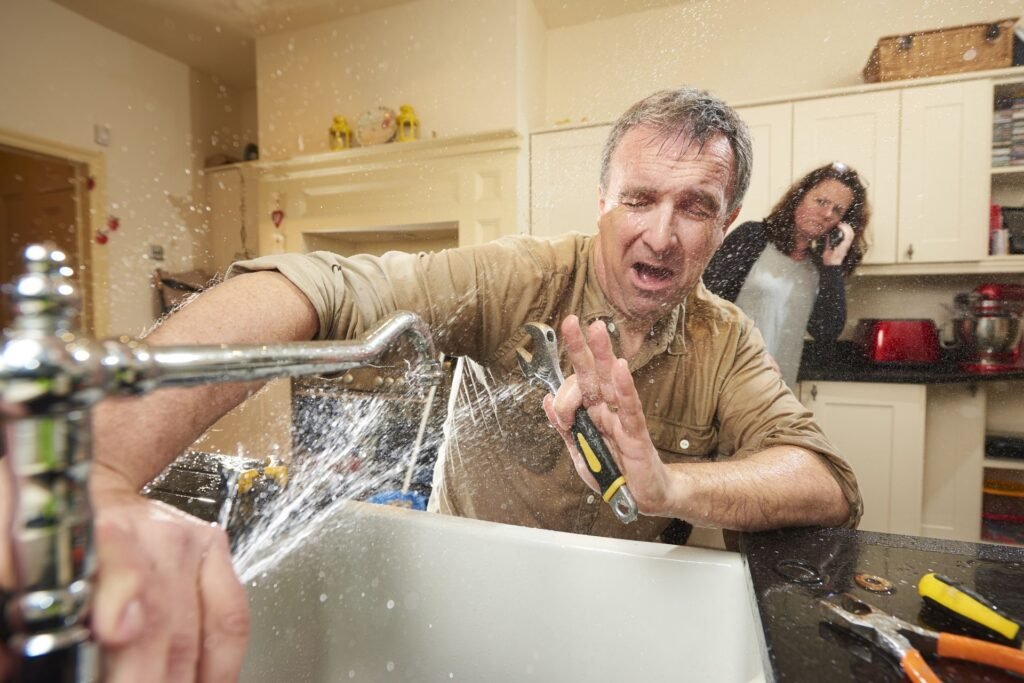
A busy Friday service can come to a halt over a problem most customers never see. Restaurant grease trap problems often begin quietly, then turn into foul smells, slow drainage, overflowing sinks or a blocked drain at the worst possible time. For restaurants, cafés, takeaways and hotels, acting early protects hygiene standards, staff safety and the ability to keep trading.
Why grease traps cause problems in commercial kitchens
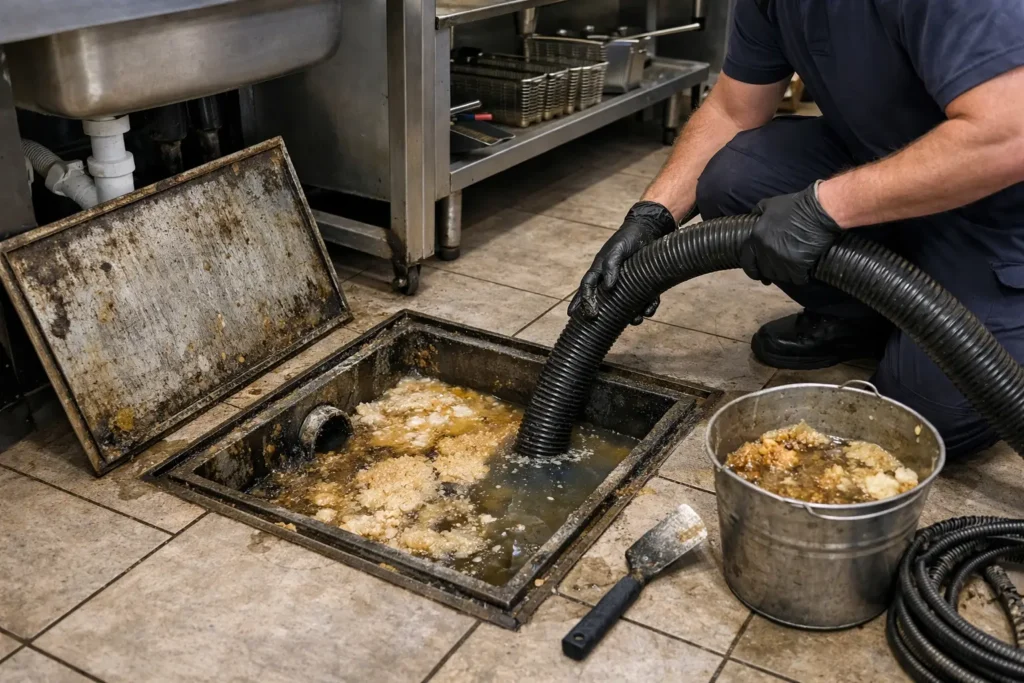
A grease trap, sometimes called a grease interceptor, is designed to separate fats, oils and grease from wastewater before they enter the drainage system. As hot water cools, grease solidifies. Food debris settles, while oils and fats rise to the top. The trap holds these materials so they can be removed before they cause a blockage further along the pipework.
The system only works when it has enough capacity and is cleaned at the right intervals. A kitchen producing fried food, roast dinners, creamy sauces or regular wash-up volumes can fill a small trap much faster than expected. Even a well-run kitchen can develop issues if cleaning schedules do not reflect how the business actually operates.
It is also worth remembering that a grease trap is not a substitute for sensible kitchen practices. Pouring cooking oil, gravy, fat from roasting trays or food waste directly into a sink will overload it quickly. Chemical drain cleaners can be equally unhelpful. They may move grease a short distance, but rarely remove the underlying build-up and can cause damage to pipework or seals.
Common restaurant grease trap problems to look out for
The first sign is often an unpleasant smell around sinks, floor drains or the wash-up area. This odour comes from old food waste and grease breaking down inside the trap or drains. A smell that returns soon after cleaning usually means there is a deeper blockage, an overfull interceptor or a fault in the drainage line.
Slow-draining sinks are another warning. If water sits in the pot wash sink, backs up when the dishwasher empties, or takes longer than usual to clear, do not assume it is a minor inconvenience. Grease can coat the inside of pipes gradually, narrowing the space available for wastewater. Eventually, a small amount of food debris can be enough to stop the flow altogether.
Gurgling sounds, water rising through nearby floor drains, repeated blockages and overflowing grease traps all need prompt attention. In some cases, the trap itself is not the only issue. Grease may already have travelled beyond it, causing a blockage in the internal drains or external pipework. Simply emptying the trap may improve matters briefly without resolving the full problem.
Warning signs staff should report straight away
Kitchen staff are usually the first to notice a change. They should report persistent odours, slow sinks, standing water, leaks around the trap lid, unusual noises from drains and any wastewater backing up. These are practical maintenance concerns, not issues to leave until a quieter week.
Clear reporting matters because commercial drainage faults can escalate quickly. A blocked kitchen drain may affect food preparation, cleaning routines, toilet facilities or neighbouring units, depending on how the premises are connected. The longer grease and wastewater remain in the system, the greater the risk of contamination, property damage and lost takings.
What causes grease trap blockages?
Missed or irregular cleaning is the main cause. There is no single emptying schedule that suits every premises. A small café with light food preparation may need a different routine from a high-volume takeaway. The right frequency depends on the size of the trap, the type of food prepared, the number of covers, opening hours and how much washing-up is done on site.
Food solids are another common culprit. Grease traps are not designed to catch everything scraped from plates, pans and chopping boards. Rice, pasta, coffee grounds, vegetable peelings and other debris can settle and compact, reducing capacity and encouraging blockages. Good sink strainers and proper food-waste disposal make a noticeable difference.
Poor installation can also create recurring faults. A trap that is too small, incorrectly positioned, difficult to access or connected to unsuitable pipework is harder to maintain and more likely to overflow. Older premises can be particularly challenging, as kitchen layouts and usage may have changed without the drainage system being upgraded to match.
Finally, hot water can hide the problem for a while. Fat may seem to run away freely when it is warm, only to cool and solidify further down the line. This is why a kitchen can appear fine during service but suffer a blockage later, when the pipework has had time to cool.
How to deal with a grease trap problem without making it worse
If wastewater is backing up, stop using the affected sinks and equipment where possible. Continuing to run taps, dishwashers or glass washers can force contaminated water onto floors or into work areas. Keep staff away from standing wastewater and protect any nearby food, packaging and electrical equipment.
Do not try to solve a serious blockage by pouring large volumes of boiling water, bleach or harsh chemicals into the drains. Boiling water may melt grease temporarily but can push it further into cooler pipework, where it resets. Chemicals can be hazardous for staff, may damage drainage components and often fail to clear compacted grease and food waste.
For a small, contained issue, remove visible food debris from strainers, check that the grease trap lid is secure and arrange cleaning before the next busy period. If there is a strong odour, repeated slow drainage, leakage, an overflow or a complete blockage, professional drainage support is the safer option. The work may involve emptying and cleaning the trap, clearing the affected pipework and checking whether the installation or maintenance routine needs attention.
Preventing repeat grease trap problems
Prevention is less disruptive than an emergency callout during service. The most useful approach is a simple routine that staff can follow consistently. Food should be scraped into bins before washing, and sink strainers should be emptied regularly. Used cooking oil needs to be collected separately, not tipped down the drain. Cleaning products should be chosen carefully and used according to their instructions rather than as a quick fix for grease.
Keep a record of grease trap inspections and cleaning. This helps managers spot patterns, especially when drainage problems occur more frequently during busy seasons, menu changes or after new equipment is installed. It also provides useful information for landlords, property managers and maintenance contractors.
A visual check should include the grease level, the amount of settled food waste, signs of leakage, condition of the lid and any unusual smell. If the trap appears close to full, it is already time to arrange attention. Waiting for it to overflow is not an efficient maintenance strategy.
When a larger repair or upgrade may be needed
If the same problem keeps returning despite proper cleaning, the issue may be outside the trap. A drain survey or professional inspection can identify restricted pipework, poor gradients, damaged drains, incorrect connections or an interceptor that is undersized for the kitchen’s current output.
There is a trade-off here. A larger or improved grease management system costs more than routine cleaning, but repeated emergency blockages cost time, staff hours and customer confidence. For a growing restaurant or takeaway, improving the set-up can be the more practical long-term decision.
Protect your kitchen before a blockage stops service
Grease trap faults are rarely convenient, but they do not have to become a full kitchen shutdown. Early action, sensible staff routines and professional maintenance keep drainage working properly and reduce the risk of unpleasant, costly disruption.
If your restaurant, café, hotel or takeaway in Hull or the surrounding area has slow drains, bad smells or a grease trap that needs urgent attention, contact HJZ Plumbing directly on 01482 236483. We will assess the problem clearly, recommend the right practical repair and help get your kitchen back to normal.