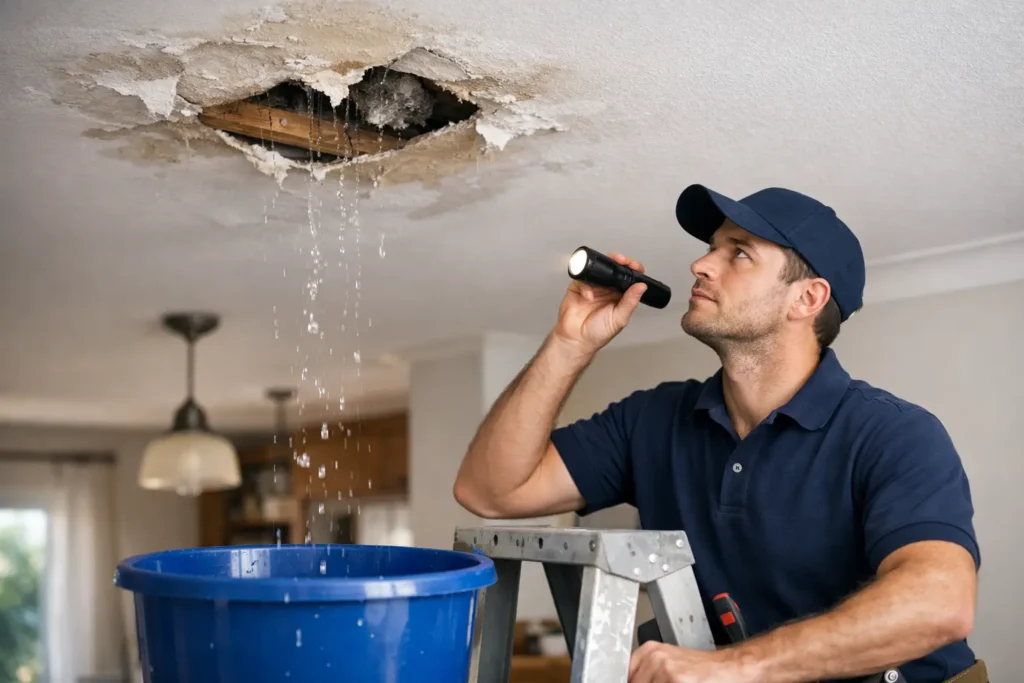
A brown patch spreading across the ceiling is never something to ignore. If you are wondering who fixes leaking ceiling problems, the short answer is that it depends on where the water is coming from – but in many cases, a plumber should be one of the first people you call.
A leaking ceiling is a symptom, not the root fault. Water may be travelling from a burst pipe, a failed shower seal, an overflowing cistern, a faulty waste pipe, or a leak from the flat or bathroom above. Sometimes the stain appears far away from the actual source, which is why quick action matters. The longer water is left to soak through plaster, timber, insulation, lights, and decorations, the more expensive the repair usually becomes.
Who fixes leaking ceiling issues?
If the leak is coming from plumbing inside the property, a plumber is usually the right trade to call first. That includes leaks from bathrooms, toilets, showers, basins, sinks, radiators, hot and cold pipework, and waste pipes hidden under floors or behind ceilings.
If the water is coming in from the roof, flashing, guttering, or external building fabric, you may need a roofer or builder. If the ceiling has already sagged, cracked badly, or collapsed, a plasterer or builder may also be needed after the leak has been stopped. Where electrics have been affected, an electrician may need to check fittings and circuits before power is safely restored.
That is why this question can be frustrating for property owners. A ceiling leak often looks like one problem, but the correct repair depends on the source. In occupied homes, rental properties, cafés, offices, schools, shops, and other busy premises, the immediate priority is to stop the water and reduce damage, then work out what repair comes next.
Why a plumber is often the first call
In many properties, the most likely cause of a leaking ceiling is a plumbing fault rather than the ceiling itself. Bathrooms on upper floors are a common culprit. A cracked tray seal, loose waste fitting, leaking shower valve, dripping pipe joint, or toilet overflow can all send water into the ceiling below.
Kitchen plumbing can do the same, especially where dishwashers, sinks, and washing machines are installed above another room or near boxed-in pipework. In commercial premises, hidden leaks from washrooms, staff kitchens, and service areas can spread quietly before anyone notices the damage below.
A good plumber does more than tighten a fitting and leave. The real job is to trace the leak properly, isolate it if needed, carry out a reliable repair, and explain clearly what has happened. That matters because misdiagnosing a ceiling leak wastes time and often leads to repeated callouts.
Common causes of a leaking ceiling
The cause is not always obvious from the mark on the plaster. Water can track along joists, pipes, boards, or cables before it appears. That is why the source above the stain is not always the true source of the leak.
Plumbing-related causes often include failed pipe joints, pinhole leaks, cracked shower trays, broken toilet seals, overflowing tanks, faulty taps left dripping into concealed spaces, blocked wastes, and damaged radiator pipework. In flats, maisonettes, hotels, and shared buildings, a fault in another unit can show up in your ceiling first.
There are also non-plumbing causes. Roof leaks after heavy rain, damaged guttering, blocked downpipes, poor sealing around roof penetrations, and condensation in loft spaces can all lead to ceiling staining. The pattern can offer clues. If it worsens after someone uses the shower, plumbing is likely. If it appears mainly during bad weather, the roof or external fabric may be to blame. Even then, it is worth having the source checked rather than guessing.
What to do before help arrives
The first step is to protect people and property. If water is dripping near light fittings or sockets, switch off the affected electrics only if it is safe to do so. Move furniture, stock, soft furnishings, or equipment out of the way. Put down towels, buckets, or waterproof sheeting to catch drips and limit spread.
If you suspect a plumbing leak, turn off the water supply if you can do it safely. In some cases, isolating the stop tap or a local isolation valve can prevent more serious ceiling damage within minutes. For landlords, letting agents, and business operators, acting quickly can also reduce disruption for tenants, staff, and customers.
Do not keep poking or pressing a bulging ceiling. Water can collect above the plasterboard and make it unstable. If the ceiling is sagging heavily, keep the area clear and treat it as unsafe until it has been assessed.
Who fixes the ceiling after the leak?
Stopping the leak and repairing the ceiling are often two separate jobs. Once the water source has been dealt with, the ceiling may still need time to dry before cosmetic repairs can be done properly. If plasterboard has softened, stained badly, or collapsed, it may need to be removed and replaced.
That part is usually handled by a plasterer, decorator, or general builder depending on the extent of the damage. If insulation has become soaked, that may also need replacing. If water has affected lighting, extraction fans, or wiring routes, an electrician may need to inspect the installation first.
This is where honest advice matters. Not every stained ceiling needs immediate replacement, but not every damp patch can simply be painted over either. If the leak has been active for a while, there may be hidden damage above the visible mark.
When it is an emergency
Some ceiling leaks can wait for a booked repair. Others need urgent attention. A steady drip, active water flow, ceiling bulge, leak near electrics, or water escaping into a business, rental property, or shared access area should be treated as urgent.
The same applies if water is affecting a restaurant, café, hotel, office, school, or shop where hygiene, safety, or trading could be disrupted. In these settings, a fast response is not just about convenience. It can prevent lost income, tenant complaints, unusable facilities, and more extensive reinstatement work later.
For homeowners, the emergency point often comes when the leak is live and cannot be contained. For landlords and agents, it is also when there is risk to the tenant, the building fabric, or neighbouring properties.
How the right contractor saves time and money
A leaking ceiling can tempt people to call the wrong trade first because the damage is visible on the ceiling. But patching plaster before the leak is properly traced rarely solves anything. The stain comes back, the ceiling deteriorates further, and the repair bill grows.
Calling a plumber first makes sense when there is any reasonable chance the source is internal pipework, a bathroom fitting, or a waste leak. A practical local plumber can identify whether the issue is genuinely plumbing-related or whether another trade is needed, which helps you avoid paying for guesswork.
That is especially useful in older properties, rented homes, and commercial buildings with altered layouts, concealed pipe runs, or previous repair work. Leaks do not always follow tidy patterns, and experience matters when finding them quickly.
Who fixes leaking ceiling problems in occupied properties?
Occupied properties need a calm, tidy, organised approach. The leak still has to be traced and repaired, but there is also the practical side – protecting flooring, keeping disruption down, communicating clearly, and working safely around tenants, residents, staff, or customers.
That is often where reliable local support makes a difference. Whether the issue is in a family home, a rented flat, a school washroom, a café toilet, or a hotel bathroom, the priority is the same: stop the leak, make the area safe, and fix the fault properly before damage spreads.
If you are unsure who fixes leaking ceiling issues in your property, start with the most likely source rather than the visible damage. If there is any sign the leak is coming from pipes, a bathroom, a shower, a toilet, a sink, or internal water services, a plumber is usually the right first call.
If you need help with a ceiling leak in Hull, Beverley, or nearby areas, HJZ Plumbing can trace plumbing-related leaks, carry out repairs, and give clear advice on what needs doing next. For fast, dependable help, call 01482 236483 or visit www.hjzplumbing.com. Acting early is often the simplest way to keep a small leak from turning into major damage.